
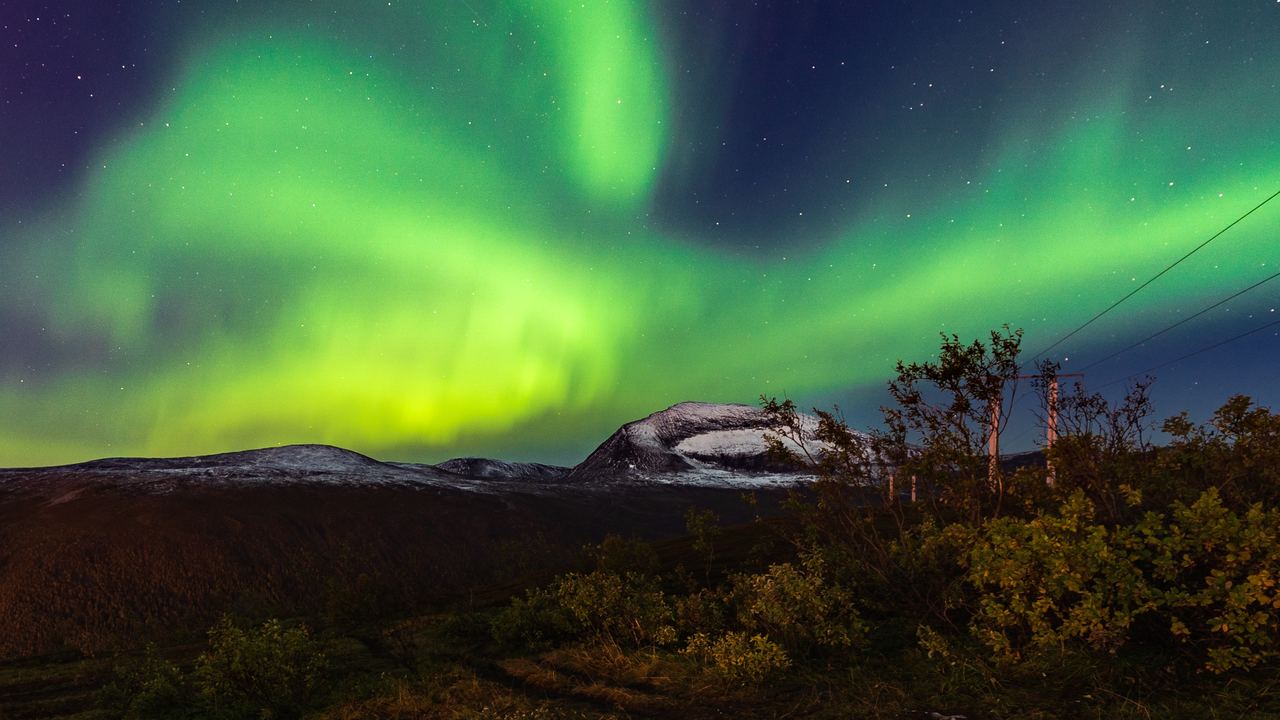
Aurora tours are not designed for children. The timing is wrong, the temperature is wrong, and the central activity is waiting. That does not make it a bad family trip, but the standard product is a poor fit and the adjustments are worth making on purpose rather than discovering them at midnight.
Many operators set minimum ages, commonly somewhere between 6 and 12 for the longer chases and occasionally higher. Where no minimum is stated, ask, particularly for anything over six hours.
The three real problems
The clock. The active part of the night is around magnetic midnight, roughly 21:00 to 01:00. A tour timed to be in the right place then will have a seven-year-old asleep in the minibus before anything happens. The aurora does not adjust to bedtimes.
The cold. Children lose heat faster, tolerate discomfort less, and are worse at noticing it is happening until it already has. Once a child decides they are cold the evening is over, whatever the sky is doing.
The waiting. An aurora tour is standing in a field looking upward for a long time, sometimes with no result. Adults chose that. Children were brought along, and the difference shows around hour two.
Which format to pick
| Format | Suits children? | Why |
|---|---|---|
| Boat or fjord cruise | Best option for younger children | Indoor space to warm up, seating, toilets, food, and you can go inside without ending the trip |
| Short coach tour | Workable | Three to four hours, the vehicle is always nearby, and it ends at a sensible time |
| Private tour | Best if the budget allows | You set the departure and, crucially, you can end it the moment it stops working |
| Small-group minibus chase | Older children and teenagers | Six to ten hours in the dark. Excellent for odds, demanding for anyone under about twelve |
| Photography tour | No | Long, static, and everyone else has paid to concentrate |
The pattern is that the formats which are best for seeing the aurora are the worst for children, and the reverse. A boat cannot drive out from under cloud, which costs you on a marginal night; it also has a heated cabin, which is what lets a family stay out at all. That trade is unavoidable, and it is better made knowingly.
The private tour resolves most of it if you can afford it. Being able to stop at 23:00 because it has stopped being fun, without stranding fourteen other people, is worth a great deal.
The expectation problem
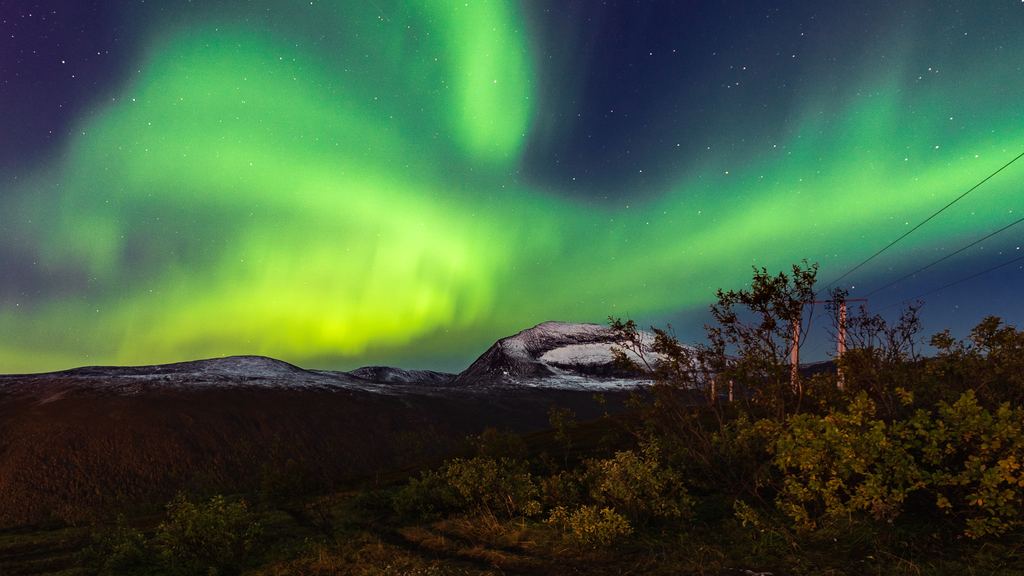
This one catches families harder than anyone else. A child who has been shown photographs for weeks arrives expecting the photographs, and what they get is a pale grey band that might be cloud.
That is not a failure of the tour. It is how human vision works in the dark: colour perception runs on cone cells that need more light than a typical aurora provides, so you see with rods instead, which are sensitive but colourblind. The camera has no such limit, which is why the photographs are greener than the night.
Explaining this in advance changes the evening completely. A child told "it will look like a faint grey-green cloud, and then we will take a photo and you will see it turn green" is delighted when exactly that happens. A child expecting the poster is disappointed by a perfectly good display.
Practical things that work
- Nap in the afternoon. Treat the aurora night as a late night from the start rather than fighting it.
- Confirm the thermal suits fit children. Most operators carry child sizes; some do not, and an adult suit on a child is useless.
- Hand warmers in boots and mittens. Cheap, and they buy you an extra hour of goodwill.
- Bring more food than seems necessary. Cold children get hungry and hungry children get cold.
- Give them a job. Watching for the first sign, holding the torch, counting seconds on an exposure. Waiting is much easier with a task.
- Have an exit plan. Know how you get back to a warm vehicle, and be willing to use it.
- Book more than one night. This matters more with children, because you can leave the first night early without having spent your only chance.
A word for the alternative
You do not have to book a tour at all. In Tromso, Rovaniemi or Reykjavik you can walk or take a short taxi ride to somewhere dark, wait half an hour, and go back to a warm room the moment anyone has had enough.
The odds are worse, because nobody is reading the satellite images or driving you to a gap in the cloud. But an unstructured hour that ends when the children decide is often a better family memory than six hours of doing it properly, and it costs nothing.
Family questions
What age is old enough?
For a short boat or coach trip, most children over about five manage. For a six to ten hour chase, twelve and up is realistic, and several operators set their minimum around there for good reason.
Do children pay full price?
Usually there is a child rate, sometimes free under a certain age. It varies enough that it is worth checking rather than assuming, especially on private tours where the pricing is per vehicle.
Is Rovaniemi the best choice for families?
It has the most family infrastructure, being built around Christmas tourism, so the rest of the trip is easier. Its aurora numbers are weakest in November and December, which is exactly when families travel. Worth knowing before booking.
What if my child is disappointed?
Manage it beforehand rather than afterwards. Explain that the lights are faint and grey to the eye, that they may not appear at all, and that the camera will show more than they can see. Every one of those is true, and children handle honest odds better than adults expect.
A plan that survives contact with an actual child
The failure mode is predictable: everyone is excited at 20:00, someone is cold and bored by 21:30, and the aurora, if it comes at all, arrives at 23:00 to an audience that has stopped caring. A few decisions in advance change that.
- Nap in the afternoon, all of you. Treat it as a night shift from the start rather than something to push through.
- Eat properly before, and bring more food than seems reasonable. Cold children get hungry fast, and hungry children get cold faster.
- Confirm child-size thermal suits when you book. Most operators carry them; an adult suit on a child traps no heat and is worse than useless.
- Hand warmers in boots and mittens from the start, before anyone is cold.
- Give each child a job. First to spot a change in the sky, holder of the red torch, counter of seconds during an exposure. Waiting with a task is a completely different experience from waiting.
- Agree the exit in advance. Everyone knows how we get back to a warm vehicle and that saying so is allowed. Removing the fear of being trapped outside makes children last longer, not less.
- Book two shorter nights rather than one long one. The first can end early without costing you the trip.
The last point is the one that matters most, and it is the same arithmetic as everywhere else on this site: with a usable sky on roughly one night in four, the family that booked twice has a real advantage over the family that booked once and endured.
Ages, and what operators actually require
There is no single rule, and the variation is wide enough that it has to be checked per booking. Broadly, in the listings we reviewed:
- Boat trips and short coach tours often have no minimum, or a low one, sometimes with free travel for very young children.
- Small-group minibus chases commonly set a minimum somewhere between 6 and 12 years.
- Photography-focused tours frequently set a higher minimum or discourage children outright, because the format depends on everyone staying still and quiet for long stretches.
- Private tours usually have no minimum at all, since the group is your own.
Where a minimum age is set, it is usually about the duration and the cold rather than safety, and operators will say so if you ask. Where no age is stated on a long chase, ask anyway: a company that has thought about it will have an answer, and a company that has not is telling you something.
Child pricing varies just as much. Reduced rates are common, free travel under a certain age happens, and on private tours the price is often per vehicle, which makes a family of four or five better value than it looks.
Sources
- Minimum ages, child pricing and inclusions from marketplace listings for Tromso, Reykjavik and Rovaniemi reviewed on 10 August 2026. These vary widely between operators and change: confirm on the listing you book from.
- Why the late hours matter: aurora activity tends to peak around magnetic midnight, as the earth rotates the observer under the most active part of the oval. See NOAA Space Weather Prediction Center and our page on the auroral oval.
- Why the aurora looks grey rather than green to the naked eye: human low-light vision runs on rod cells, which are highly sensitive and do not discriminate colour. Explained on our colours page.
- Cloud statistics behind the recommendation to book more than one night: ERA5 (ECMWF, Copernicus Climate Change Service), see our weather page.
Data verified on. Minimum ages and inclusions vary widely between operators. Check the specific listing before booking: the figures here describe common practice, not a rule.
Which format suits a family
The boat has a heated cabin and cannot chase the weather. The minibus can chase and has nowhere to warm up. That is the whole trade.