
Northern Lights
Everyone explains how the aurora works. Nobody publishes how likely you are to see it, where, in which month. We calculated it.
Type at least two letters.
Where to see the northern lights


What travellers say
Nobody can promise you the aurora
Booking a night under the northern lights means buying something nobody can promise. The industry knows this and sells the word guaranteed anyway, alongside percentages that no one states the method for.
This site takes the opposite approach. Every number here carries its source, what exactly was counted, and what it does not tell you. Where we cannot calculate something properly, we say so instead of estimating.
Picked by our editors for you
Six nights we would book ourselves, one for each country we cover.
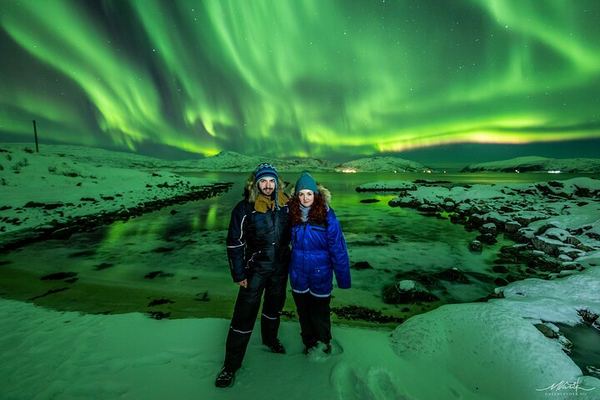
Northern Lights Adventure with Greenlander, Maximum 8 People
A working chase in a modified 4x4 Mercedes: hot meal, tripods, thermal suit and aurora portraits. Expect snow underfoot and a genuinely late finish.
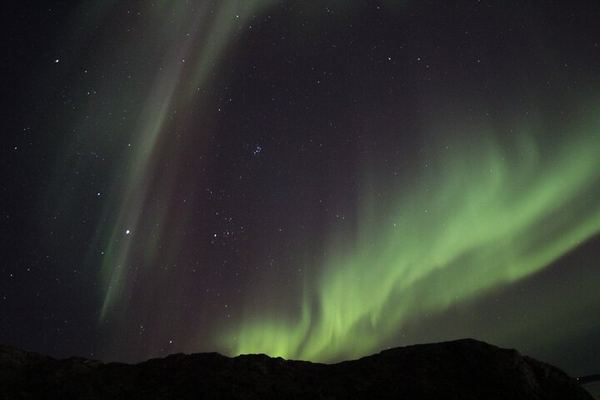
Yellowknife Aurora Hunting by Bus with Wilderness First Aid Guides
Every guide is trained in wilderness first aid, the line worth reading twice for a tour that parks in territorial parks in midwinter. Small groups.
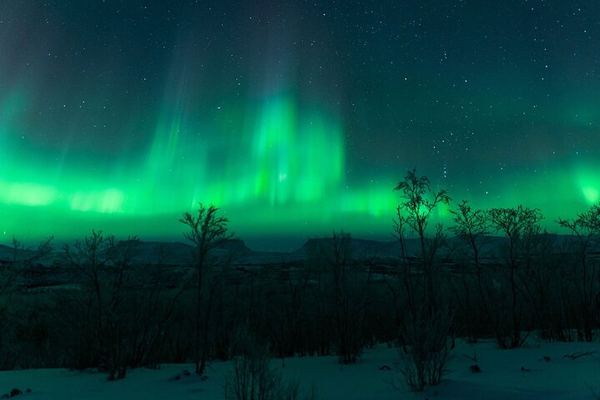
Kiruna Northern Lights Chase with a Photographer, Lights of Vikings
Abisko, the boreal forest, or anywhere with a gap in the cloud: this operator built its name on driving far for clear sky. Photographs sent within three days.
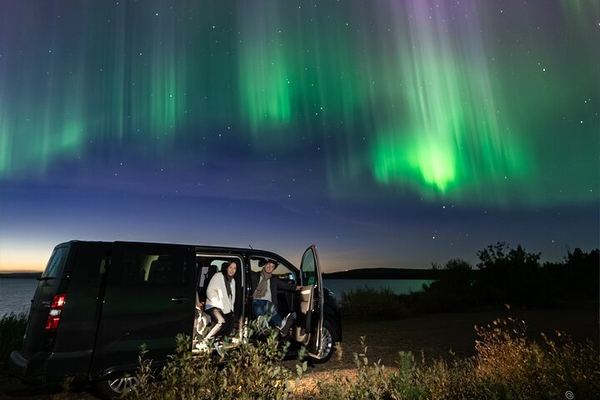
Small Group Northern Lights Hunt from Rovaniemi with Pro Photos and Video
Unlimited photographs and video on astrophotography gear, eight guests at most, and a start time that moves between 16:00 and midnight with the solar wind.
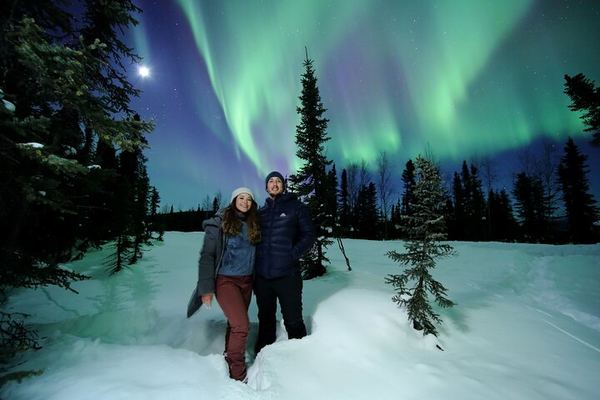
Electric Moose Studios Aurora Tour with Studio Portraits and Hot Pizza
Controlled studio lighting is why these portraits are not silhouettes, from a photographer who shot weddings for ten years before turning to the aurora.
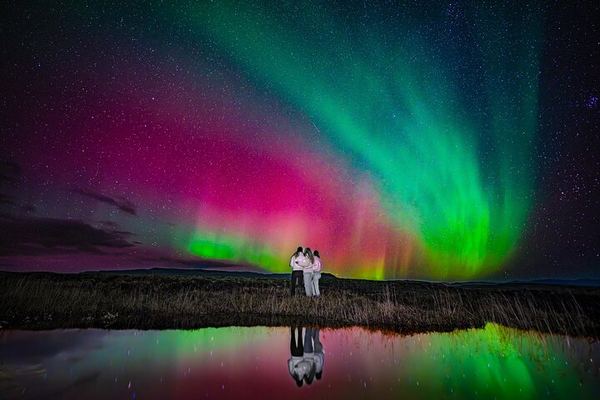
Small Group Northern Lights Jeep Tour with an Icelandic Guide and Photos
Vikings, Norse gods and the elves Icelanders are still careful about fill the road time, and the guide works the camera too. Free retry if luck goes wrong.
Ratings collected by Viator and Tripadvisor
Start with the question you actually have
Six sections. The first two are where the numbers live.
Plan your trip
When to go, how much real darkness you get, which nights the moon takes away, and what to wear when you stand still for six hours in the cold.

Where to go
Tromso, Reykjavik and Rovaniemi compared on cloud data, darkness and geomagnetic latitude. Plus the places worth an extra flight, and one that is not what it claims.

Choosing a tour
What a guarantee actually covers, why a two-hour cruise and a ten-hour chase share the same title, and the complaints that repeat in bad reviews.

How the aurora works
The physics that changes decisions: the oval, why the Kp index misleads, and why the colour depends on how long an atom stays excited.

Photographing the aurora
Why your eyes see grey and the sensor sees green, what a phone can really do, and the settings that hold up at minus twenty.
Culture and curiosities
What people believed before anyone knew, the sound the Sami named it after, and a glossary of the words forecasts never define.
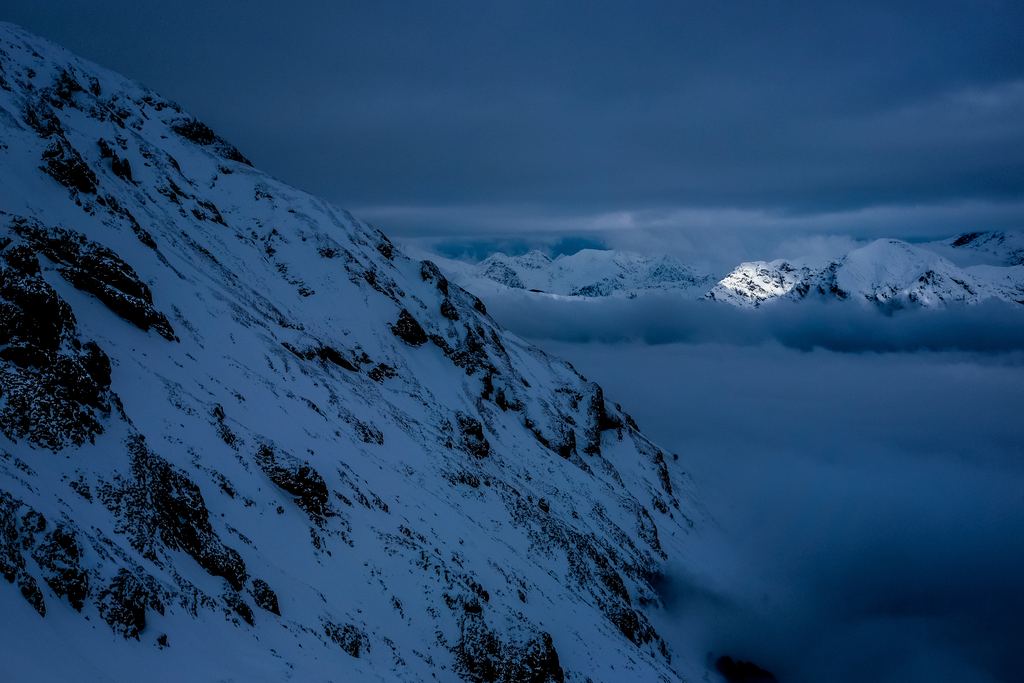
The number that changes a booking
December is the worst month of the season
The universal advice is to travel in midwinter because the nights are long. That looks at darkness and ignores cloud, and the two move in opposite directions.
In Tromso, December has the most darkness physically possible, eight hours out of eight during the polar night, and the worst sky in our entire dataset. September has twice the clear-sky odds and under two hours of true darkness.
No month wins both. Knowing which one you are optimising is most of the decision.
How we handle numbers
One Tromso operator advertises 60 to 70% cloud-free nights for a period in which the reanalysis gives between 16.8% and 23.5%. A factor of about four, on a metric they do not define.
We do not think that is dishonesty so much as an industry habit. But it is why every figure on this site states where it came from, exactly what was counted, and what it cannot tell you. The thresholds we use are our choices, not natural facts, and we say so on every page that uses them.
It also means we publish inconvenient results. Our own calculation for Abisko, famous for a patch of persistently clear sky, comes out as the cloudiest in the dataset. Rather than run that as a headline, we checked whether the method can even see the thing being claimed. It cannot: the window is smaller than the model grid. So the honest answer is that nobody has published a verifiable figure either way, and that is what the page says.
There are no prices anywhere on this site yet, for the same reason. When the catalogue supports a median with a stated sample and a date, it will appear.
Editorial
From the season
Dated writing, kept separate from the guide so the guide stays current.
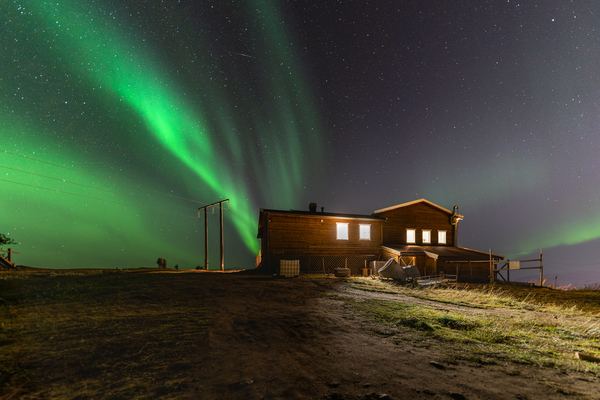
Three Nights in Tromsø Is a Coin Flip: How Many Nights You Need to See the Northern Lights
The trade says three nights, and attaches a percentage with no method behind it. On eleven seasons of cloud data three nights in Tromsø is 51.2%, a coin flip on the weather alone. Here is the calculation, and why the obvious version of it is wrong.

You Will Probably See Grey: What the Northern Lights Look Like to the Naked Eye
The world's standard brightness scale for the aurora describes its lowest step as barely visible, about as bright as the Milky Way, with no colour. That step is the common one. Here is what your eye can do with it, and why the trip is still worth taking.
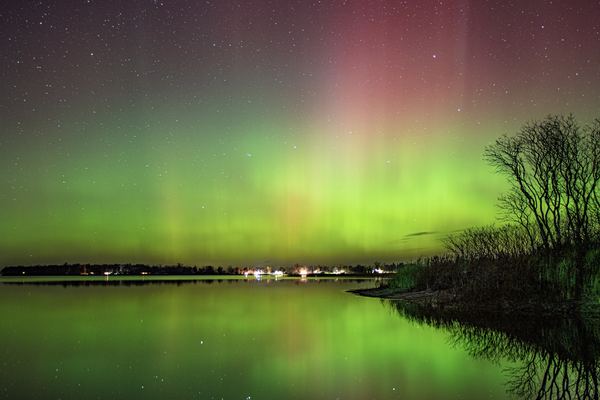
September Is the Worst Month for Northern Lights in Thirteen of the Fourteen Places We Measure
September has the clearest sky of the whole aurora season in six of the fourteen places we measure, and it is still the weakest month of the season in thirteen of them. The reason is not cloud. It is that this far north the darkness has not arrived yet.
Three things worth knowing before you book
Book more than one night. Prefer a tour that can drive out from under the cloud. Consider the shoulder season, which is cheaper and usually clearer.