

Sweden
The country that holds both ends of the table, 98 km apart
Swedish Lapland is the quiet corner of Arctic aurora travel and it produces the strangest result in our data. The two bases here, an hour and a half apart by road, come out first and last of the fourteen destinations we measure. Kiruna gets a usable sky on 38.8% of season nights, ahead of every other European base on this site. Abisko gets 18.7%, the lowest figure we have anywhere.
Abisko is the one with the reputation. The blue hole, the window of clear sky said to sit over the valley because the mountains wring the water out of Atlantic weather first, is the best-known claim in this business, and the percentages attached to it come from the people selling tours there. Our count runs the other way, and the reason is worth being precise about rather than triumphant: the claimed window is 10 to 20 square kilometres and the reanalysis grid is about 28 km, so at that scale our method is blind. What it can see is the regional gradient, and the gradient favours the plain at Kiruna over the basin at Tornträsk.
What Sweden does not have is a market. Eight departures, two bases, no coaches and no cheap seats: the lowest price here is 153 EUR, more than double what a seat costs in Rovaniemi. Six operators cannot compete the way eighty can. The compensation is that every departure here is a small vehicle with someone making decisions, and the viewpoints are empty.
Choose a destination in Sweden
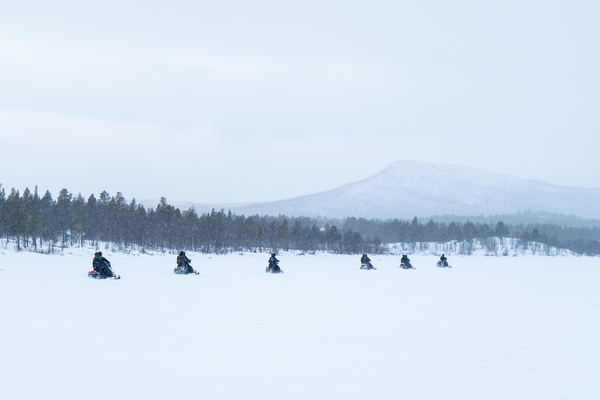

Northern Lights Experiences in Sweden
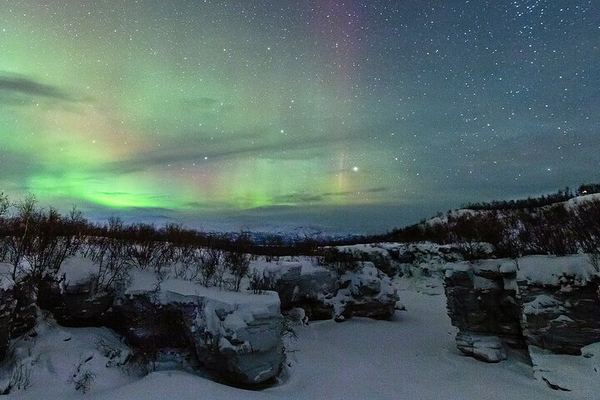
Abisko Aurora Tour from Kiruna with a Three Course Dinner
Sámi guides take you to Abisko, one of the most dependable aurora spots anywhere. The road crosses several weather zones, so a cloudy night still has gaps.
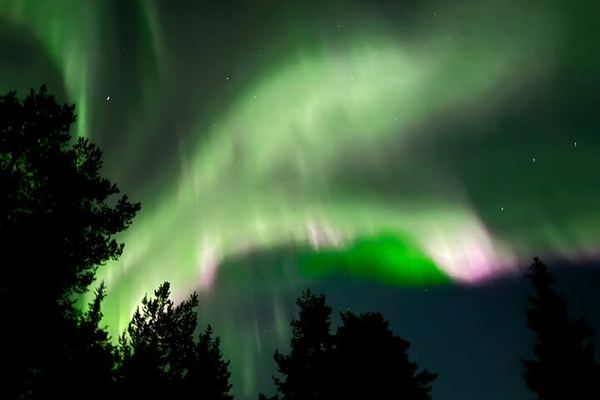
Husky Sled Ride and Northern Lights Tour from Kiruna
The guide drives, so your eyes stay on the sky for 13 km, with a teepee stop and a fire halfway. By late March it no longer goes properly dark on this run.
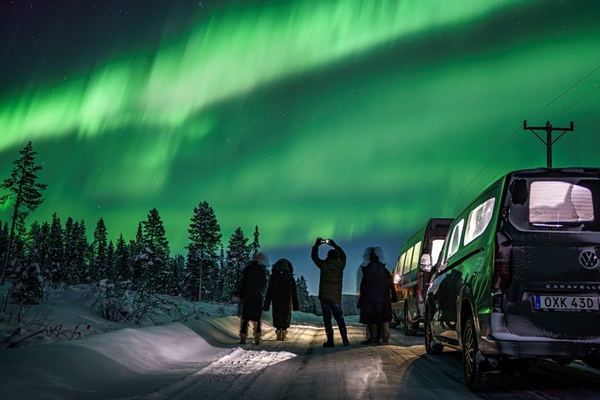
Kiruna Aurora Chase with a Street Food Dinner in a Tipi
Dinner by the fire in the Stejk Street Food tipi, then minivans into wilderness the coaches cannot reach. Lingonberry juice and fika outdoors at the stop.
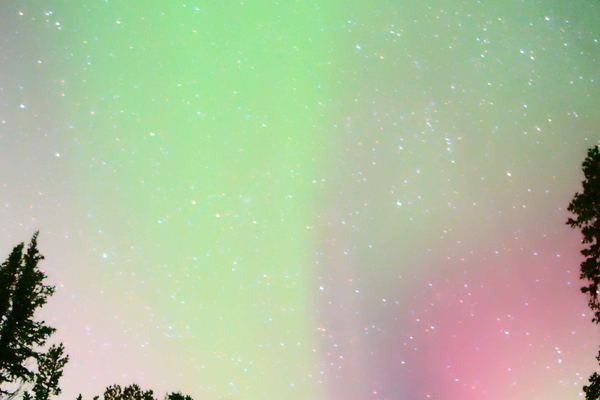
Kiruna Northern Lights Chase Through the Snowy Forests
Four hours by minibus into the forests outside town, wherever the sky can be seen through. Short enough for an early start, and for a slow night to end early.
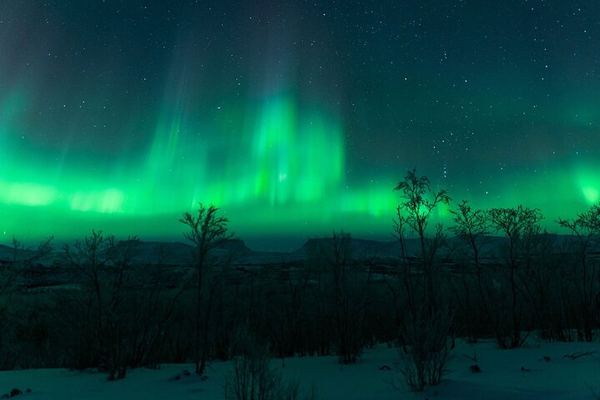
Kiruna Northern Lights Chase with a Photographer, Lights of Vikings
Abisko, the boreal forest, or anywhere with a gap in the cloud: this operator built its name on driving far for clear sky. Photographs sent within three days.
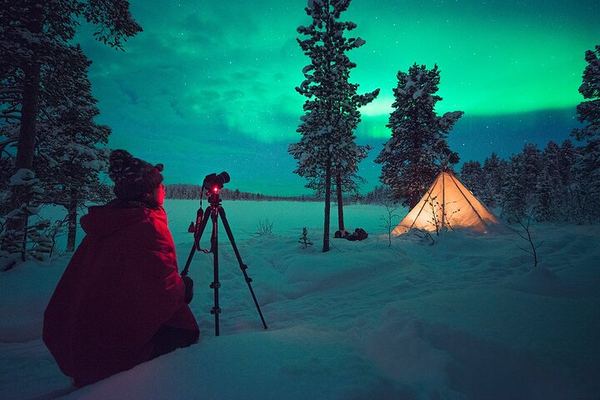
Northern Lights Photo Tour from Kiruna with Sami Photo Guides
Camera and tripod are lent to you, so a phone is enough to arrive with. Sámi photographers born here pick the spot from how weather moves, not from a map.
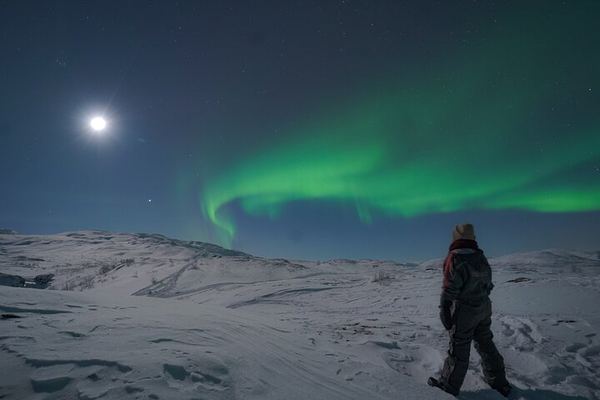
Northern Lights Tour from Kiruna to Abisko National Park
The mountains to the west wring the weather out of the incoming air, which is why this valley sees more clear nights than the coast. Winter gear included.
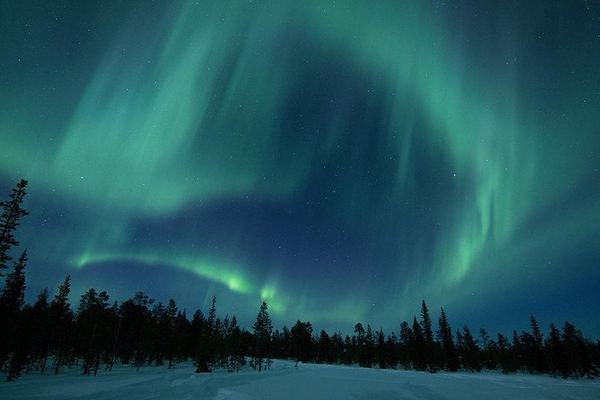
Snowmobile Aurora Expedition from Kiruna with a Lappish Dinner
Forest tracks, the frozen Torne River and frozen lakes from the saddle, then traditional Lappish food around an open fire in a forest hut. Two can share.
Ratings collected by Viator, Tripadvisor and Civitatis
Two bases, and the numbers behind them
| Base | Latitude | Usable sky, season | Best month | Departures | Median seat |
|---|---|---|---|---|---|
| Kiruna | 67°51′N | 38.8% | November | 6 | 184 EUR |
| Abisko | 68°21′N | 18.7% | October, narrowly | 2 | — (sample too small) |
Read the last two columns together and the market looks upside down. The base with roughly half the clear nights costs more and offers a quarter of the choice. That is what a reputation is worth, and it is the clearest example in this catalogue of a price set by a story rather than by a measurement.
In practice the distinction matters less than it looks, because several Kiruna departures will drive to Abisko when the forecast points that way. Booking from Kiruna and letting the guide decide is the version that needs no argument: you get the better base rate and the option on the valley.
When to come, and the month nobody names
Two things decide how much aurora time a month contains: how often the sky is usable, and how many hours of real darkness there are to use it in. Multiplied together, the Swedish season produces an answer that appears nowhere in the marketing.
| Month | Kiruna | Abisko |
|---|---|---|
| September | 1.10 | 0.63 |
| October | 2.41 | 1.26 |
| November | 2.86 | 0.97 |
| December | 2.40 | 1.08 |
| January | 2.50 | 1.12 |
| February | 2.67 | 1.25 |
| March | 2.36 | 1.02 |
November is the best month in Sweden, on 35.7% of Kiruna nights and the full eight hours of astronomical darkness. February and January follow. The month everyone recommends, September, comes last at both bases and by a wide margin: 2.5 hours of dark at Kiruna and 2.3 at Abisko, with only 27% and 23% of nights free of moonlight.
March deserves a note of its own. It has by far the highest cloud figure anywhere in Europe, 54.8% at Kiruna, and 4.3 hours of darkness drops it to sixth of seven. It is a lovely month to be here and it is not the month with the most aurora time in it. That gap between the headline number and the useful one is exactly what this site exists to close.
The other thing the table shows is Kiruna's remarkable evenness: six of its seven months sit within half an hour of each other, and every one of those six beats Abisko's best. You do not have to pick the right month in Kiruna. You cannot pick a good one in Abisko.
One limit, stated because it argues against this ranking: it measures how much dark clear sky a month contains, not the chance the aurora does something inside it. Geomagnetic storms are close to twice as frequent around the equinoxes, favouring September and March. Doubling September brings it level with the Kiruna pack rather than ahead of it, and at Abisko it would move to the top of a very flat and very low row.
The country where you are allowed to stand in a field
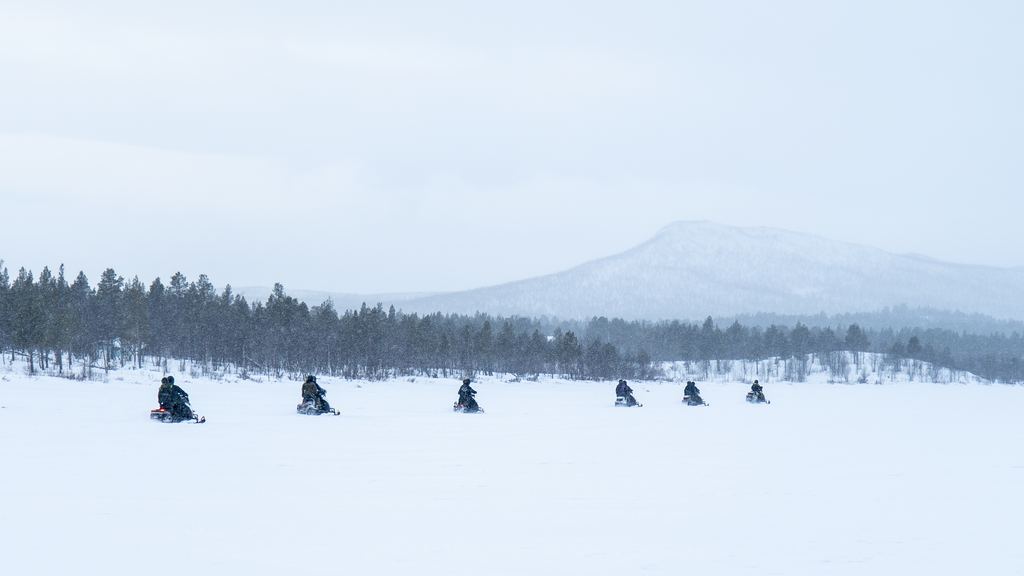
Sweden has allemansrätten, the right of public access, written into the constitution since 1994. In practice it means you may walk, stand, camp and look at the sky on almost any land in the country, including private land, provided you do no damage and keep away from houses.
That is not a detail. In much of the world, finding somewhere dark and legal to stand at eleven at night is a real obstacle, and half the value of a guided tour is that somebody else has solved it. In Sweden the problem does not exist. If you are staying in the north and the sky opens at two in the morning, you put a coat on and walk out of the door.
Which is worth weighing against the ticket price. With one night and no car, buy the tour: a Swedish winter road in the dark is not a job for a hire car and a phone map. With three nights in one place, the country is doing most of the work for free.
The most scientifically observed sky in this catalogue
Kiruna has been an auroral research town since 1957, when a geophysical observatory was set up there during the International Geophysical Year. It is now the Swedish Institute of Space Physics, and it has been measuring the field above this region continuously ever since. Nine years later Esrange opened 40 km east and began firing sounding rockets directly into the auroral zone to sample it from inside, which it still does. Abisko, meanwhile, has had a scientific field station since 1903 holding one of the longest unbroken climate records in the Arctic.
None of that changes what you will see on a given Tuesday. It does explain why claims made in Swedish listings tend to be narrower and better supported than the ones made further south, and it is a little ironic that the one exception is the most repeated claim of all.
When to come
The Swedish season, on our numbers
| Month | 1 | 2 | 3 | 4 | 5 | 6 | 7 | 8 | 9 | 10 | 11 | 12 |
|---|---|---|---|---|---|---|---|---|---|---|---|---|
| KirunaNovember is the best month in Sweden: 35.7% usable sky over eight full hours of darkness. Six of the seven months sit within half an hour of each other, so picking the wrong one costs you very little. | 1 | 2 | 3 | 4 | 5 | 6 | 7 | 8 | 9 | 10 | 11 | 12 |
| AbiskoEvery month between 0.63 and 1.26 expected usable dark hours: Kiruna's worst beats Abisko's best. November at 12.3% is the lowest cloud figure of all fourteen destinations we measure. | 1 | 2 | 3 | 4 | 5 | 6 | 7 | 8 | 9 | 10 | 11 | 12 |
Cloud: ERA5 via Open-Meteo, 11 seasons. Darkness and moon: ephemerides. Ranking by cloud multiplied by darkness; method in the site's data notes.
Five dates that made Swedish Lapland
The origins
1909
Europe's first national parks
Sweden protects nine areas, Abisko among them, in the first national park legislation on the continent. The valley stays unlit and unbuilt, which is worth more than the reputation it later acquired.
1957
Kiruna starts measuring
A geophysical observatory opens at Kiruna during the International Geophysical Year. It becomes the Swedish Institute of Space Physics and has watched this sky ever since.
The growth
1966
Esrange fires upward
A rocket range 40 km east of Kiruna begins launching sounding rockets straight into the auroral zone to sample it from inside. It is still one of the few places in Europe you can legally launch anything.
1994
The right to roam, constitutionally
Allemansrätten is written into the Swedish constitution. You may stand in almost any field in the country at two in the morning and look up, which is not true of most places in this catalogue.
Today
October 2024
Solar maximum declared
NOAA and NASA confirm Solar Cycle 25 has peaked. Activity stays elevated for a year or two on either side, which is the window the current seasons fall inside.
Planning a Sweden aurora trip
When should I go?
November, February or January at Kiruna, and honestly almost any month there except September: six of the seven are within half an hour of each other on our combined measure. September comes last at both Swedish bases despite good cloud figures, because there are barely two and a half hours of real darkness in it.
Kiruna or Abisko?
Kiruna, on every number we can measure: better sky in all seven months, roughly double once darkness is counted, cheaper, six departures against two, and the airport. Abisko has the reputation and a claim our method cannot resolve. If you want both, book from Kiruna with an operator that states it will drive to Abisko.
Is Sweden better than Finland or Norway?
Kiruna beats every European base in this catalogue on clear nights and on the combined measure, so on sky, yes. On choice, price and refund guarantees, Finland wins comfortably with 92 departures against eight. On scenery with an aurora in front of it, Norway's fjords are hard to argue with.
Why are Swedish tours so expensive?
Eight departures and a handful of operators. There is no volume to drive prices down and no coaches to spread the cost across fifty seats. Every departure in Sweden is a small vehicle with a guide choosing the destination, which is the product Rovaniemi charges 200 EUR for.
Can I get around without a car?
Yes. Kiruna has an airport with direct winter flights, all six departures include pickup or a town meeting point, and the Kiruna to Narvik railway stops at Abisko. A car buys you the freedom to drive to a viewpoint at midnight, which the right of public access makes legal.
Data verified on. Cloud: ERA5 via Open-Meteo, 11 seasons. Darkness and moon: ephemerides. Prices and counts read from the 8 Swedish departures on 10 August 2026.