
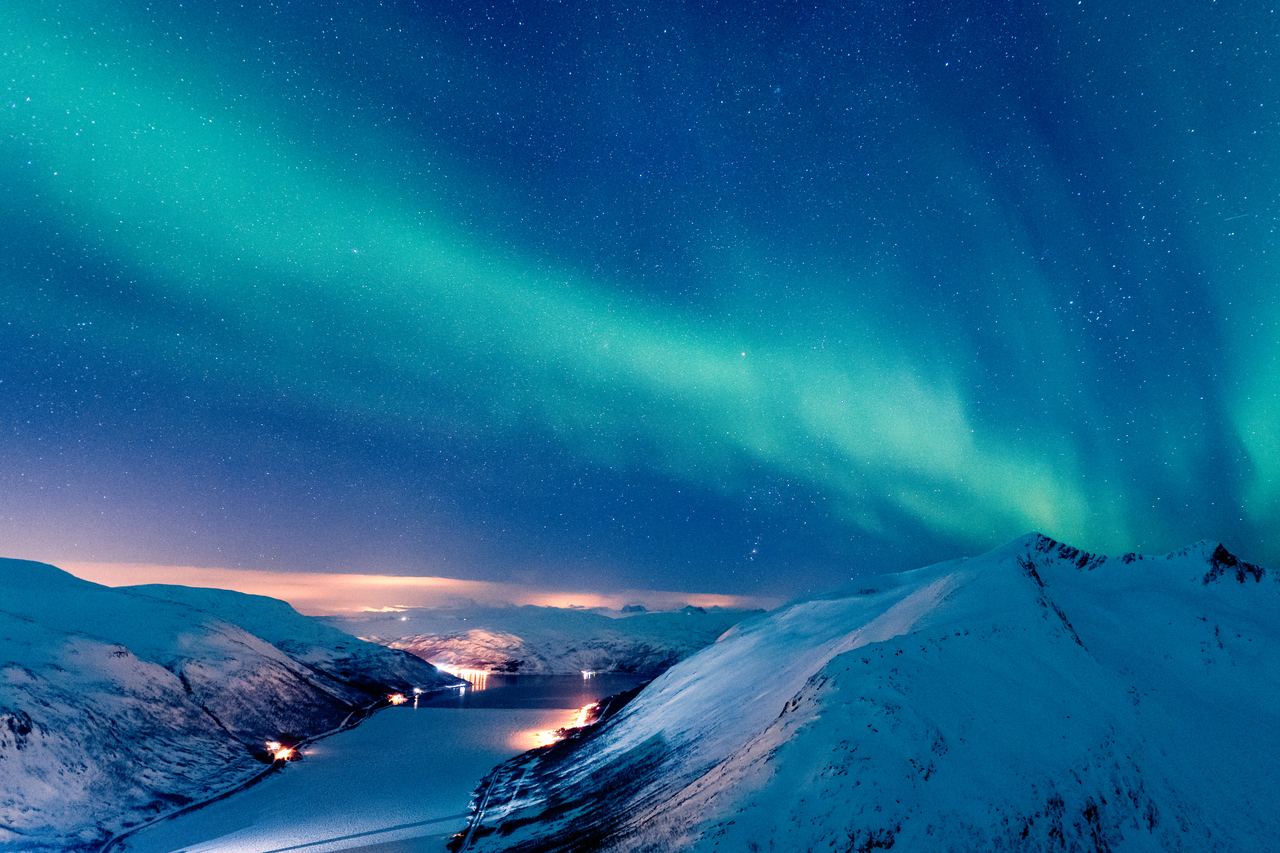
Tromsø
The busiest aurora town in the Arctic, the least open sky in Norway, and the best machinery for escaping it
More aurora tours leave Tromsø on a January evening than leave any other town on earth. That is a mixed blessing. The competition has pushed a seat on a large coach below 100 EUR and produced a class of guide who reads three weather models before dinner and knows which valley clears first when the wind turns southwest. It has also produced pull-offs where six vehicles park together and forty people stand in each other's photographs.
And it sits on the least open sky in Norway. Eleven seasons of reanalysis give Tromsø a usable sky on 25.4% of season nights, against 32.9% at Bodø and 29.3% at Alta, both of which beat it in all seven months. This is the coast, the Gulf Stream keeps it warm and wet, and the cloud is the whole business.
Which is exactly why the tours here look the way they do. The 74 departures divide into four kinds of night, and the difference between them is not really the price. It is how far the vehicle can go and how quickly it can change its mind. Everything else, the thermal suit, the campfire, the reindeer sausage, the free portrait, is a variation on comfort while you wait.
Choose a destination in Tromsø
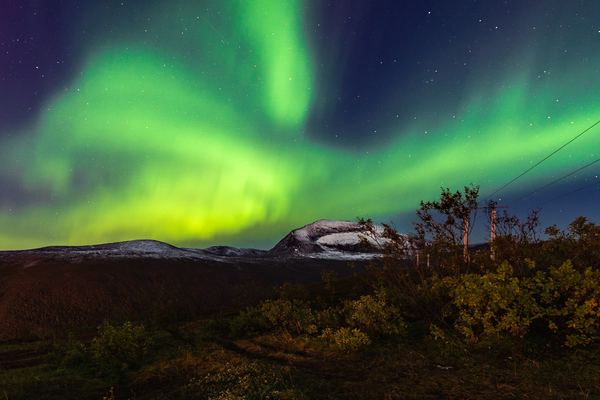

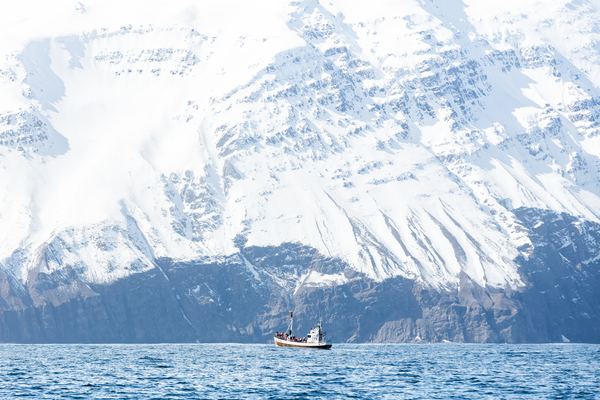

Northern Lights Experiences in Tromsø
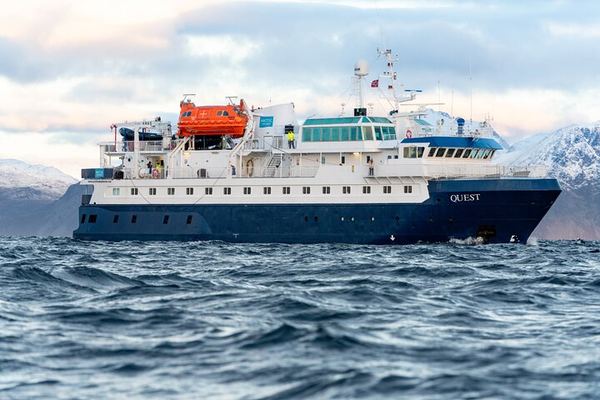
24 Hour Northern Lights and Whale Watching Cruise from Tromso
Sail across the auroral oval in the evening, sleep in a cabin while the ship moves, and wake on the whale grounds. Three-course dinner and lecture on board.
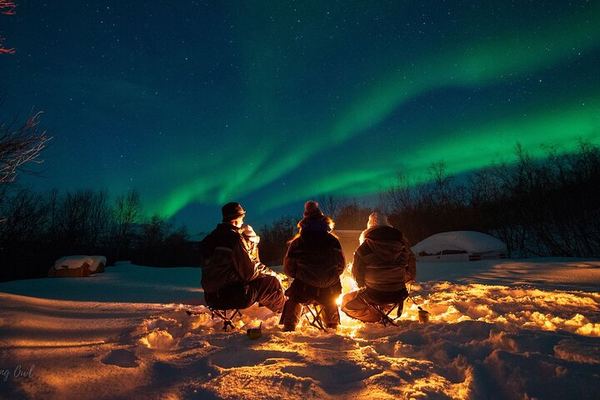
Adults Only Aurora Hunt from Tromso with Wandering Owl
An adults-only northern lights hunt from Tromsø: thermal suits, a campfire and a hot meal while the guides read the night's forecast. Photos included.
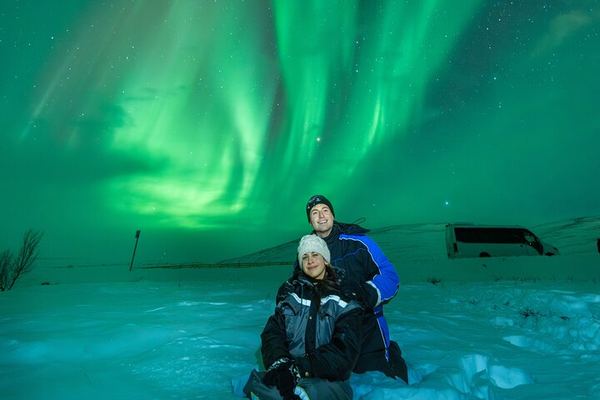
All Inclusive Aurora and Arctic Evening from Tromso with Campfire
Campfire, hot meal and photos on an all-inclusive aurora night from Tromsø. You get a forecast update the morning of, and can rebook if it turns.
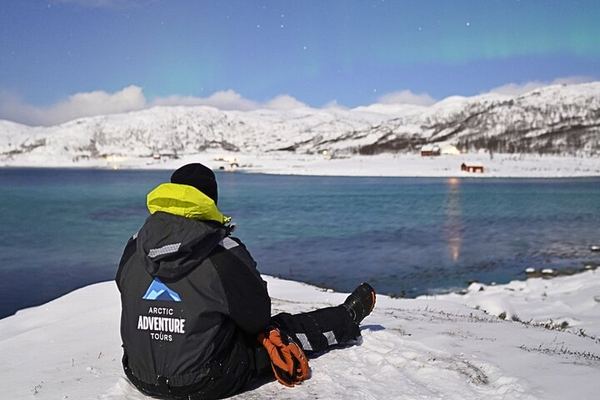
All Inclusive Northern Lights Hunt from Tromso, Max 15 Guests
Up to nine hours hunting clear sky from Tromsø in a group of 15, with a guide and driver working as a pair, an expedition meal and warm gear included.
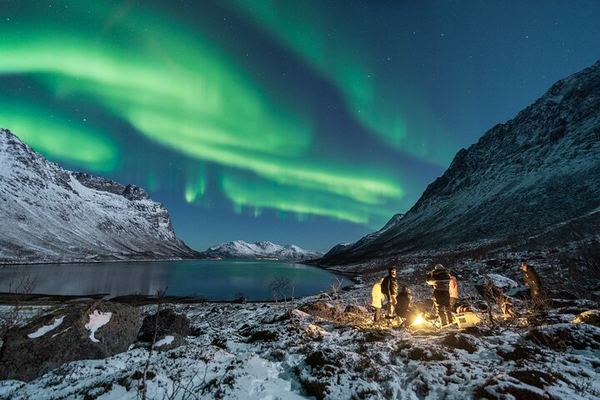
All Inclusive Northern Lights Hunt with The Green Adventure, Photos Included
Thermal suit and meal built into the price, a campfire with marshmallows, and expedition soup made in Tromsø that beats standing closer to the flames.
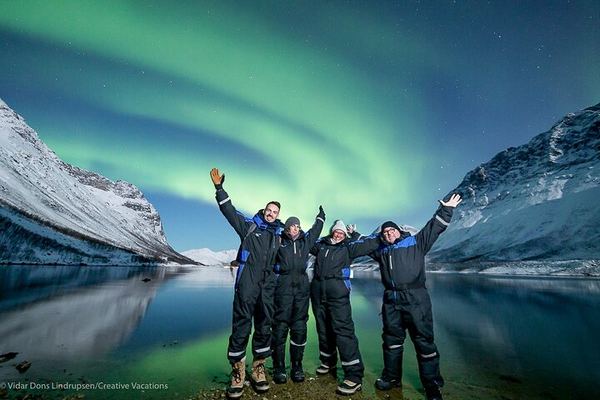
Aurora Adventure Tour from Tromso with Photographer Vidar
Seven hours under Arctic sky with Vidar, a professional photographer: real advice if you brought a camera, your portrait emailed to you if you did not.
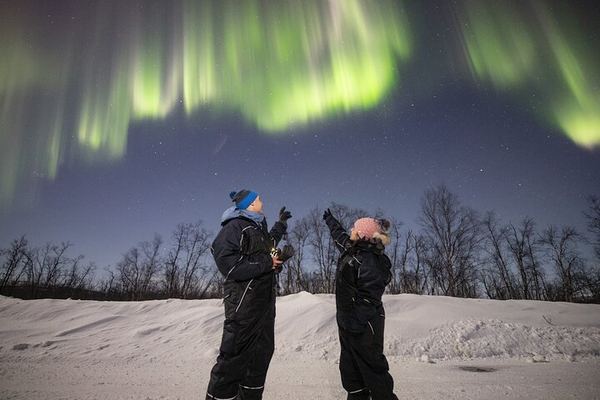
Aurora Chase from Tromso with Full Frame Cameras and Photos
The guides cross-check three forecasts before choosing where to go, then two full-frame cameras cover the night, including portraits with the aurora behind you.
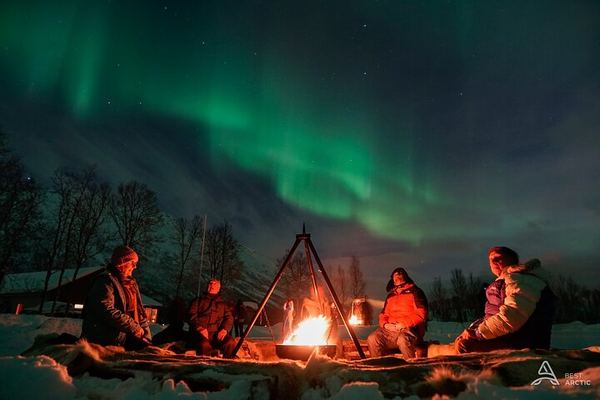
Aurora Safari by Coach with Private Heated Camps and Onboard Toilet
Wait by the campfire, in a hut or inside a lavvo, with a hot meal and proper toilets. Somewhere heated is what lets you stay out until the sky performs.
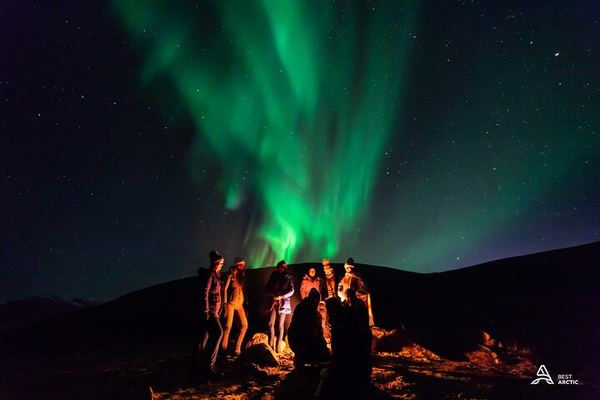
Aurora Safari by Minibus with Private Camp Locations Across Troms
Five to seven hours by minibus to the operator's own camp sites rather than the shared car park: darkness that stays dark, a toilet, tripods and cake.
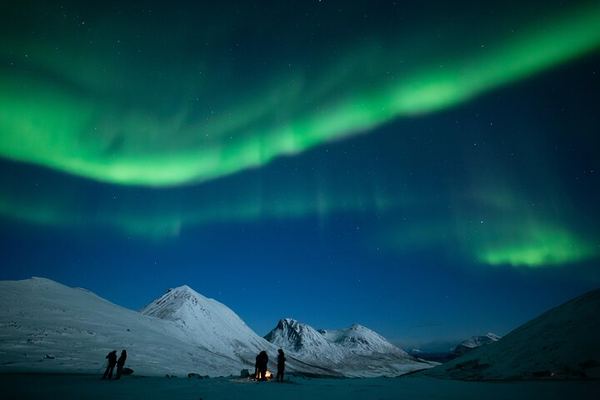
Budget Northern Lights Bus Tour from Tromso
The cheap way out of Tromsø: up to 2.5 hours' drive to dark sky, trained guides, hot drinks and portraits. The difference is the bus, not the sky.
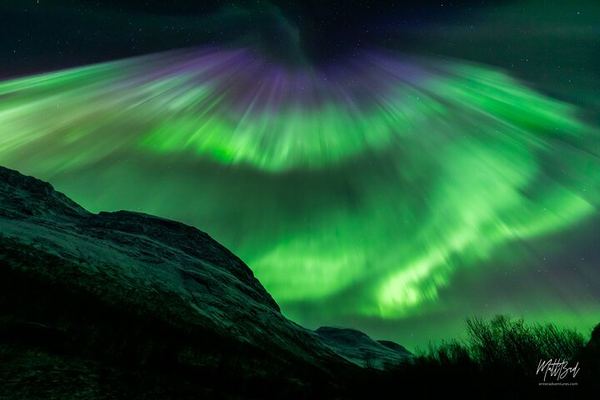
Guided Northern Lights Bus Tour from Tromso with Free Photos
A heated bus set up for a long night of waiting, with photographs included at no cost. Read the meeting notes twice: this operator can ask for your passport.
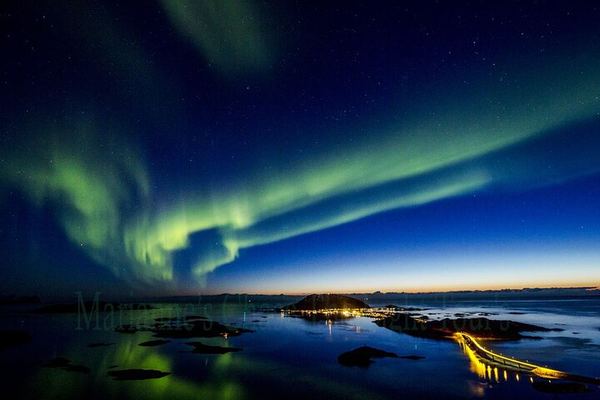
Marianne's Heaven On Earth Aurora Chaser Tours from Tromso
Photographers with 50 years of aurora hunting between them, hands-on with your camera settings, and a new watch for sky anomalies that are not satellites.
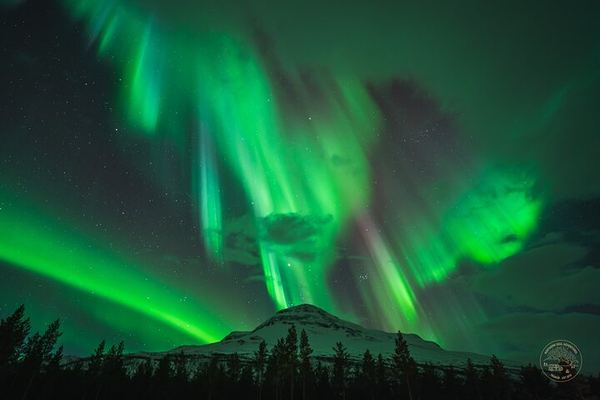
Minibus Northern Lights Chase from Tromso with Photography
The minibus trades the 4x4's reach for a lower price per head. A network of guides in contact all evening is how one vehicle knows the sky 60 km away.
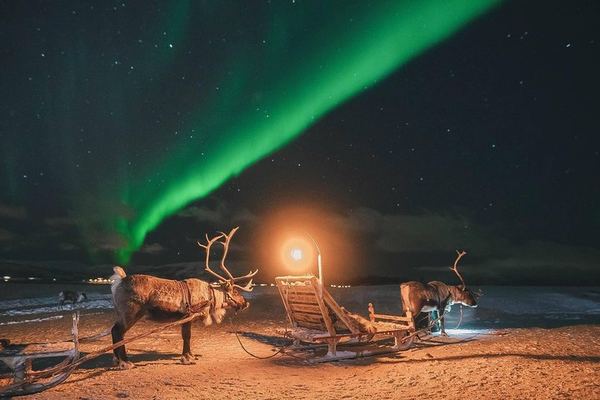
Night Reindeer Sledding with Camp Dinner and a Chance of Aurora
Feed a herd of 300 from your hands, ride the sleigh, then eat bidos stew in a candlelit gamme while the guide performs a joik. Aurora if the sky is clear.
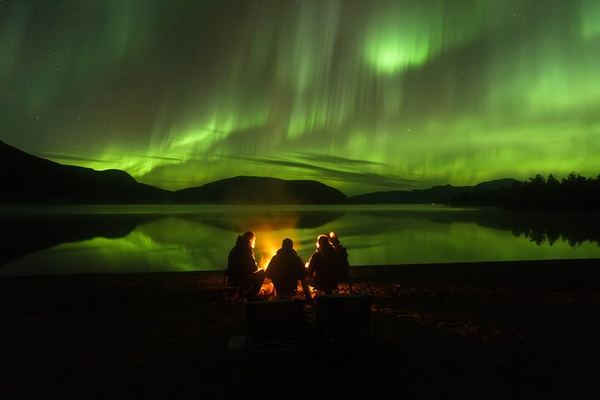
Northern Lights Adventure from Tromso in a Mercedes 4x4, Max 8 Guests
Eight guests, a 4x4 van, and a viewing spot chosen from the road conditions as much as the cloud. Fire, hot drinks and grilled pølse i brød while you wait.
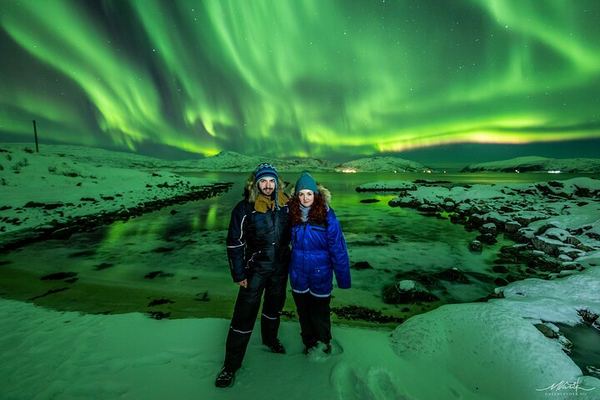
Northern Lights Adventure with Greenlander, Maximum 8 People
A working chase in a modified 4x4 Mercedes: hot meal, tripods, thermal suit and aurora portraits. Expect snow underfoot and a genuinely late finish.
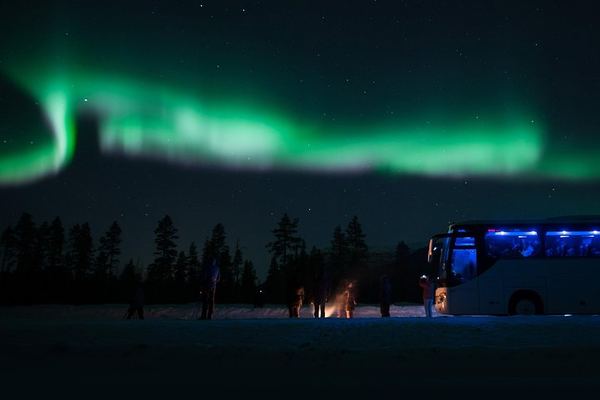
Northern Lights Big Bus Chase from Tromso with Chasing Lights
The budget chase, and honest about it: clear sky comes before scenery, some stops are roadside, and the route can cross into Finland. Dress in layers.
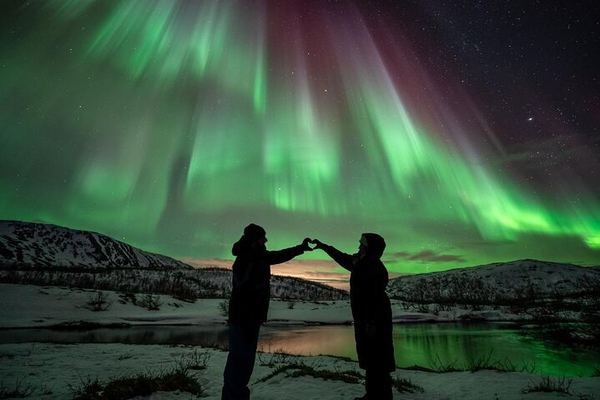
Northern Lights Big Bus Chase from Tromso with Free Photos
Seven to nine hours in a heated bus with WiFi and toilets, sometimes crossing into Finland or Sweden. It can return at 02:30, so leave the morning free.
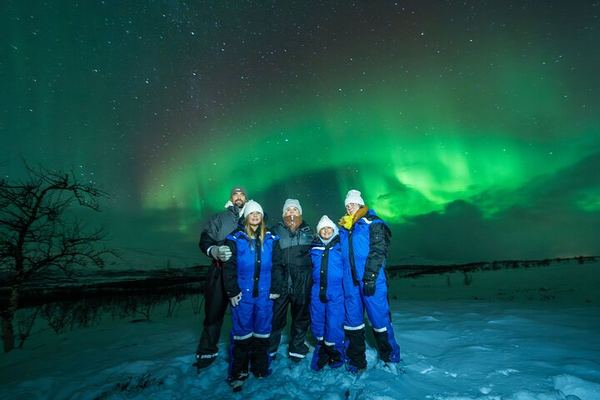
Northern Lights Chase from Tromso Guided in Spanish
A Tromsø aurora chase guided entirely in Spanish, with campfire, hot food and photos, flexible booking and a forecast update the morning of your tour.
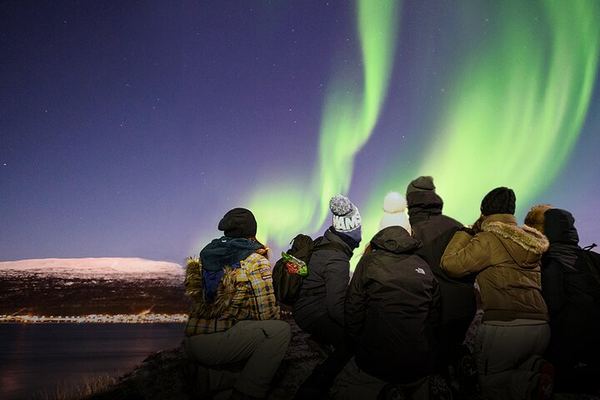
Northern Lights Chase from Tromso with a Professional Photographer
No fixed route: the guides follow continually updated weather and solar data. Book 15 to 20 April and expect a shorter, weaker night, as the operator says.
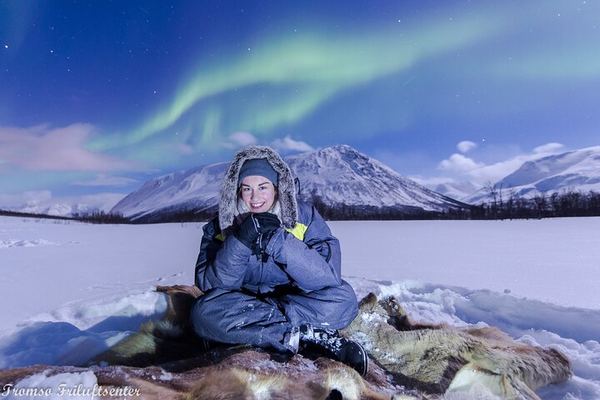
Northern Lights Chase with a North Norwegian Family Operator
Seven hours with a small family operator whose coastal stories are their own, told by people who grew up on this coast rather than read about it.
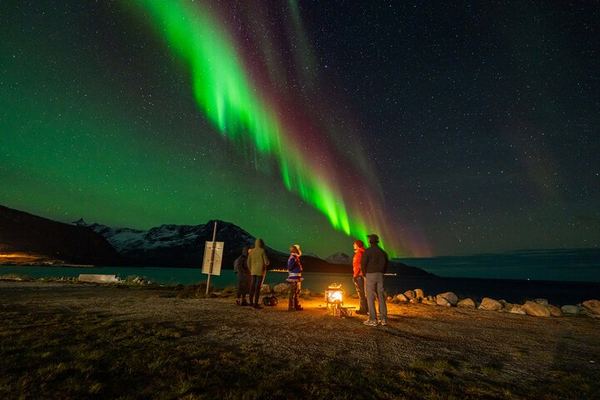
Northern Lights Chase with a Sami Guide, Campfire Meal and Photos
A local Sámi guide picks the spot on the day and crosses into Finland if the sky is better there. Private viewing sites, campfire and grilled food.
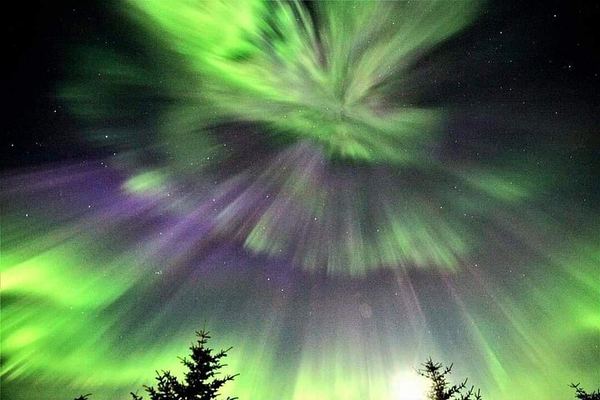
Northern Lights Cruise by Luxury Catamaran from Tromsø, Up to 6 per Booking
Northern Yachting's catamaran Arctic Eagle sails about 6 nautical miles into the fjord. Warm suits, local snacks and a deck net to lie on and watch the sky.
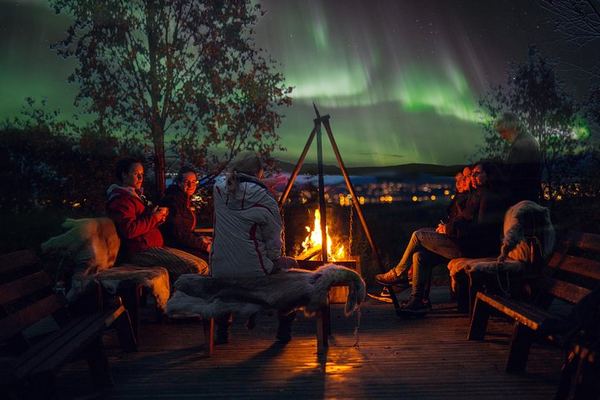
Northern Lights Evening at the Husky Camp near Tromso
A camp instead of a chase: shelter, fire, puppies in the dog yard and one clear northern horizon, rather than a night driving between viewpoints.
Ratings collected by Viator and Tripadvisor
The numbers, month by month
Cloud is a statistic over eleven seasons; darkness and moon are ephemerides, exact for years ahead. The last column multiplies the first two, and it is the one that decides when to come.
| Month | Usable-sky nights | Darkness per night | Moon-free nights | Expected usable dark hours |
|---|---|---|---|---|
| September | 34.0% | 1.8 h | 17% | 0.61 |
| October | 31.9% | 6.4 h | 48% | 2.04 |
| November | 20.0% | 7.9 h | 50% | 1.58 |
| December | 16.8% | 8.0 h | 58% | 1.34 |
| January | 23.5% | 7.9 h | 58% | 1.86 |
| February | 23.3% | 6.7 h | 57% | 1.56 |
| March | 28.4% | 3.5 h | 39% | 0.99 |
The last column is where the standard advice falls apart, and it falls apart in both directions.
September has the most open sky of the year and is the worst month here by a wide margin. Thirty-four per cent of nights are usable and there are 1.8 hours of astronomical darkness to use them in, with only 17% of nights free of moonlight, the worst pairing of any destination we measure. December is the opposite trap: eight full hours of darkness, the Sun never rising at all, and 16.8% of nights with anything to see through. Both months are heavily sold and neither is the answer.
October is the month. It combines the second-best sky of the year with six and a half hours of real darkness and half the month moon-free, and it is low season. January is the runner-up and the best of the deep-winter months.
One honest limit on that ranking. It measures opportunity, how much dark clear sky a month contains, and not the chance that the aurora does something inside it. Geomagnetic storms are close to twice as frequent around the equinoxes as at the solstices, an effect described by Russell and McPherron in 1973, and that favours September and March specifically. We have checked whether it changes the answer here: even doubling September's figure leaves it behind October. It narrows the gap rather than closing it.
What actually decides whether you see it
Three things have to line up: darkness, geomagnetic activity, and a gap in the cloud. The first is free from late September. The second is out of everyone's hands and on most nights sufficient, because the auroral oval sits over Tromsø even at low activity, which is why operators here talk about weather far more than about the Kp index.
That leaves cloud, and the numbers above are why the working radius is the product. Twenty kilometres inland the picture is often completely different, and the operators advertising a range of 200, 300 or 350 km are not exaggerating for effect. One takes part in a camera network watching the sky from 50 locations in real time; another simply keeps other guides on the phone all evening. Both are solving the same problem: a single vehicle can only see one patch of sky, and above this town the patch is shut three nights in four.
The four formats, and what each one buys you
| Format | Typical group | Typical night | Price range | What it buys |
|---|---|---|---|---|
| Large coach | up to 45 | 4 to 7 hours | 83 to 150 EUR | The lowest price, a toilet on board, and the range to keep driving when a small van would turn back |
| Minibus | 8 to 18 | 5 to 9 hours | 120 to 260 EUR | Side roads a coach cannot take, and a guide with time for everyone |
| Small 4x4 van | 4 to 8 | 6 to 9 hours | 220 to 305 EUR | The longest reach, hilltops and, on some tours, a short walk off the road |
| Private vehicle | your group only | 5 to 8 hours | 1,399 to 2,212 EUR | The ability to change plan at 21:00 without consulting anyone, and undivided attention |
The private figures look absurd next to the others until you read them as a vehicle hire rather than a ticket. Split four or five ways they land in the same territory as a small-group seat, and they buy the one thing money can genuinely add to an aurora night: the freedom to stay out another hour because the forecast has shifted.
Two formats that are not just transport
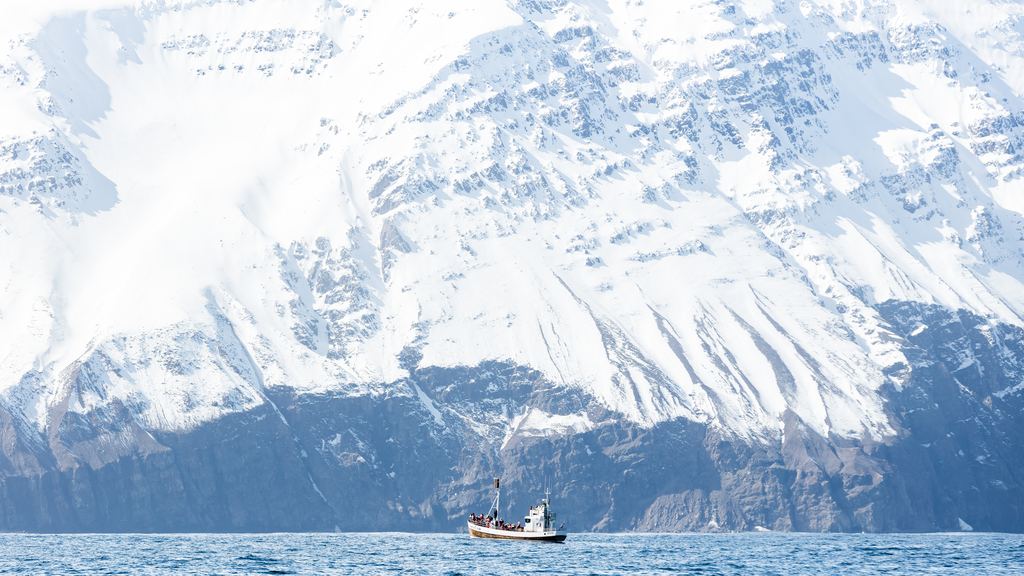
By boat changes the geometry rather than the comfort. A weak aurora sits low on the northern horizon, and from a valley floor it can be entirely behind a ridge while somebody on open water is watching it. Tromsø's fjords are ice-free all winter, so this is available every night of the season. The trade-off is that a boat cannot chase: it goes where the water goes, and in a town with this cloud record that matters more than it would elsewhere.
Reindeer and Sámi camps solve the other half of the problem, which is the waiting. An aurora night is mostly standing still, and a camp gives that time a shape: a herd to feed, a fire, a joik, a meal in a lavvu. If the sky does nothing, you have still had an evening. Several of these tours are run by Sámi families on their own land, and the guiding reflects it.
When to come
Tromsø against the other Norwegian bases
| Month | 1 | 2 | 3 | 4 | 5 | 6 | 7 | 8 | 9 | 10 | 11 | 12 |
|---|---|---|---|---|---|---|---|---|---|---|---|---|
| TromsøOctober is the best month: 31.9% usable sky over 6.4 hours of darkness. September looks good on cloud alone and is the worst month here, with 1.8 hours of dark and 17% of nights moon-free. | 1 | 2 | 3 | 4 | 5 | 6 | 7 | 8 | 9 | 10 | 11 | 12 |
| BodøThe best Norwegian sky at 32.9%, and November is unusually strong: 36.3% where Tromso drops to 20.0%. Only three departures. | 1 | 2 | 3 | 4 | 5 | 6 | 7 | 8 | 9 | 10 | 11 | 12 |
| AltaAhead of Tromso in all seven months on cloud, and eight full hours of darkness from November to January. September is its weakest month for moonlight anywhere here, at 13%. | 1 | 2 | 3 | 4 | 5 | 6 | 7 | 8 | 9 | 10 | 11 | 12 |
Cloud: ERA5 via Open-Meteo, 11 seasons. Darkness and moon: ephemerides. Ranking by cloud multiplied by darkness; method in the site's data notes.
The practical version, if you are choosing dates. October for the best combination and low-season prices. January if you want deep winter, snow on everything and the longest nights, accepting a sky that is open on fewer than one night in four. Not December, which is the most expensive and most crowded month of the year and the worst on our numbers. And not September, whatever the cloud column alone suggests.
How Tromsø became an aurora town
The science came first here by more than a century, and the tourism grew on top of it.
The origins
1794
Tromsø becomes a town
Trading rights are granted to a settlement of a few hundred people on an island 350 km inside the Arctic Circle.
1899
The first aurora observatory
Kristian Birkeland establishes a permanent observatory on Haldde mountain, further north near Alta, to test his idea that the aurora is caused by charged particles from the sun following Earth's magnetic field.
The growth
1928
The Auroral Observatory opens in Tromsø
Nordlysobservatoriet begins continuous observation of the aurora from the town itself. It is now part of the Arctic University of Norway.
Today
Today
Seventy-four departures a night
Aurora tourism is a winter industry in its own right, with vehicles ranging from 45-seat coaches to four-passenger Land Cruisers leaving the same square each evening.
Questions worth asking before you book
Which month should I pick?
October. It has the second-best sky of the Tromsø year and six and a half hours of real darkness to use it in, which is the best combination the town offers, and it is low season. January is the best of the deep-winter months. December is the worst on our numbers and the most expensive, and September, despite the best cloud figure of the year, is bottom of the list because there is almost no darkness in it.
How many nights should I allow?
Two at minimum, three if the trip allows it, and here the data argues for three. With a usable sky on roughly a quarter of season nights, a single night is a coin flip weighted against you. Several operators sell a discounted or free second attempt precisely because they know this.
Is a more expensive tour more likely to see the aurora?
Not directly, and in Tromsø more than anywhere it is close to being true anyway. What money buys is range, flexibility and attention. A 300 EUR 4x4 with four passengers can commit to a three-hour drive into Finland on a bad night; an 83 EUR coach with forty-five will usually not.
What does a success rate figure actually mean?
Read it carefully. Operators here quote 88% to 98%, and they are not measuring the same thing: most count any aurora visible at all, including displays faint enough that only a camera registers them, and most exclude nights they cancelled. For scale, one Tromsø operator publishes 60 to 70 per cent cloudless nights between 21 November and 15 February; our own count over that period gives 16.8 to 23.5 per cent.
How cold does it actually get?
Coastal Tromsø is milder than its latitude suggests, typically -5 to -10°C in midwinter, because of the Gulf Stream. Inland and toward the Finnish border, -20°C and below is normal, and that is exactly where the guides go when the coast clouds over. Tours that include a thermal suit are not selling a luxury.
Data verified on. Cloud: ERA5 via Open-Meteo, 11 seasons. Darkness and moon: computed ephemerides. Prices, group sizes and durations read from the 74 Tromsø tours on 10 August 2026.