
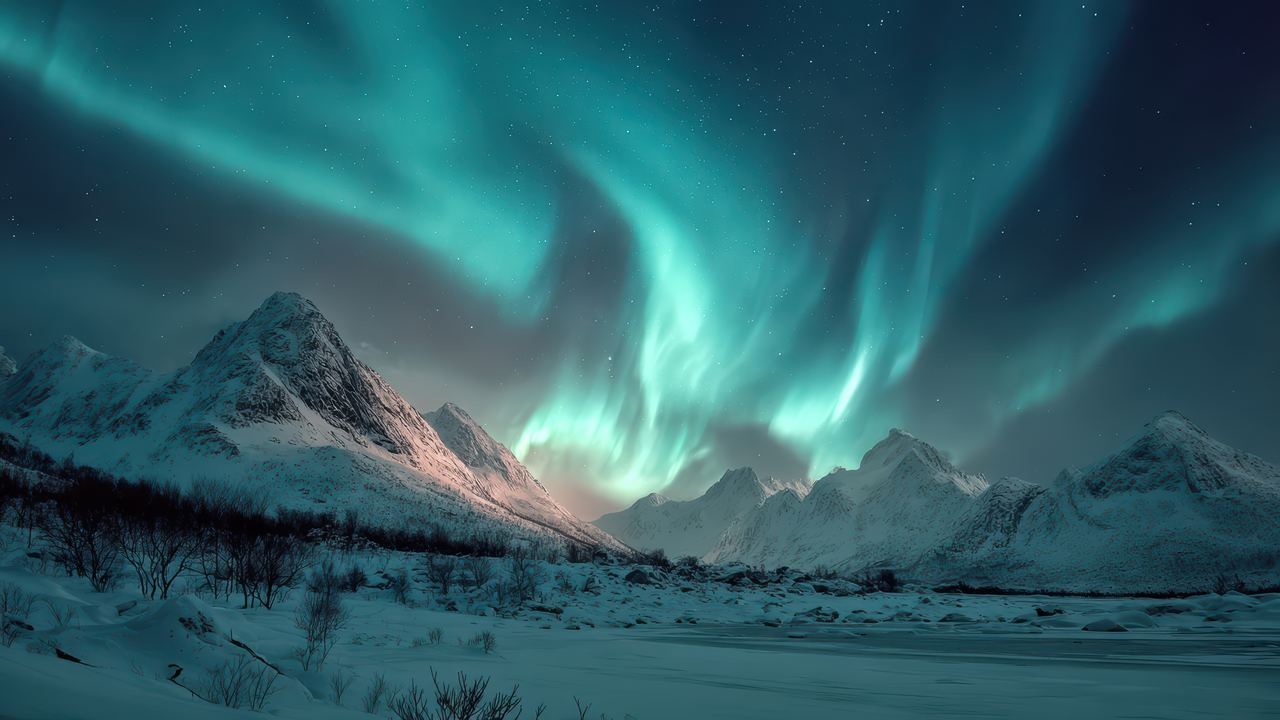
Whitehorse
4 departures from a capital of 28,000 people in a territory the size of Spain
The Yukon holds around 40,000 people in 482,000 square kilometres, an area bigger than Spain, and roughly three quarters of those people live in Whitehorse. Which means the emptiness starts at the edge of town and does not stop. Darkness is not something you drive to find here; it is the condition of the entire territory.
Whitehorse sits at 60°43′N, the lowest geographic latitude of any base in this catalogue, and around 64 degrees magnetic, which is the number that matters. That puts it comfortably under the auroral oval on an active night and near its southern edge on a quiet one: better placed than Anchorage, not in the same league as Yellowknife, 1,300 km east.
Four departures is a small market and it shapes what is on offer. There are no coaches, no price war and no refund guarantees. Two of the four are single evenings at around 113 EUR, and the other two are three-night packages, which in a place with no fallback option is the honest product: if you are coming this far, come for several nights and let the weather have its say.
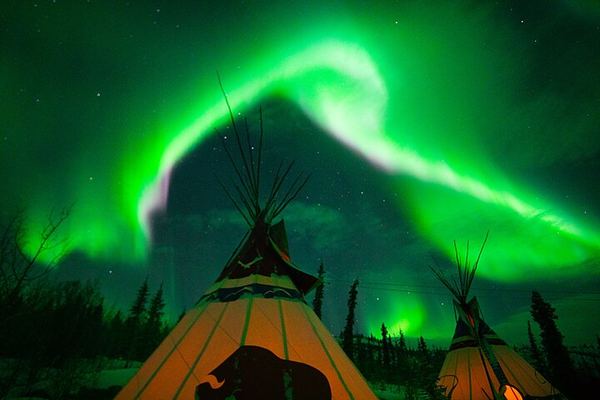
Arctic Day: Late Night Aurora Viewing Tour from Whitehorse
A purpose-built viewing site rather than a roadside pullout: the group settles in and stays while the aurora decides. The city is behind you and irrelevant.
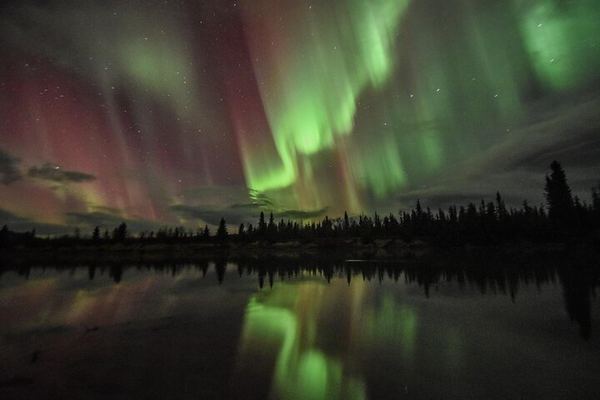
Northern Lights and Huskies at a Takhini River Dog Lodge
More than 100 dogs live on site, so come only if you like their company. Until the river freezes, its surface can hold a second aurora below the first.
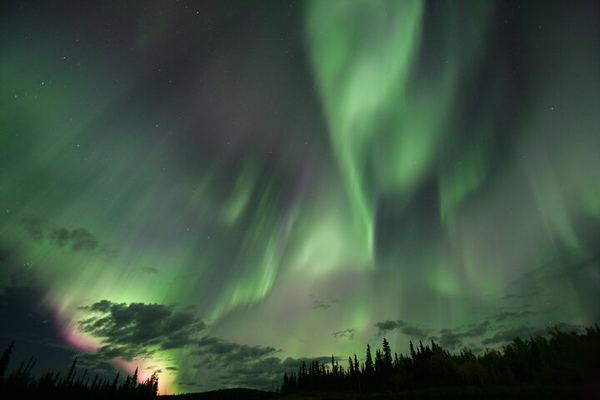
Small Group Yukon Aurora Viewing by Pickup Truck or Van, Max 10
Ten seats and no coach, so the night keeps moving until it finds clear sky. Room to stand apart from the others, and a viewing spot close to silence.
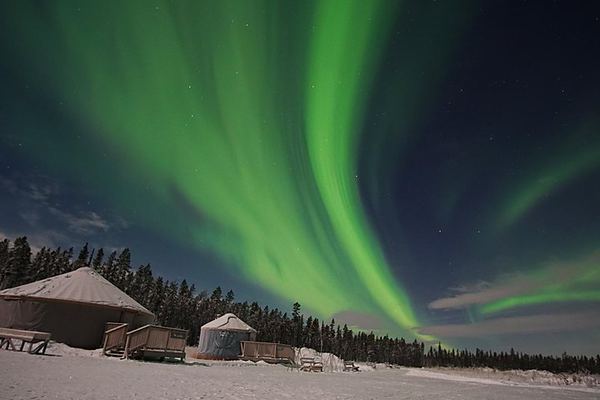
Yukon Aurora Viewing Package: 4 Days and 3 Nights at the AuroraCentre
Three consecutive evenings beside a campfire at one dark site outside Whitehorse, instead of chasing the sky. Days stay free, with a city tour included.
Ratings collected by Viator and Tripadvisor
The four departures
They divide neatly by whether you want to sit still or move, and by whether you are here for one night or three.
| Departure | Price | Reviews | What it is |
|---|---|---|---|
| Late-night viewing at a dedicated site | 113 EUR | 80 | A purpose-built viewing location well outside the city lights. Goes out late and stays put |
| Small group by pickup truck or van, max 10 | 114 EUR | 23 | Ten seats and no coach, so it can keep moving until it finds clear sky rather than committing to one spot |
| Three nights at the AuroraCentre | 626 EUR | 38 | Four days, three consecutive evenings at a viewing site just outside town. The odds improve because you get three tries |
| Northern lights at a Takhini River dog lodge | 602 EUR | 25 | More than a hundred dogs live on site. Wonderful if you like dogs, and genuinely not for anyone who does not |
The dog lodge listing is unusually direct about who it does not suit, and that honesty is worth respecting. A hundred working sled dogs is not a petting zoo: it is loud, enthusiastic and constant. If that sounds like an excellent evening, it is one of the more distinctive things in this catalogue.
When to come, and the price of being the southernmost
Two things decide how much aurora time a month contains: how often the sky is usable, and how many hours of real darkness there are to use it in. At 60°43′N Whitehorse is the southernmost base in this catalogue, and the second column is where that shows.
| Month | Usable-sky nights | Darkness per night | Moon-free nights | Expected usable dark hours |
|---|---|---|---|---|
| February | 53.4% | 4.6 h | 54% | 2.46 |
| January | 37.7% | 5.7 h | 58% | 2.15 |
| December | 33.5% | 6.2 h | 58% | 2.08 |
| October | 40.6% | 4.7 h | 45% | 1.91 |
| March | 54.2% | 3.3 h | 65% | 1.79 |
| November | 28.7% | 5.8 h | 53% | 1.66 |
| September | 57.7% | 2.8 h | 43% | 1.62 |
Whitehorse has the best September cloud figure in this entire catalogue at 57.7% and 2.8 hours of astronomical darkness to use it in, which puts September last. March, at 54.2% and 3.3 hours, is fifth. Both are the sort of numbers that would make a headline anywhere else, and both are undone by the same thing: this is the southernmost base here, and its nights are the shortest.
February is the month, on 53.4% of nights over 4.6 hours, and January and December follow. It is the same answer as Yellowknife, arrived at from a different direction: there the sky peaks in midwinter too, but with an extra hour and a half of darkness on top.
March has one thing going for it that the table does not show: 65% of its nights are free of moon interference, the highest figure of any month at any destination we measure. If your dates are fixed in March, at least you are unlikely to lose a night to the Moon as well.
One limit, stated because it argues against this ranking: it measures how much dark clear sky a month contains, not the chance the aurora does something inside it. Geomagnetic storms are close to twice as frequent around the equinoxes, favouring September and March. Doubling September would lift it to the top here, which is worth saying plainly: Whitehorse is one of the two places in this catalogue where that correction is large enough to change the ordering.
Yellowknife or Whitehorse?
If the aurora is the only reason for the trip, Yellowknife wins on the numbers and it is not close: roughly 68 degrees magnetic against 64, eleven departures against four, a median seat of 79 EUR against 113, and an extra hour and a half of darkness in the months that matter.
Whitehorse is a better place to be. It is on the Alaska Highway with mountains on every horizon, it has been listed by Guinness World Records as the city with the least air pollution in the world, and it is the natural base for a wider Yukon trip rather than a single-purpose aurora visit. It also has Takhini Hot Springs up the road, where an annual international hair-freezing competition is held in temperatures cold enough to set wet hair solid in minutes.
The practical answer: come to Whitehorse if you want the Yukon, and treat three nights of aurora in February as part of it. Come to Yellowknife if you want the aurora and will accept whatever town it comes attached to.
A city built by a rush, a railway and a road
Whitehorse takes its name from rapids on the Yukon River that were said to look like the manes of white horses, and which disappeared under a dam in 1958. The town grew because those rapids were the point where boats stopped: everything and everyone heading to the Klondike goldfields in 1898 had to be portaged around them.
The railway from Skagway arrived in 1900 and made the portage permanent. In 1942 the Alaska Highway was pushed through in eight months, 2,700 kilometres of it, and Whitehorse acquired a road to the outside world. In 1953 it took the territorial capital from Dawson City.
One more thread connects this town to another page in this catalogue. The Yukon Quest, a thousand-mile sled dog race, has run between Whitehorse and Fairbanks since 1984, over harder country and with less support than the Iditarod. The dog lodge on this page is part of that world rather than adjacent to it.
Whitehorse against the other North American bases
| Month | 1 | 2 | 3 | 4 | 5 | 6 | 7 | 8 | 9 | 10 | 11 | 12 |
|---|---|---|---|---|---|---|---|---|---|---|---|---|
| WhitehorseFebruary on 53.4% over 4.6 hours. September has the best cloud figure in the whole catalogue at 57.7% and only 2.8 hours of darkness, which puts it last. March has the highest moon-free share anywhere, 65%. | 1 | 2 | 3 | 4 | 5 | 6 | 7 | 8 | 9 | 10 | 11 | 12 |
| YellowknifeThe same month, with an extra hour and a half of darkness on top. Eleven departures against four, and a median seat of 79 EUR against 113. | 1 | 2 | 3 | 4 | 5 | 6 | 7 | 8 | 9 | 10 | 11 | 12 |
Cloud: ERA5 via Open-Meteo, 11 seasons. Darkness and moon: ephemerides. Ranking by cloud multiplied by darkness; method in the site's data notes.
Before you book from Whitehorse
When should I come?
February, then January. February pairs 53.4% of nights with 4.6 hours of darkness, the best combination the Yukon offers. September has the single best cloud figure in this entire catalogue at 57.7% and comes last, because there are only 2.8 hours of real darkness in a Whitehorse September night.
Is four departures enough?
Only if you take a package. Two of the four are three consecutive evenings for a reason: with a market this small there is nothing to switch to if a weather system parks over the valley. If you are here for one night, book the small-group van, which can at least move.
How does it compare with Yellowknife?
Worse for the aurora, better as a place. Yellowknife is roughly four degrees higher magnetically, has eleven departures, starts at 57 EUR and gives you an extra hour and a half of darkness in the good months. Whitehorse has mountains, the Alaska Highway, hot springs and a territory worth travelling in.
Do I need a car?
Not for the tours, which include pickup. A car is useful for the Yukon around Whitehorse, which is the actual reason most people base here, and for reaching Takhini Hot Springs on your own schedule.
Is the dog lodge suitable if I am unsure about dogs?
No, and the operator says so plainly, which is rare enough to be worth trusting. More than a hundred sled dogs live on site and you will be among them for the evening.
Data verified on. Cloud: ERA5 via Open-Meteo, 11 seasons. Darkness and moon: ephemerides. Prices and review counts read off the 4 departures on 10 August 2026.