
Canada
15 departures from a country that keeps the magnetic pole, and sells the cheapest aurora nights in this catalogue
Canada's advantage in this business is not geography, it is magnetism, and it produces a result that looks wrong on a map. Yellowknife sits seven degrees of latitude south of Tromsø and gets more overhead aurora. Whitehorse sits nine degrees south of Alta and holds its own. The reason is that the auroral oval is a ring around the geomagnetic pole, the pole of the Earth's dipole field, which lies off northwest Greenland rather than at the top of the globe, and everything in the Canadian north is pulled closer to it than its latitude suggests.
Measured that way, Yellowknife comes out at roughly 68 degrees magnetic, the highest of any base in this catalogue. It is also 1,000 kilometres from the nearest ocean, which keeps the air dry and the skies clear. That combination is why a town of 20,000 people on the shore of a lake in the middle of Canada is one of the two or three most reliable places on earth to see the northern lights.
The commercial consequence is unusual. Where Finnish operators compete by offering your money back and Alaskan operators compete by building heated rooms, Canadian operators compete on price, because when the sky delivers most nights there is no need to insure against it. Fifty-seven euros buys a guided night in Yellowknife with no stated time limit. Nothing else in this catalogue comes close.
Choose a destination in Canada
Northern Lights Experiences in Canada
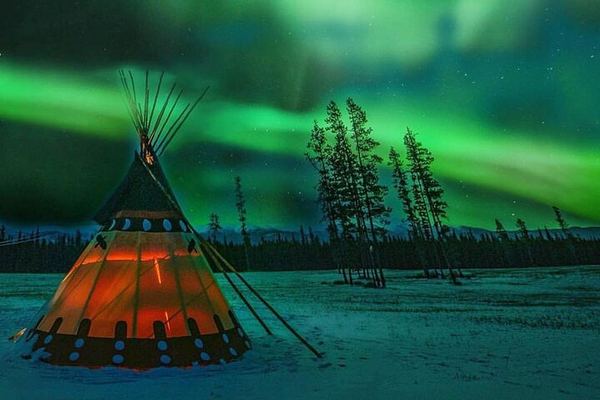
4-Day Yellowknife Aurora Tour with 3 Hotel Nights and Mandarin or English Guide
Three evening aurora sessions from about 10 pm, three hotel nights, 24-hour airport transfers and a city tour. Mandarin or English guiding; meals not included.
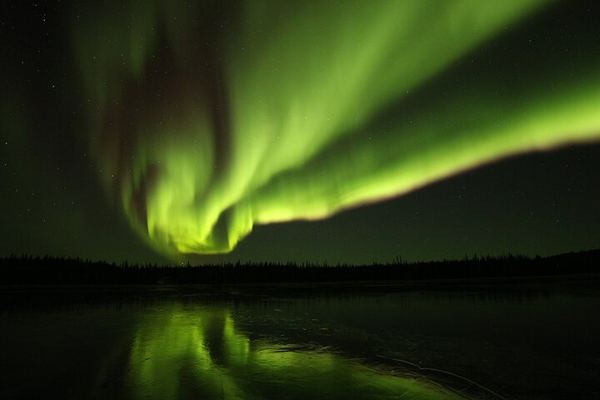
Aboriginal Owned Aurora Hunting Tours from Yellowknife
A wholly Aboriginal owned company whose guides grew up here and hunt the aurora for a living. Free photographs, tripods lent, hot chocolate and maple cookies.
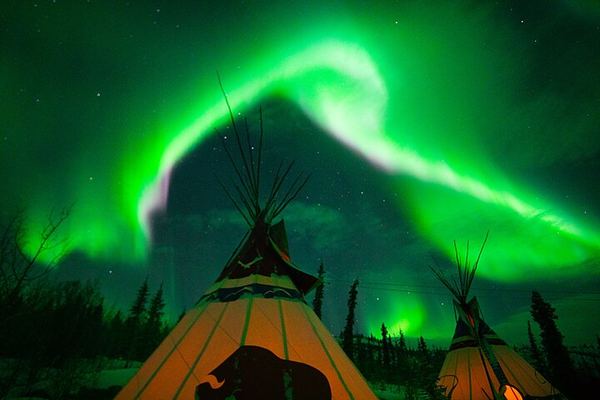
Arctic Day: Late Night Aurora Viewing Tour from Whitehorse
A purpose-built viewing site rather than a roadside pullout: the group settles in and stays while the aurora decides. The city is behind you and irrelevant.
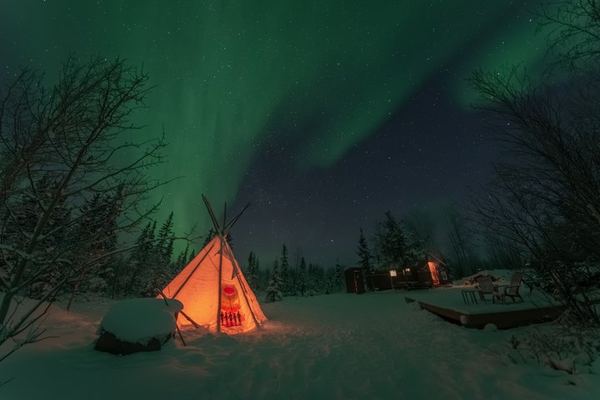
Intimate Aurora Cabin Night with Bannock and Fish Chowder
A small warm cabin, hot bannock and local fish chowder at midnight, and northern clothing to pose in. Five guests minimum, or book the whole cabin outright.
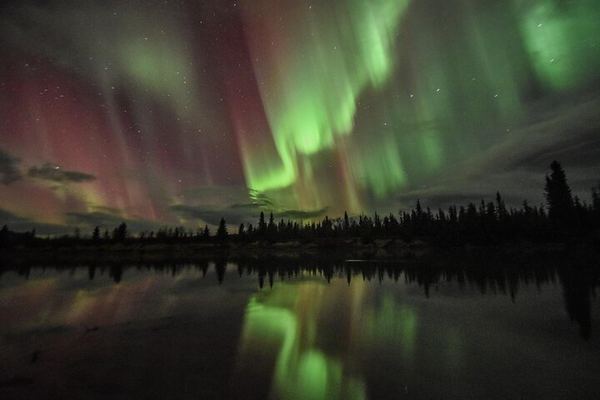
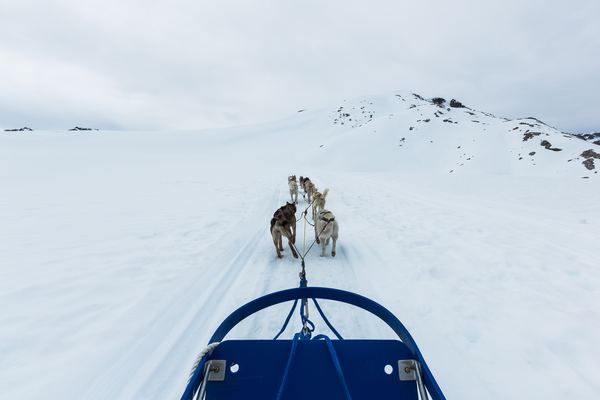
Northern Lights and Huskies at a Takhini River Dog Lodge
More than 100 dogs live on site, so come only if you like their company. Until the river freezes, its surface can hold a second aurora below the first.
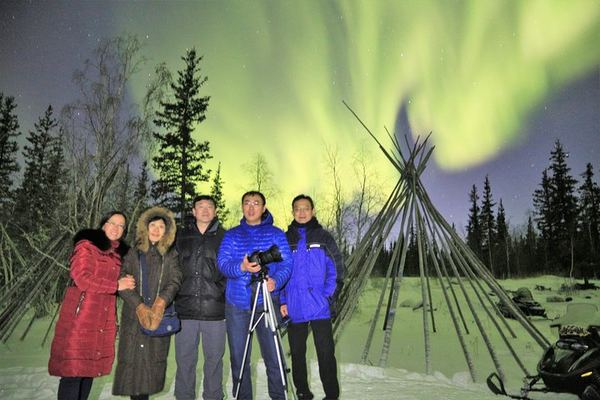
Northern Lights Bus Tour on the Ingraham Trail from Yellowknife
The trail runs past a chain of lakes, and stopping at several means the same aurora over three sets of water and rock. Free photographs and pickup included.
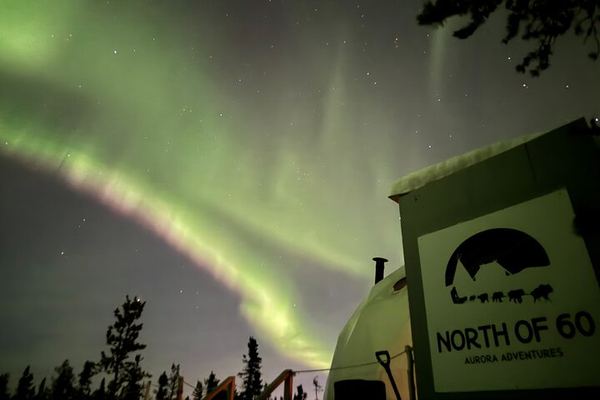
Skydome Aurora Viewing near Yellowknife with Hotel Pickup
Three heated domes a short drive from town, one large and two mini, with guests free to move between them and the outdoor space all night. No car needed.
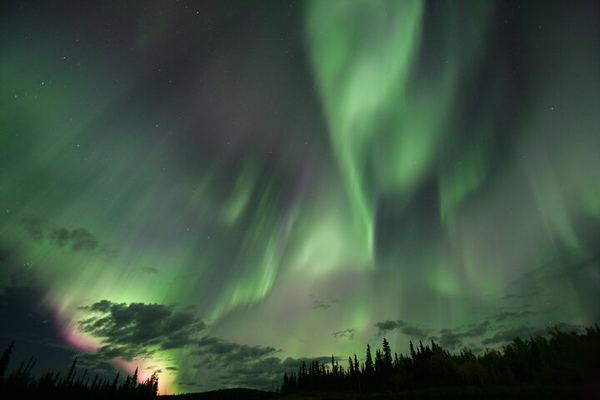
Small Group Yukon Aurora Viewing by Pickup Truck or Van, Max 10
Ten seats and no coach, so the night keeps moving until it finds clear sky. Room to stand apart from the others, and a viewing spot close to silence.
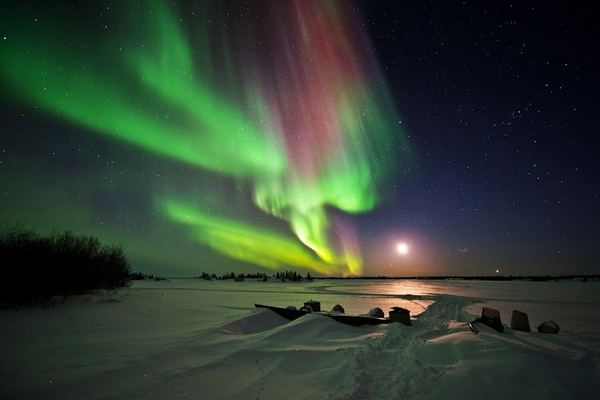
Yellowknife Aurora by Bus: Lake Hopping with Hotel Pickup
In autumn the lakes mirror the sky; once the ice locks, the bus parks out in the middle of one. Four guests minimum, or you are moved to another tour.
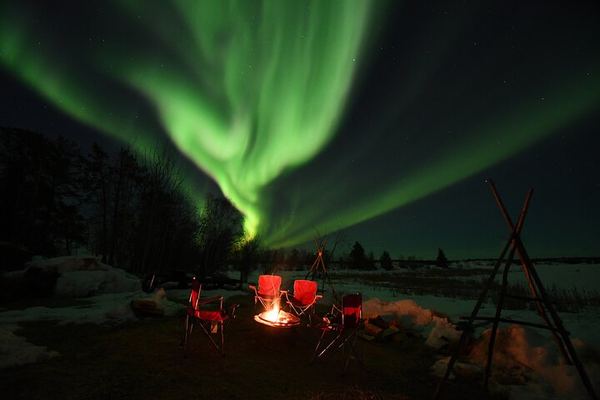
Yellowknife Aurora Camp with Heated Site and Free Photography
A warm campsite with a clean washroom kept for the group and drinking water on site. If cloud settles over the camp, the night turns into a hunt instead.
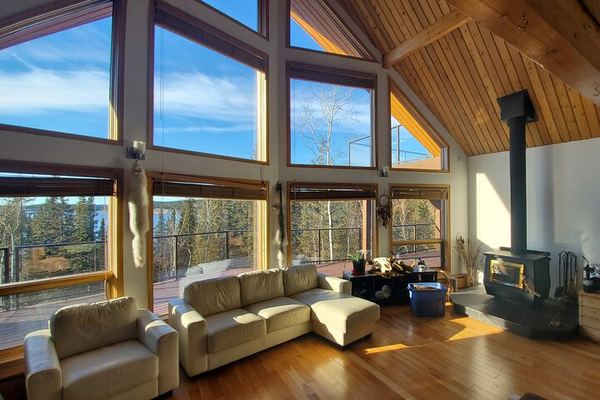
Yellowknife Aurora Chasing and Lodge Night at Madeline Lake
Clear and cold means the warm lodge, with furs, games and indoor washrooms; roaming cloud tips it towards driving. Original digital photos for everyone.
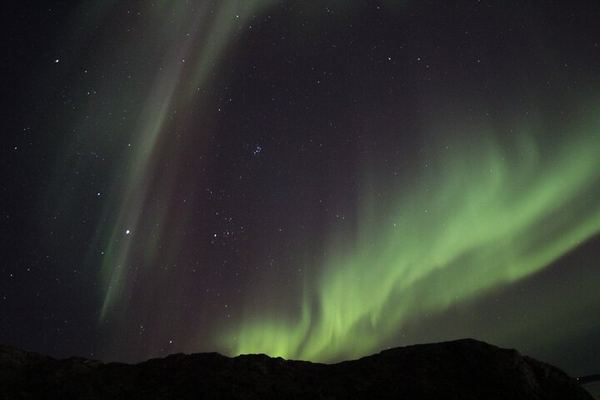
Yellowknife Aurora Hunting by Bus with Wilderness First Aid Guides
Every guide is trained in wilderness first aid, the line worth reading twice for a tour that parks in territorial parks in midwinter. Small groups.
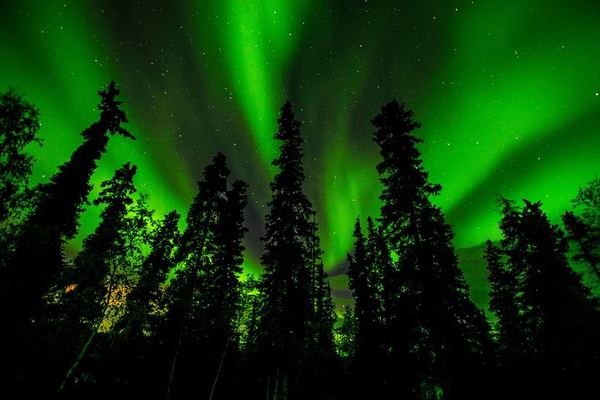
Yellowknife Aurora Tour with No Time Limit and Unlimited Photos
A fixed end time is exactly what makes people miss the good hour, so this one stays out while the sky is worth watching. Unlimited professional photos.
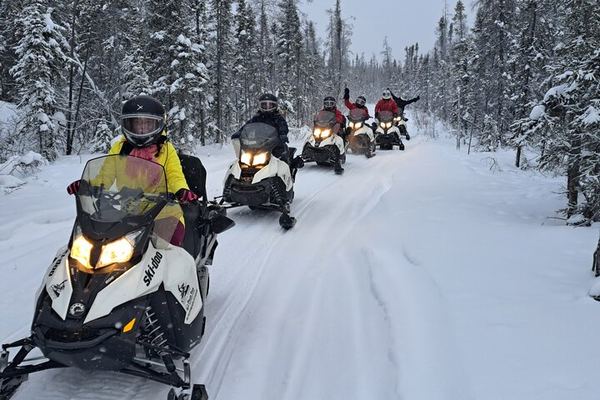
Yellowknife Winter Package: 5 Days, 4 Nights of Aurora and Day Trips
A daytime activity on each of four days and an aurora schedule that bends to the sky. Book 45 days ahead and the parka, snow pants and boots come free.
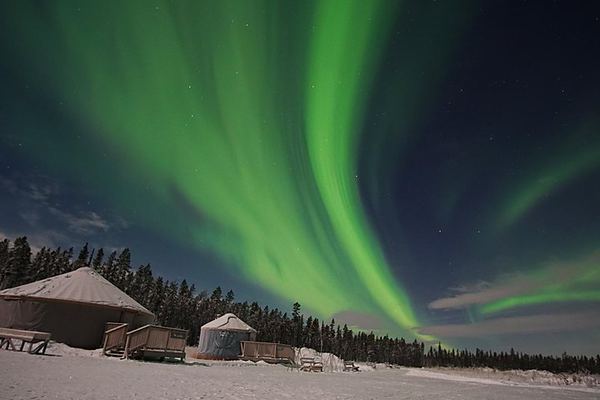
Yukon Aurora Viewing Package: 4 Days and 3 Nights at the AuroraCentre
Three consecutive evenings beside a campfire at one dark site outside Whitehorse, instead of chasing the sky. Days stay free, with a city tour included.
Ratings collected by Viator and Tripadvisor
Two poles, and only one of them decides anything
The confusion is worth clearing up because it changes how you read every aurora forecast. There are two northern magnetic poles and they are in different places.
The magnetic dip pole is the point where a compass needle stands vertically. James Clark Ross located it in June 1831 on the Boothia Peninsula in what is now Nunavut, planted a flag, and made it a Canadian possession by accident. It has not stayed put: over the last century it has drifted north and then east, accelerating to something like 50 kilometres a year, and it is now well out across the Arctic Ocean heading for Siberia.
The geomagnetic pole is different. It is the pole of the simplified dipole that best describes the Earth's field as a whole, it lies off northwest Greenland, and it moves far more slowly. That is the one the auroral oval is centred on, and it is why the Canadian north remains the best-placed inhabited region on the planet for this even as the dip pole wanders off.
| Base | Geographic | Magnetic, approx. | Usable sky, season | Best month | Departures | Median seat |
|---|---|---|---|---|---|---|
| Yellowknife | 62°27′N | 68°N | 47.8% | February | 11 | 79 EUR |
| Whitehorse | 60°43′N | 64°N | 43.7% | February | 4 | — (sample too small) |
Compare those magnetic figures with the European ones and the picture reverses. Tromsø at 69°39′N geographic comes out around 67 magnetic; Rovaniemi at 66°33′N comes out around 64. A Canadian town that looks southerly on a map is sitting further inside the ring than either, and the sky agrees: 47.8% of usable nights against Tromsø's 25.4%.
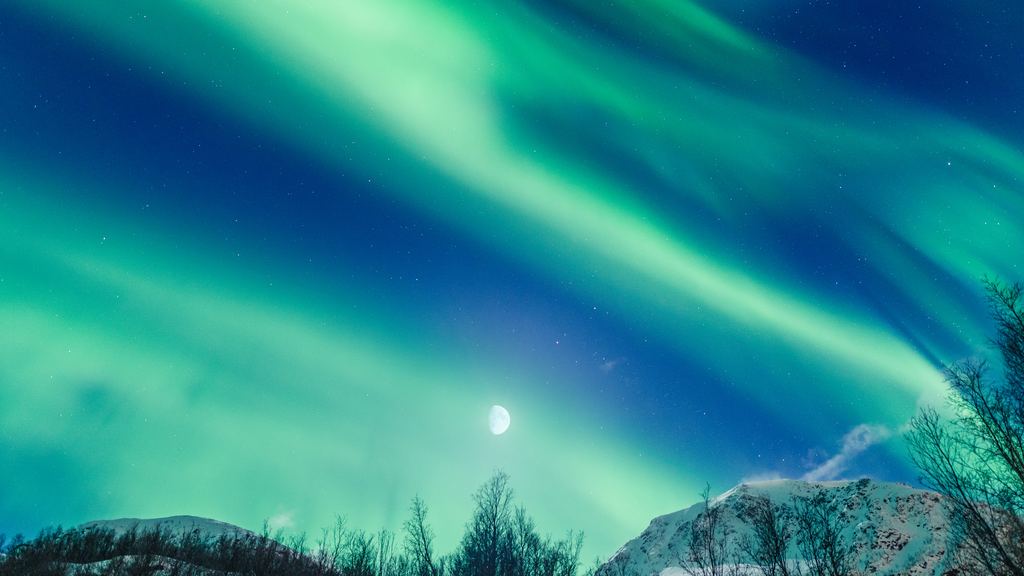
February, and the month that looks best on paper
Two things decide how much aurora time a month contains: how often the sky is usable, and how many hours of real darkness there are to use it in. Multiplied together, both Canadian bases give the same answer, and it is not the one the cloud column alone suggests.
| Month | Yellowknife | Whitehorse |
|---|---|---|
| September | 2.23 | 1.62 |
| October | 2.17 | 1.91 |
| November | 2.14 | 1.66 |
| December | 3.16 | 2.08 |
| January | 3.51 | 2.15 |
| February | 3.67 | 2.46 |
| March | 2.03 | 1.79 |
February is the month at both, and it is decisive. Yellowknife's 3.67 expected usable dark hours is the second-highest figure of any month at any of the fourteen destinations we measure, behind only January in Fairbanks.
The instructive row is March. Yellowknife's March cloud figure of 61.6% is the highest in this entire catalogue, and Whitehorse's September figure of 57.7% is the second. Both come near the bottom of their own columns, because the nights at these latitudes are already shortening fast by March and have not properly arrived by September. A number that would headline any other site turns out to describe a month you should not pick.
That gap between the impressive figure and the useful one is the reason we publish both columns rather than one.
One limit, stated because it argues against this ranking: it measures how much dark clear sky a month contains, not the chance the aurora does something inside it. Geomagnetic storms are close to twice as frequent around the equinoxes, an effect described by Russell and McPherron in 1973, which favours September and March. At Whitehorse that correction is large enough to lift September to the top; at Yellowknife it narrows the gap without closing it. February survives either way.
The moon, which nobody mentions
Every operator will tell you to check the cloud and the Kp index. Almost none will tell you to check the lunar calendar, and it is the one variable in this entire business that can be predicted with certainty months in advance.
A full moon in a clear winter sky throws a great deal of light. It will not hide a strong display, but a faint arc, which is what most nights offer for the first hour or two, can be washed out entirely. If you are choosing dates and have any freedom at all, aim for the week either side of a new moon. Whitehorse in March has the highest moon-free share of any month at any destination we measure, 65%, which is the one thing that month has going for it.
The counter-argument is real. Moonlight lights the landscape, and a photograph of an aurora over a moonlit frozen lake is often better than the same aurora over a black void. Photographers frequently prefer a quarter moon for exactly that reason. So: new moon if you want to see the most, quarter moon if you want the best picture, full moon only if the dates are fixed.
Water, ice and the two Canadian seasons
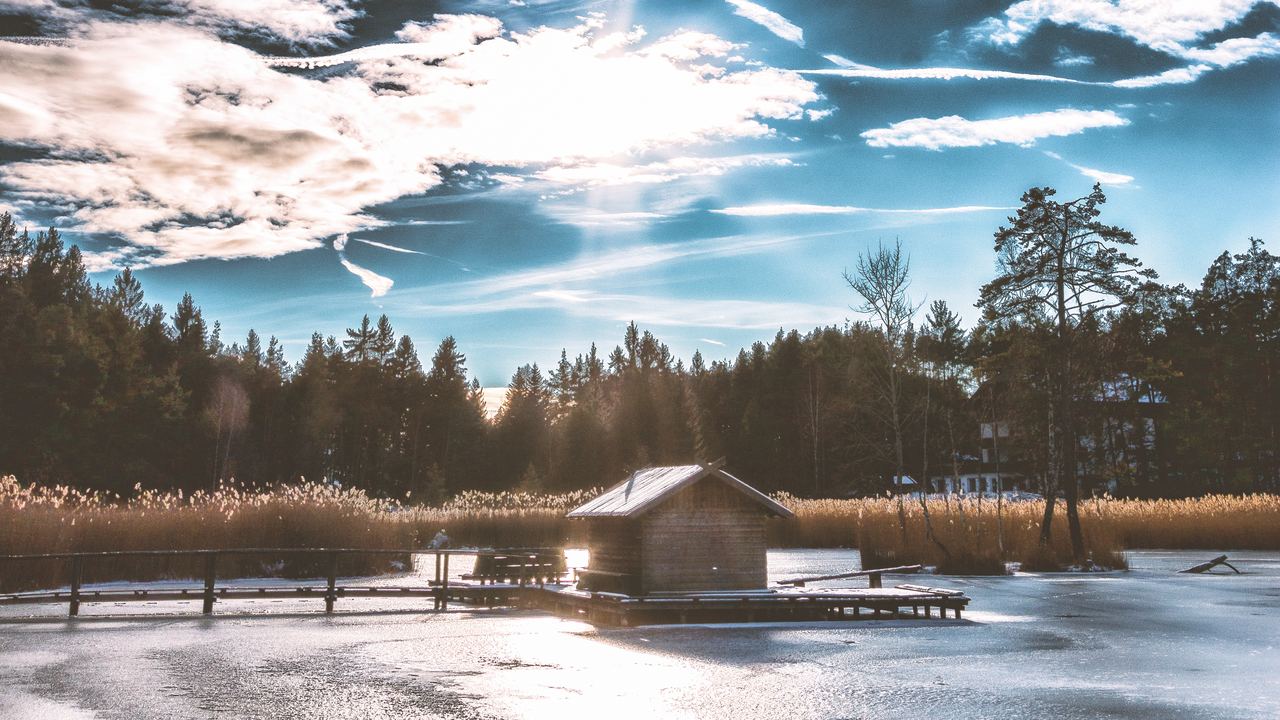
Yellowknife's country is more water than land, and that splits its season in two. In autumn the lakes are open and still, and a mirror surface doubles whatever the sky is doing; those reflections are the images that made this town's reputation. From November the ice takes over, and by midwinter it carries vehicles, at which point the buses drive out into the middle of a lake for a horizon that is unbroken in every direction.
The same ice supports a winter road running hundreds of kilometres north to the diamond mines, built fresh each year and gone by spring. It is a reminder of what kind of country this is: a place where the infrastructure itself is seasonal, and where the darkness you need for an aurora is not something you drive to but the default state of everything outside town.
When to come
The Canadian season, on our numbers
| Month | 1 | 2 | 3 | 4 | 5 | 6 | 7 | 8 | 9 | 10 | 11 | 12 |
|---|---|---|---|---|---|---|---|---|---|---|---|---|
| YellowknifeFebruary at 3.67 expected usable dark hours is the second-best month anywhere in this catalogue. March has the highest cloud figure we measure, 61.6%, and only 3.3 hours of darkness to use it in. | 1 | 2 | 3 | 4 | 5 | 6 | 7 | 8 | 9 | 10 | 11 | 12 |
| WhitehorseThe same month, with shorter nights throughout: this is the southernmost base here. September has the second-highest cloud figure in the catalogue at 57.7% and comes last. | 1 | 2 | 3 | 4 | 5 | 6 | 7 | 8 | 9 | 10 | 11 | 12 |
Cloud: ERA5 via Open-Meteo, 11 seasons. Darkness and moon: ephemerides. Ranking by cloud multiplied by darkness; method in the site's data notes.
Four dates in the magnetic north
The origins
June 1831
Ross finds the magnetic pole
James Clark Ross reaches the point on the Boothia Peninsula where a compass needle stands vertical, and claims it. The dip pole has since drifted across the Arctic Ocean toward Siberia at some 50 km a year; the geomagnetic pole that governs the aurora has stayed on the Canadian side.
September 1859
The Carrington Event
The largest geomagnetic storm on record puts aurora over the Caribbean and Hawaii and sets telegraph systems failing worldwide. It remains the benchmark for what the sun is capable of.
The growth
1967
Yellowknife becomes a capital
The Northwest Territories move their seat of government to a gold town on Great Slave Lake, bringing the roads, the airport and eventually the eleven aurora operators that work out of it.
Today
October 2024
Solar maximum declared
NOAA and NASA confirm Solar Cycle 25 has peaked. Activity stays elevated for a year or two on either side, which is the window the current seasons fall inside.
Planning a Canada aurora trip
When should I come?
February, at either base, and it is the clearest recommendation on this site after January in Fairbanks. Yellowknife in February gives 61.1% of nights with a usable sky and six hours of darkness. Do not be drawn by March's 61.6% cloud figure, the highest in this catalogue: there are only 3.3 hours of dark in a Yellowknife March night.
Yellowknife or Whitehorse?
Yellowknife if the aurora is the trip: four degrees higher magnetically, eleven departures against four, a median seat of 79 EUR, and an extra hour and a half of darkness in the good months. Whitehorse if you want the Yukon, with mountains, hot springs and the Alaska Highway.
Is Canada really better than Norway or Finland?
For the sky above Yellowknife, yes, and by a clear margin once you measure magnetically rather than geographically. What Canada lacks is the density and variety of the European markets: fifteen departures across two towns against Finland's ninety-two.
Why are the tours so cheap?
Because they work. A high strike rate means operators do not need refund guarantees to sell a seat, so the competition goes into price instead. It is the same market logic that produced Finland's money-back promises, running in the opposite direction.
Should I check the moon?
Yes, and hardly anyone tells you to. A full moon can wash out a faint arc completely, and unlike the cloud it is knowable months ahead. Aim for the week either side of a new moon if you want to see the most; a quarter moon if you want the landscape lit for photographs.
Data verified on. Cloud: ERA5 via Open-Meteo, 11 seasons. Darkness and moon: ephemerides. Prices and counts read from the 15 Canadian departures on 10 August 2026.