
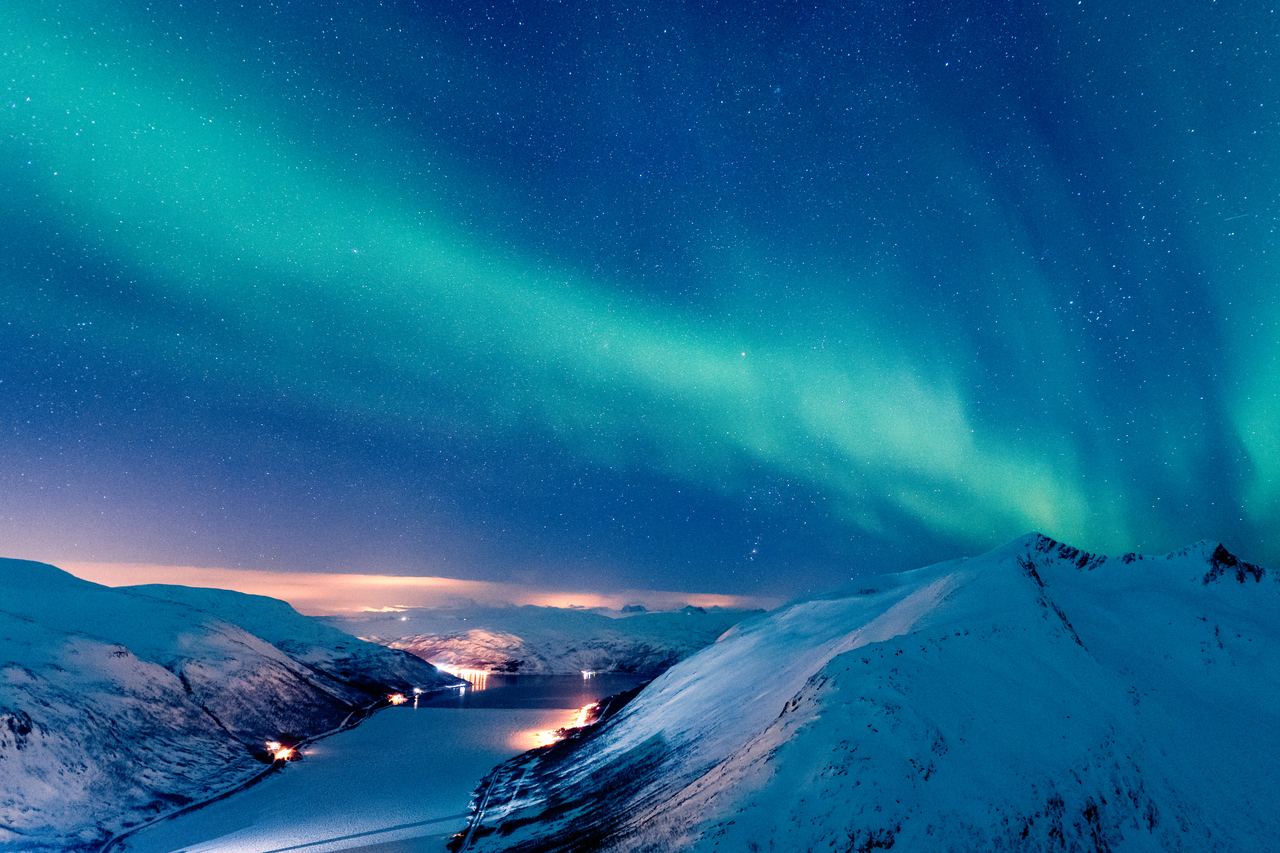
Yellowknife
The highest magnetic latitude in this catalogue, the highest single month in it, and the cheapest nights anywhere
There are two ways to measure how far north you are and only one matters to the aurora. Geographic latitude is measured from the equator; magnetic latitude is measured from the geomagnetic pole, which lies off northwest Greenland rather than at the top of the globe. The auroral oval is a ring around that.
Yellowknife is the clearest illustration anywhere of what the difference does. On a map it looks unpromising: 62°27′N, seven degrees south of Tromsø, on the shore of a lake in the middle of the Canadian mainland. Measured magnetically it comes out at roughly 68 degrees, higher than Tromsø, higher than Abisko, higher than anywhere else in this catalogue.
The sky agrees. Eleven seasons of reanalysis give Yellowknife a usable sky on 47.8% of season nights, second only to Fairbanks, and its March figure of 61.6% is the highest single month we measure anywhere. February is 61.1% and September 55.7%. This is continental air a thousand kilometres from any ocean, and it behaves accordingly.
Which produces the commercial result that makes this town unusual. Where Finnish operators compete by offering your money back and Alaskan operators compete by building heated rooms, Canadian operators compete on price, because when the sky delivers half the nights there is no need to insure against it. Fifty-seven euros buys a guided night here with no stated time limit. Nothing else in this catalogue comes close.
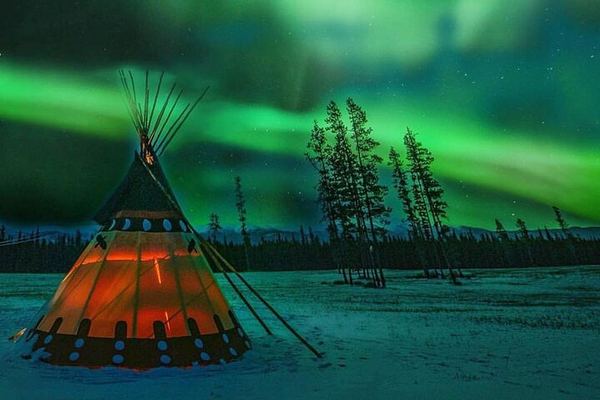
4-Day Yellowknife Aurora Tour with 3 Hotel Nights and Mandarin or English Guide
Three evening aurora sessions from about 10 pm, three hotel nights, 24-hour airport transfers and a city tour. Mandarin or English guiding; meals not included.
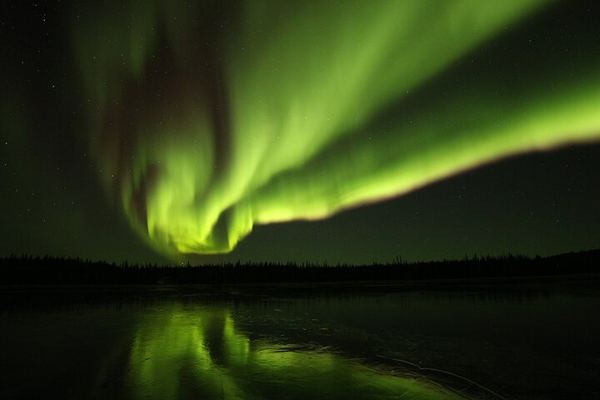
Aboriginal Owned Aurora Hunting Tours from Yellowknife
A wholly Aboriginal owned company whose guides grew up here and hunt the aurora for a living. Free photographs, tripods lent, hot chocolate and maple cookies.
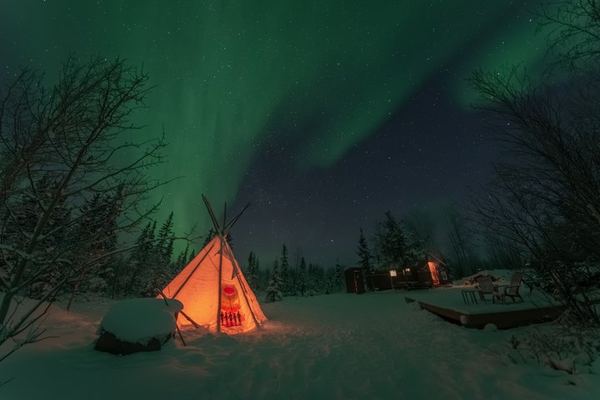
Intimate Aurora Cabin Night with Bannock and Fish Chowder
A small warm cabin, hot bannock and local fish chowder at midnight, and northern clothing to pose in. Five guests minimum, or book the whole cabin outright.
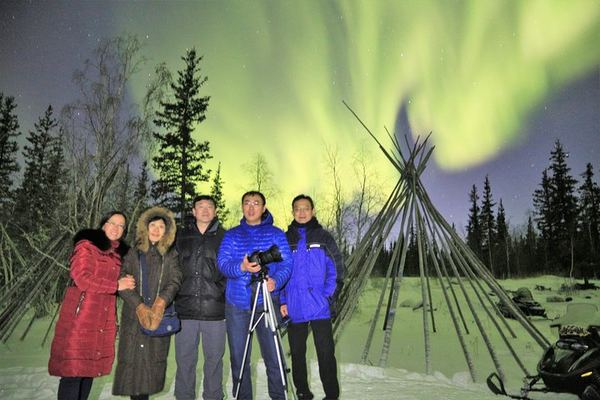
Northern Lights Bus Tour on the Ingraham Trail from Yellowknife
The trail runs past a chain of lakes, and stopping at several means the same aurora over three sets of water and rock. Free photographs and pickup included.
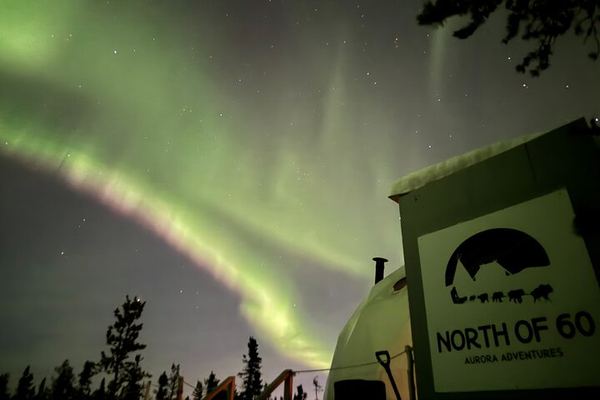
Skydome Aurora Viewing near Yellowknife with Hotel Pickup
Three heated domes a short drive from town, one large and two mini, with guests free to move between them and the outdoor space all night. No car needed.
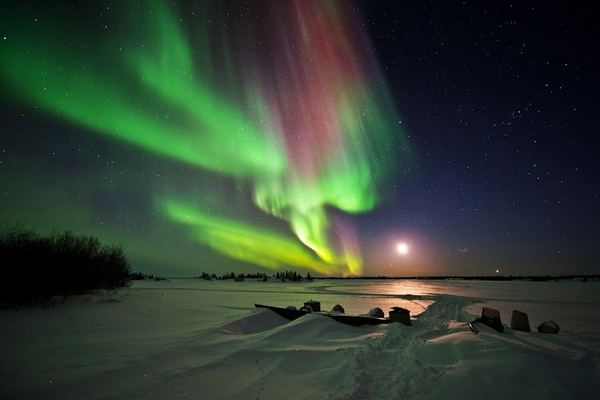
Yellowknife Aurora by Bus: Lake Hopping with Hotel Pickup
In autumn the lakes mirror the sky; once the ice locks, the bus parks out in the middle of one. Four guests minimum, or you are moved to another tour.
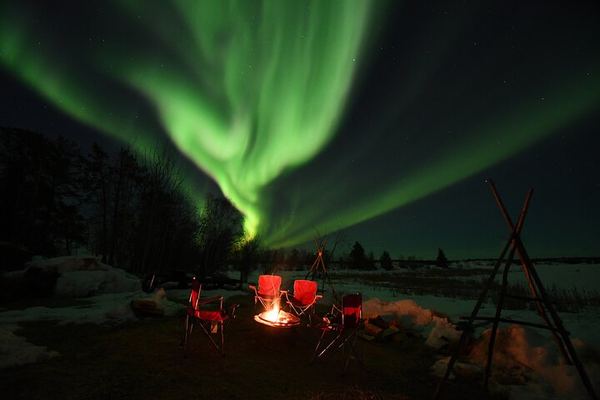
Yellowknife Aurora Camp with Heated Site and Free Photography
A warm campsite with a clean washroom kept for the group and drinking water on site. If cloud settles over the camp, the night turns into a hunt instead.
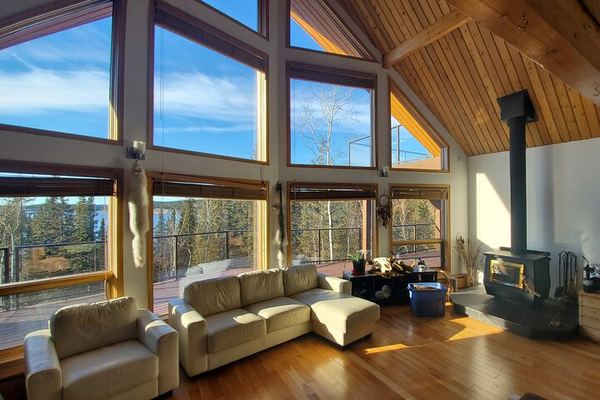
Yellowknife Aurora Chasing and Lodge Night at Madeline Lake
Clear and cold means the warm lodge, with furs, games and indoor washrooms; roaming cloud tips it towards driving. Original digital photos for everyone.
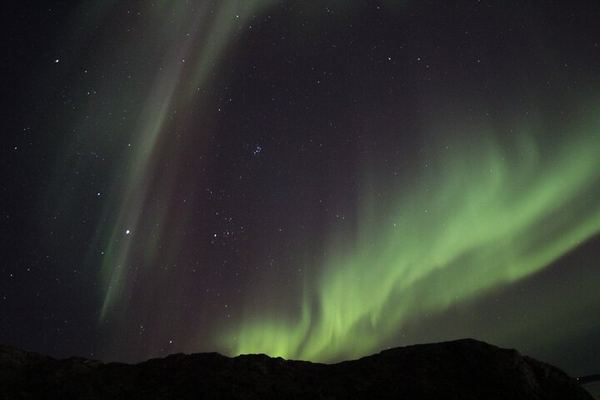
Yellowknife Aurora Hunting by Bus with Wilderness First Aid Guides
Every guide is trained in wilderness first aid, the line worth reading twice for a tour that parks in territorial parks in midwinter. Small groups.
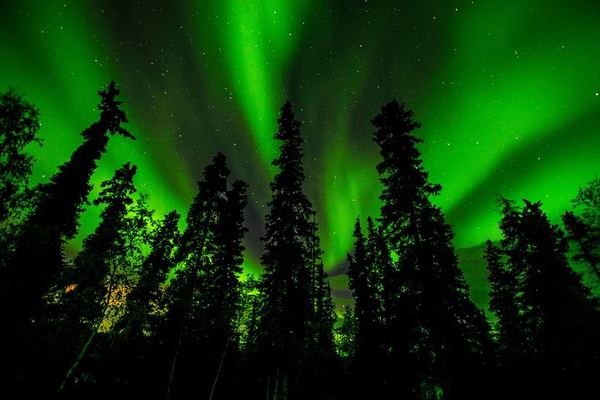
Yellowknife Aurora Tour with No Time Limit and Unlimited Photos
A fixed end time is exactly what makes people miss the good hour, so this one stays out while the sky is worth watching. Unlimited professional photos.
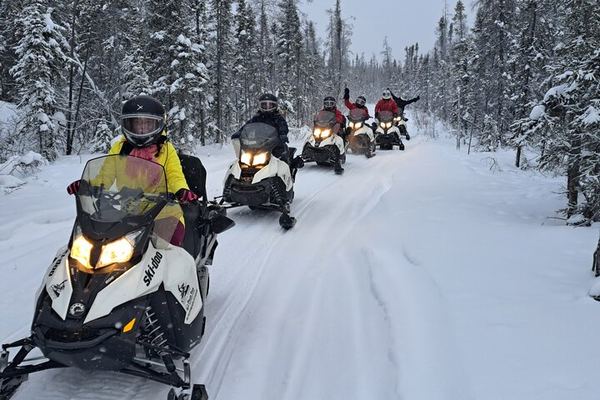
Yellowknife Winter Package: 5 Days, 4 Nights of Aurora and Day Trips
A daytime activity on each of four days and an aurora schedule that bends to the sky. Book 45 days ahead and the parka, snow pants and boots come free.
Ratings collected by Viator and Tripadvisor
The numbers, month by month
| Month | Usable-sky nights | Darkness per night | Moon-free nights | Expected usable dark hours |
|---|---|---|---|---|
| February | 61.1% | 6.0 h | 57% | 3.67 |
| January | 49.4% | 7.1 h | 55% | 3.51 |
| December | 41.0% | 7.7 h | 55% | 3.16 |
| September | 55.7% | 4.0 h | 50% | 2.23 |
| October | 36.1% | 6.0 h | 48% | 2.17 |
| November | 29.7% | 7.2 h | 53% | 2.14 |
| March | 61.6% | 3.3 h | 61% | 2.03 |
February is the month, and it is not close. 61.1% of nights with a usable sky and six full hours of astronomical darkness produce 3.67 expected usable dark hours, the second-highest figure of any month at any of the fourteen destinations we measure, behind only January in Fairbanks.
March is the row that catches people out. It has the highest cloud figure in this entire catalogue at 61.6%, and 3.3 hours of darkness, the lowest March figure of any destination we measure. Multiplied, it comes last of the seven. It is a marvellous month to be in Yellowknife and it is not the month with the most aurora time in it, and no site anywhere makes that distinction.
November is the hole, at 29.7%, the only month here that would look ordinary in Europe. And September, unusually, is not last: at 4.0 hours of darkness it has more than any September in this catalogue, which lifts it to fourth.
One limit on that ranking, stated because it argues against it. It measures how much dark clear sky a month contains, not the chance the aurora does something inside it. Geomagnetic storms are close to twice as frequent around the equinoxes, an effect described by Russell and McPherron in 1973, which favours September and March. Doubling September would put it near the top; March would move up but not past February. If you want one month, February; if you want the strongest cloud record and can accept short nights, March.
The eleven departures
Nine of the eleven are single nights and eight of those cost under 91 EUR. The median seat is 79 EUR, less than half of anywhere else in this catalogue. This is a mature, competitive market that has settled on a low price rather than on guarantees, which is the opposite of what happened in Finland and, given the table above, the rational response.
| Format | How many | Price band | What you are buying |
|---|---|---|---|
| Bus along the Ingraham Trail | 3 | 62–88 EUR | A road east past a chain of lakes, stopping at several rather than committing to one |
| Heated camp, dome or lodge | 4 | 79–91 EUR | Somewhere warm to wait: three heated domes, a lodge at Madeline Lake, a serviced camp, a cabin with bannock and fish chowder |
| Small-group van | 2 | 57–114 EUR | Mobility, and the cheapest night in the catalogue. One states no time limit; one is Aboriginal-owned |
| Multi-night package | 2 | 628–813 EUR | Four or five nights with daytime activities and accommodation, with the aurora half kept flexible |
Two deserve singling out. The Aboriginal-owned operation is run by people who grew up here, in a town that sits in the traditional territory of the Yellowknives Dene First Nation, and carries 389 reviews at 4.8. And one van tour publishes no time limit whatsoever, which given that displays here regularly start after midnight is worth more than any comfort feature.

Lakes, and why the season has two halves
Yellowknife sits on Great Slave Lake, the deepest lake in North America at over 600 metres, and the country east of town along the Ingraham Trail is more water than land. That geography splits the season into two quite different products.
In autumn the lakes are open. A still surface doubles whatever the sky is doing, and September's 55.7% cloud figure makes those reflection photographs a realistic plan rather than a lucky one, even if the short nights hold the month back overall. From roughly November the ice takes hold, and by midwinter it is thick enough to drive on: the buses stop parking on the shore and start parking out in the middle of a lake, which gives you an unobstructed horizon in every direction at once. February, at 61.1% over six hours of dark, is when that is most likely to pay off.
A gold town that became a diamond town and then an aurora town
Yellowknife exists because gold was found on this shore in 1934. It became capital of the Northwest Territories in 1967, and in 1998 the first diamond mine opened 300 kilometres north, supplied each winter by an ice road across the frozen lakes that exists for only a couple of months a year.
The aurora industry came third and is now a substantial part of the town's winter. Roughly 20,000 people live here. It is worth knowing that this market has served international aurora travellers, particularly from East Asia, since the 1990s: one of the eleven departures is guided primarily in Mandarin and says so plainly, which is a courtesy the listing deserves credit for rather than a warning.
When to come
Yellowknife against the other North American bases
| Month | 1 | 2 | 3 | 4 | 5 | 6 | 7 | 8 | 9 | 10 | 11 | 12 |
|---|---|---|---|---|---|---|---|---|---|---|---|---|
| YellowknifeFebruary at 61.1% over six hours of darkness is the second-best month anywhere in this catalogue. March has the highest cloud figure we measure, 61.6%, and the least darkness to use it in, which drops it to last. | 1 | 2 | 3 | 4 | 5 | 6 | 7 | 8 | 9 | 10 | 11 | 12 |
| FairbanksJanuary at 4.01 expected usable dark hours is the best month anywhere. Flatter than Yellowknife: it never drops below 41.3% cloud. | 1 | 2 | 3 | 4 | 5 | 6 | 7 | 8 | 9 | 10 | 11 | 12 |
| WhitehorseFebruary again, on 53.4% over 4.6 hours. Shorter nights than Yellowknife at every point, being nearly two degrees further south. | 1 | 2 | 3 | 4 | 5 | 6 | 7 | 8 | 9 | 10 | 11 | 12 |
Cloud: ERA5 via Open-Meteo, 11 seasons. Darkness and moon: ephemerides. Ranking by cloud multiplied by darkness; method in the site's data notes.
Before you book from Yellowknife
When exactly should I come?
February. It gives 61.1% of nights with a usable sky and six full hours of darkness, which no other month at any destination here matches except January in Fairbanks. March is fractionally clearer at 61.6%, the highest cloud figure in this catalogue, and has only 3.3 hours of dark, which puts it last on the combined measure. Avoid November, the one weak month at 29.7%.
How can a town this far south be better placed than Tromsø?
Because the aurora does not care about the equator. The oval is a ring around the geomagnetic pole, which sits off northwest Greenland, and that puts Yellowknife at roughly 68 degrees magnetic against Tromsø's 67. The sky agrees: 47.8% of usable nights against 25.4%.
Why is it so cheap?
Eleven operators competing in a town of 20,000 with a very high strike rate. When the sky delivers half the nights, nobody needs to sell a guarantee, and the competition goes into price instead. Fifty-seven euros for a guided night with no time limit is the best value in this catalogue, and the median seat is 79 EUR.
Bus, camp or van?
Van if you want the ability to move and the lowest price. Camp or dome if the cold worries you, because a heated building is what keeps you watching past midnight. Bus if you like the idea of three different lakes in one night, which genuinely changes the photographs.
How cold does it get?
This is continental subarctic with no sea nearby to soften it: minus 30 is normal in January and colder happens. The heated camps and domes exist precisely because standing outdoors for four hours at those temperatures defeats most visitors, and giving up early is the main way people miss the display.
Data verified on. Cloud: ERA5 via Open-Meteo, 11 seasons. Darkness and moon: ephemerides. Prices and review counts read off the 11 departures on 10 August 2026.