
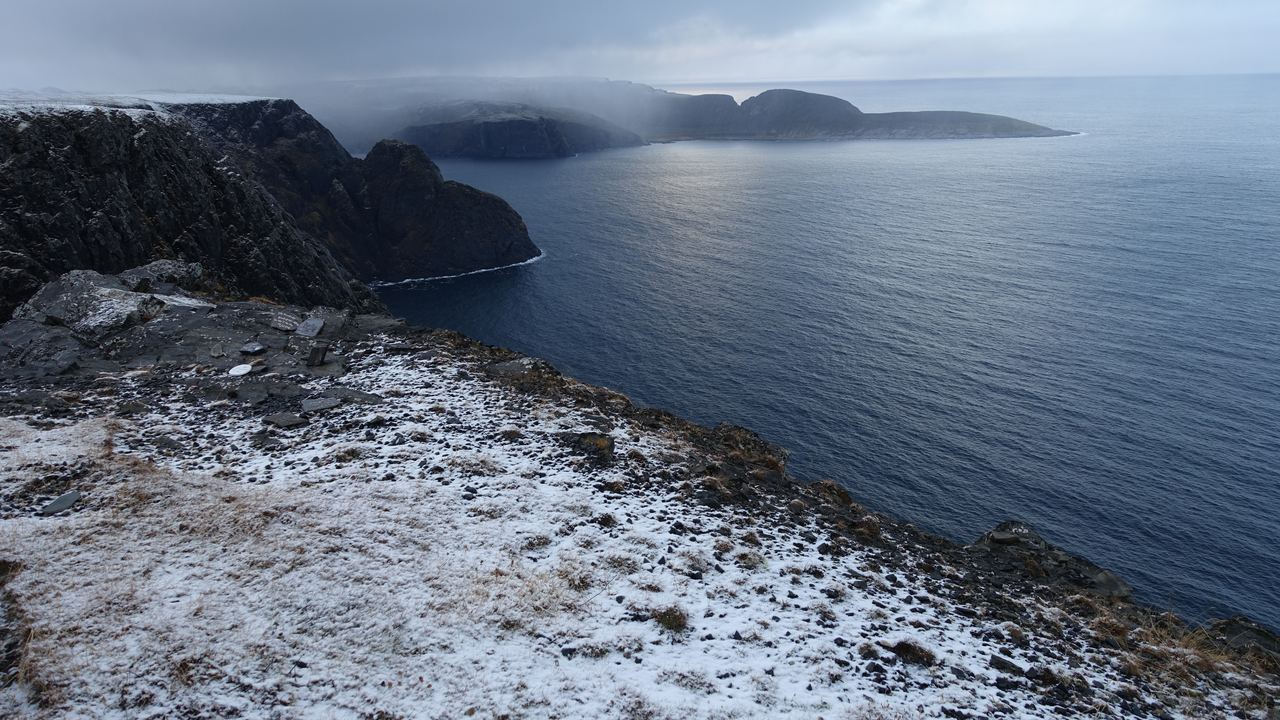
Norway
82 departures from a coast whose most famous town has the least open sky on it
Norway makes a trade no other country here makes. The North Atlantic Drift carries warm water the length of this coast and keeps the ports ice-free to 71°N, which produces the largest temperature anomaly on earth: a January night in Tromsø is around minus five where Yellowknife and Fairbanks are at minus thirty. That is a genuine gift, and it arrives with a bill. Warm sea means moisture, and moisture means cloud.
You can measure the bill. Across eleven seasons of reanalysis, counting nights with at least two hours of cloud cover at or below 50% in the hours tours actually run, Tromsø gets a usable sky on 25.4% of season nights. That is twelfth of the fourteen destinations on this site, and last of Norway's three. Bodø, two hundred kilometres south and a fraction of the market, gets 32.9%. Alta, further north and up a long fjord, gets 29.3%. Both beat Tromsø in every single month of the season.
That is not an argument against Tromsø, and it explains something about it. With 74 departures competing in one town and the worst sky of the three, the operators there have built the most sophisticated escape machinery in the business: working radii of 200, 300 and 350 kilometres, guide networks trading cloud reports by phone all evening, and a willingness to cross into Finland. A fixed-point statistic cannot capture that, and it understates what a chase actually achieves. Tromsø has the worst sky and the best tools for getting out from under it, and the price of those tools is why a seat there costs what it does.
Choose a destination in Norway
Northern Lights Experiences in Norway
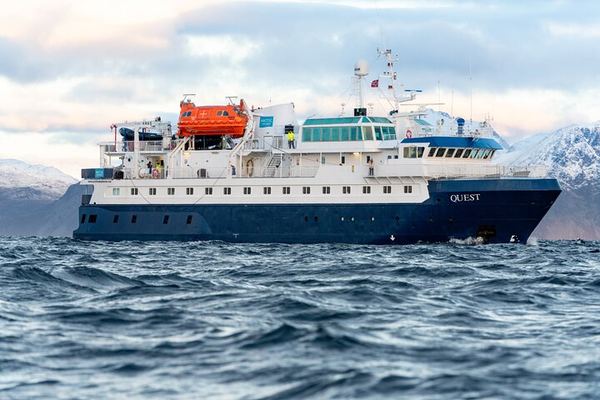
24 Hour Northern Lights and Whale Watching Cruise from Tromso
Sail across the auroral oval in the evening, sleep in a cabin while the ship moves, and wake on the whale grounds. Three-course dinner and lecture on board.
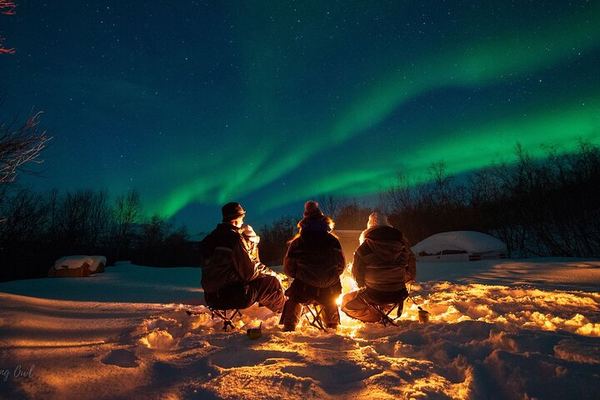
Adults Only Aurora Hunt from Tromso with Wandering Owl
An adults-only northern lights hunt from Tromsø: thermal suits, a campfire and a hot meal while the guides read the night's forecast. Photos included.
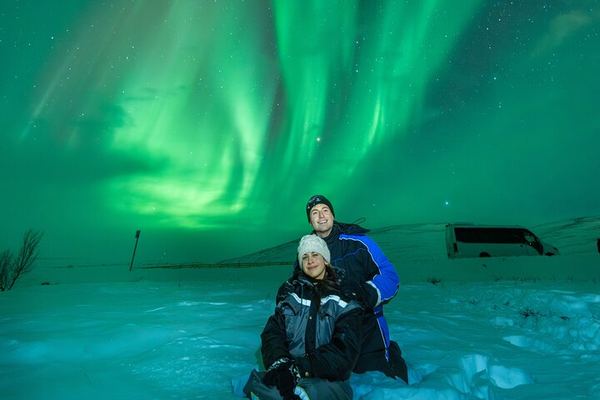
All Inclusive Aurora and Arctic Evening from Tromso with Campfire
Campfire, hot meal and photos on an all-inclusive aurora night from Tromsø. You get a forecast update the morning of, and can rebook if it turns.
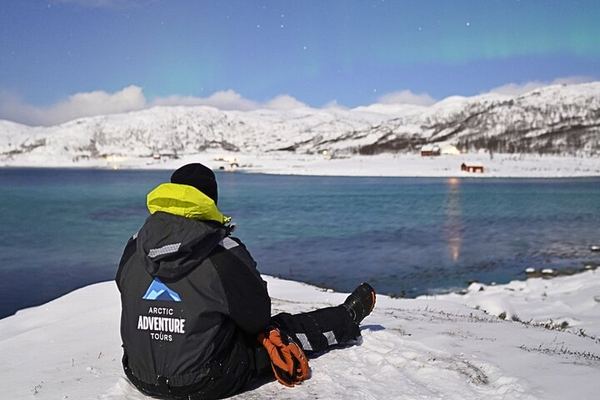
All Inclusive Northern Lights Hunt from Tromso, Max 15 Guests
Up to nine hours hunting clear sky from Tromsø in a group of 15, with a guide and driver working as a pair, an expedition meal and warm gear included.
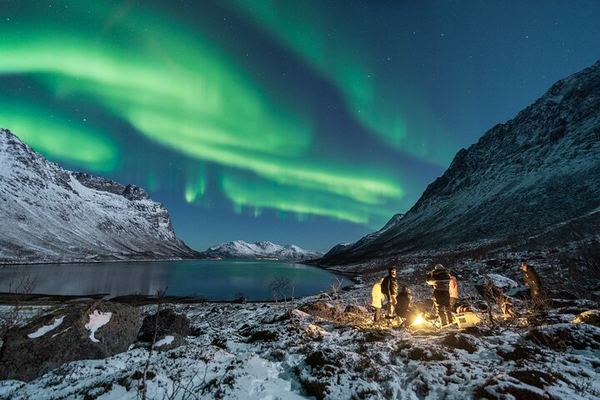
All Inclusive Northern Lights Hunt with The Green Adventure, Photos Included
Thermal suit and meal built into the price, a campfire with marshmallows, and expedition soup made in Tromsø that beats standing closer to the flames.
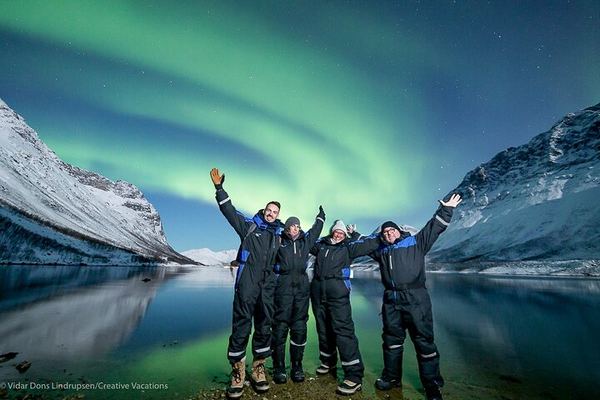
Aurora Adventure Tour from Tromso with Photographer Vidar
Seven hours under Arctic sky with Vidar, a professional photographer: real advice if you brought a camera, your portrait emailed to you if you did not.
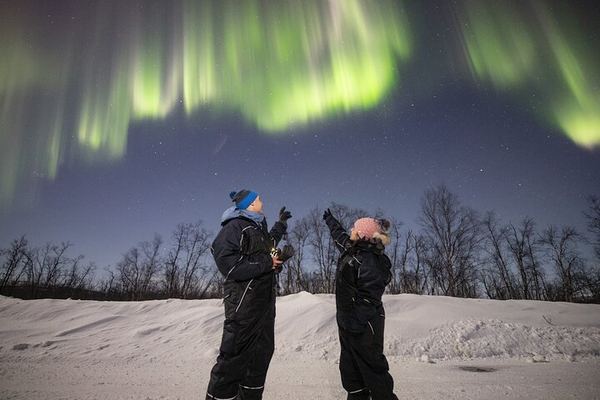
Aurora Chase from Tromso with Full Frame Cameras and Photos
The guides cross-check three forecasts before choosing where to go, then two full-frame cameras cover the night, including portraits with the aurora behind you.
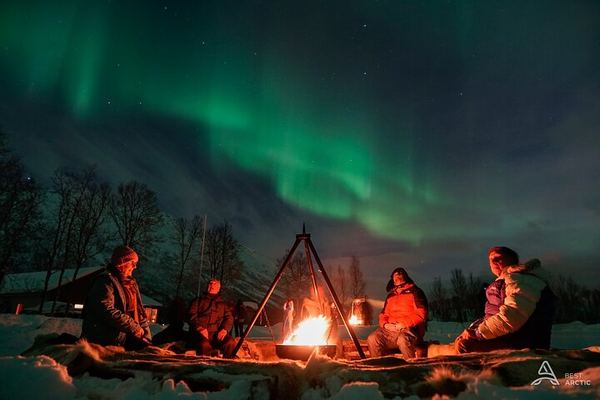
Aurora Safari by Coach with Private Heated Camps and Onboard Toilet
Wait by the campfire, in a hut or inside a lavvo, with a hot meal and proper toilets. Somewhere heated is what lets you stay out until the sky performs.
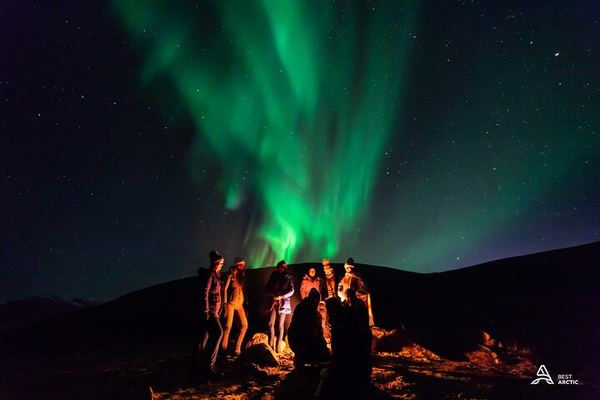
Aurora Safari by Minibus with Private Camp Locations Across Troms
Five to seven hours by minibus to the operator's own camp sites rather than the shared car park: darkness that stays dark, a toilet, tripods and cake.
Bodo eBike Northern Lights Tour to Ausvika Beach with Bonfire
Eight kilometres by eBike and a 1.5 km coastal walk to a beach bonfire. It only runs when conditions are already favourable, with a full refund if not.
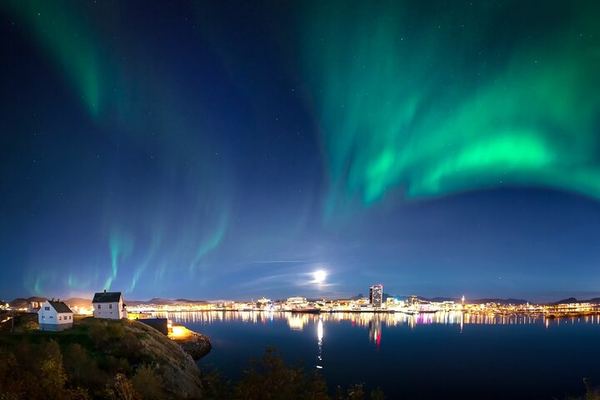
Bodo Northern Lights Safari by 4WD Van with an 85% Hit Rate
No fixed turnaround time: when the sky still has a chance of clearing, the van stays out, some nights until 2 AM. Six guests maximum, hotel drop-off after.
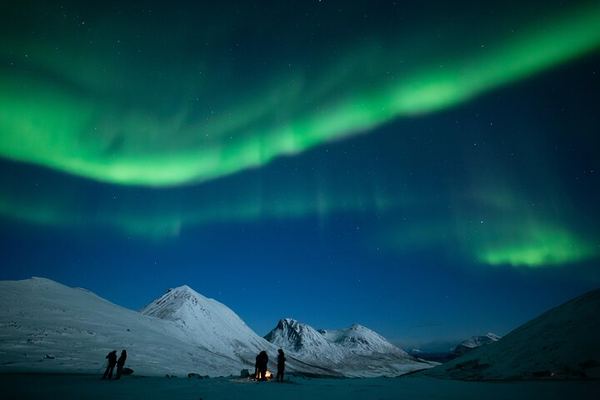
Budget Northern Lights Bus Tour from Tromso
The cheap way out of Tromsø: up to 2.5 hours' drive to dark sky, trained guides, hot drinks and portraits. The difference is the bus, not the sky.
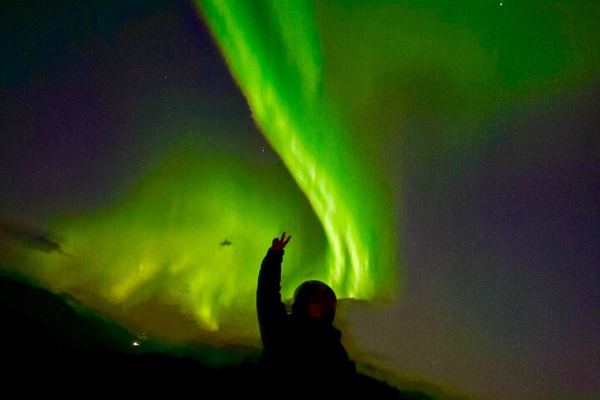
Evening ATV Ride and Northern Lights Sightseeing in Northern Norway
An aurora hunt on four wheels along the coast from Kviby, in warm gear and a helmet. An ATV reaches viewpoints no coach can, and keeps you in open air.
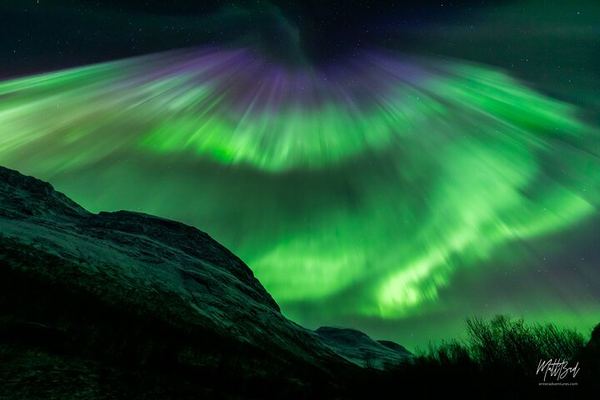
Guided Northern Lights Bus Tour from Tromso with Free Photos
A heated bus set up for a long night of waiting, with photographs included at no cost. Read the meeting notes twice: this operator can ask for your passport.
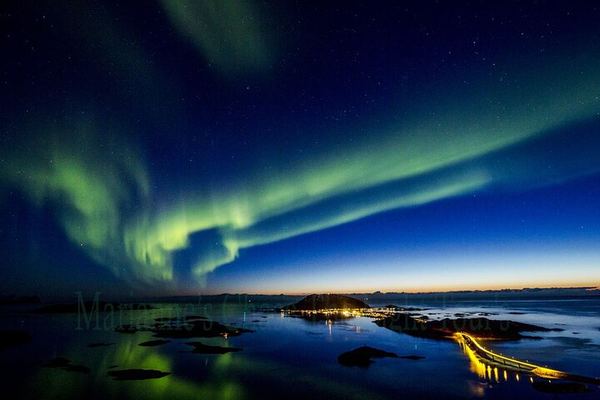
Marianne's Heaven On Earth Aurora Chaser Tours from Tromso
Photographers with 50 years of aurora hunting between them, hands-on with your camera settings, and a new watch for sky anomalies that are not satellites.
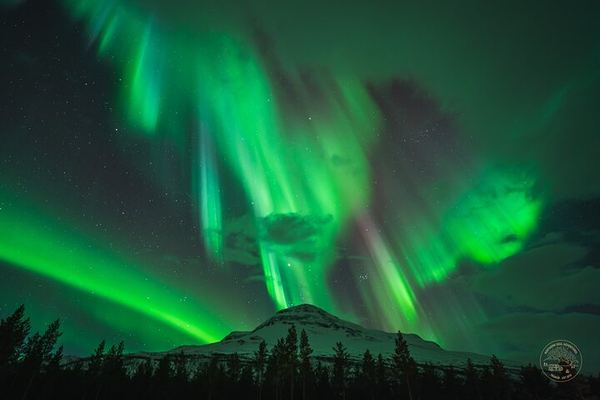
Minibus Northern Lights Chase from Tromso with Photography
The minibus trades the 4x4's reach for a lower price per head. A network of guides in contact all evening is how one vehicle knows the sky 60 km away.
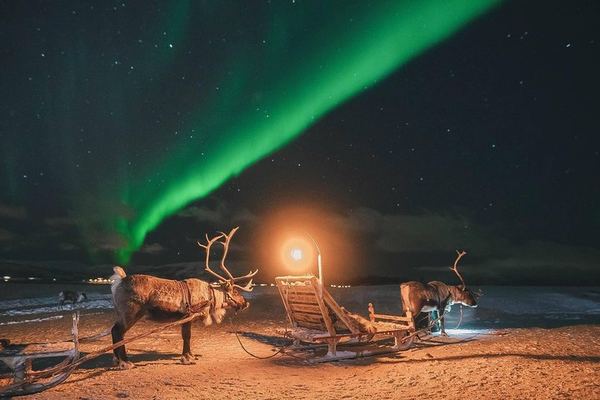
Night Reindeer Sledding with Camp Dinner and a Chance of Aurora
Feed a herd of 300 from your hands, ride the sleigh, then eat bidos stew in a candlelit gamme while the guide performs a joik. Aurora if the sky is clear.
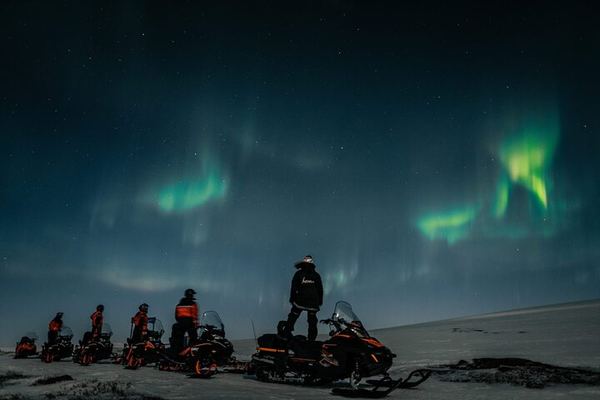
Northern Lights Adventure by Snowmobile from Alta
Follow the old postal road to the edge of Finnmarksvidda, where the only light is the sky's own. Alta's dry climate gives it some of the best odds anywhere.
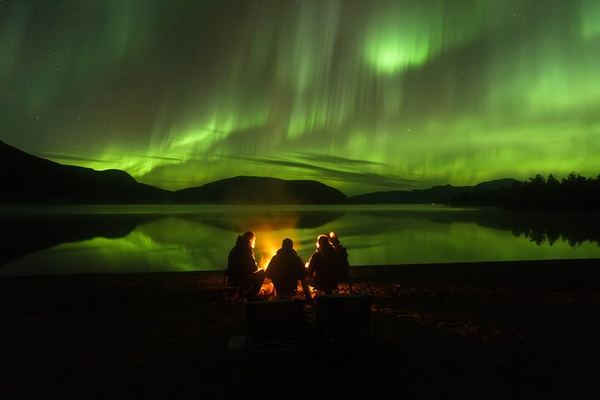
Northern Lights Adventure from Tromso in a Mercedes 4x4, Max 8 Guests
Eight guests, a 4x4 van, and a viewing spot chosen from the road conditions as much as the cloud. Fire, hot drinks and grilled pølse i brød while you wait.
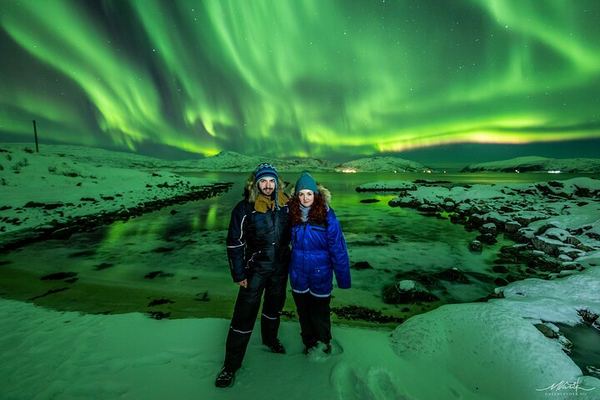
Northern Lights Adventure with Greenlander, Maximum 8 People
A working chase in a modified 4x4 Mercedes: hot meal, tripods, thermal suit and aurora portraits. Expect snow underfoot and a genuinely late finish.
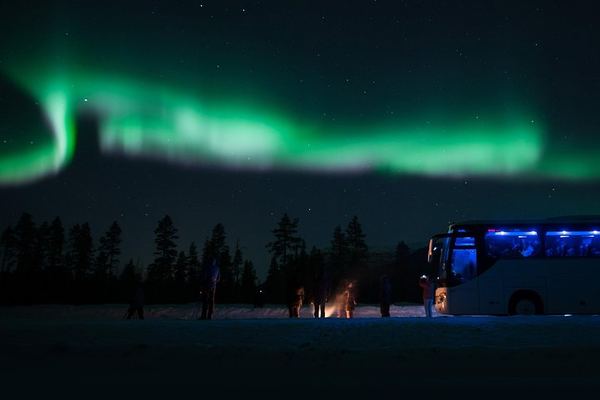
Northern Lights Big Bus Chase from Tromso with Chasing Lights
The budget chase, and honest about it: clear sky comes before scenery, some stops are roadside, and the route can cross into Finland. Dress in layers.
Northern Lights Big Bus Chase from Tromso with Free Photos
Seven to nine hours in a heated bus with WiFi and toilets, sometimes crossing into Finland or Sweden. It can return at 02:30, so leave the morning free.
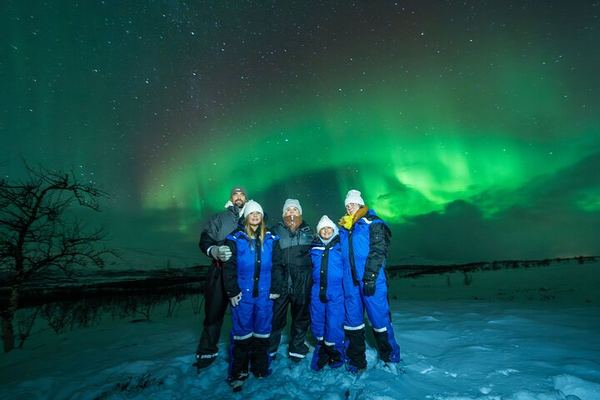
Northern Lights Chase from Tromso Guided in Spanish
A Tromsø aurora chase guided entirely in Spanish, with campfire, hot food and photos, flexible booking and a forecast update the morning of your tour.
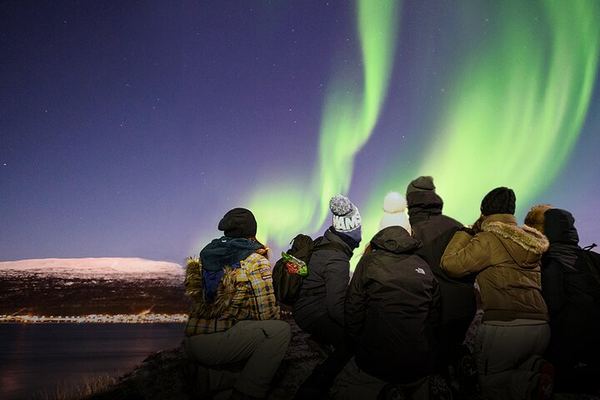
Northern Lights Chase from Tromso with a Professional Photographer
No fixed route: the guides follow continually updated weather and solar data. Book 15 to 20 April and expect a shorter, weaker night, as the operator says.
Ratings collected by Viator and Tripadvisor
Three bases, and the numbers behind them
| Base | Latitude | Usable sky, season | Best month on sky and darkness | Departures | Price band |
|---|---|---|---|---|---|
| Bodø | 67°17′N | 32.9% | November | 3 | 158–210 EUR |
| Alta | 69°58′N | 29.3% | October | 5 | 187–294 EUR |
| Tromsø | 69°39′N | 25.4% | October | 74 | 83–2,212 EUR |
The column that decides your trip is not the third one, it is the fifth. Seventy-four departures against three means that on any given night in Tromsø there is something leaving, in every format, at every price, with operators who will drive for hours. In Bodø there are three, and if none of them runs, that is your evening.
So the honest reading is a split one. If you have one or two nights and want the best odds available, Tromsø's machinery beats Bodø's sky, because a van that drives 300 km is worth more than seven percentage points at a fixed point. If you are staying a week, or building a wider Norwegian trip, Bodø and Alta give you a better starting sky and empty viewpoints.

The two months everybody books, and why both are wrong
Norwegian aurora marketing pushes two windows: the equinoxes, because geomagnetic activity peaks there, and midwinter, because the nights are long. On our numbers both are traps, and for opposite reasons.
Two things decide how much aurora time a month actually contains: how often the sky is usable, and how many hours of real darkness there are to use it in. Multiply them and the Norwegian season reorders completely.
| Month | Tromsø | Alta | Bodø |
|---|---|---|---|
| September | 0.61 | 0.61 | 0.98 |
| October | 2.04 | 2.20 | 2.17 |
| November | 1.58 | 1.84 | 2.83 |
| December | 1.34 | 2.14 | 2.09 |
| January | 1.86 | 2.06 | 2.16 |
| February | 1.56 | 2.02 | 2.08 |
| March | 0.99 | 1.11 | 1.54 |
September is the worst month at all three bases, and it is not close. Its cloud figures are the best of the year, and there are between 1.7 and 2.6 hours of astronomical darkness to use them in. At Tromsø only 17% of September nights are free of moonlight, and at Alta 13%, the lowest figures anywhere in this catalogue. March is second-worst, for the same reason at the other end: 28.4% of nights usable at Tromsø and 3.5 hours of dark.
December is the other trap, and the expensive one. Eight full hours of darkness, the Sun not rising at all, and the worst cloud record of the Norwegian year at Tromsø: 16.8%. It is also the most crowded and most expensive month of the season.
October is the answer at Tromsø and Alta, November at Bodø, with January the best of the deep-winter months everywhere. All are low season.
One limit on that ranking, stated because it argues against us. It measures opportunity, how much dark clear sky a month contains, not the chance that the aurora does something inside it. Geomagnetic storms are close to twice as frequent around the equinoxes as at the solstices, an effect described by Russell and McPherron in 1973, and that specifically favours September and March. We checked whether it changes the ranking: even doubling September's figure leaves it behind October at every Norwegian base. It narrows the gap; it does not close it.
What the four Tromsø formats are for
Most of Norway's departures leave one town, and they split into four kinds of night with different logic behind them.
Road tours are about range: the coach is cheapest and can keep driving, the minibus takes side roads a coach cannot, and the small 4x4 reaches hilltops and costs accordingly. Boats change the geometry rather than the comfort, because a weak display sits low in the north and from a fjord floor it can be entirely behind a ridge while someone on open water is watching it. Photography nights exist because a camera records colours the eye cannot. And the Sámi camps solve the waiting, which is what an aurora night is mostly made of.
When to come
The Norwegian season, on our numbers
| Month | 1 | 2 | 3 | 4 | 5 | 6 | 7 | 8 | 9 | 10 | 11 | 12 |
|---|---|---|---|---|---|---|---|---|---|---|---|---|
| BodøNovember is the single best month at any Norwegian base: 36.3% usable sky over 7.8 hours of darkness. The catch is three departures and no fallback. | 1 | 2 | 3 | 4 | 5 | 6 | 7 | 8 | 9 | 10 | 11 | 12 |
| AltaAhead of Tromso on cloud in all seven months, with eight full hours of darkness November to January. September is the worst month for moonlight anywhere here, at 13%. | 1 | 2 | 3 | 4 | 5 | 6 | 7 | 8 | 9 | 10 | 11 | 12 |
| TromsøOctober is the best of a difficult set. December is the most booked and the worst on our numbers; September has the best cloud figure of the year and almost no darkness to use it in. | 1 | 2 | 3 | 4 | 5 | 6 | 7 | 8 | 9 | 10 | 11 | 12 |
Cloud: ERA5 via Open-Meteo, 11 seasons. Darkness and moon: ephemerides. Ranking by cloud multiplied by darkness; method in the site's data notes.
How Norway ended up owning the science
The origins
1908–13
Birkeland publishes
After several winters in an observatory above Alta and a great deal of laboratory work with a magnetised sphere, Kristian Birkeland sets out the theory that charged particles from the sun follow the Earth's field into the atmosphere. He died before it was accepted; Norway later put him on the 200-krone note.
The growth
1981
EISCAT starts transmitting
A radar system outside Tromsø begins firing a megawatt of radio power into the ionosphere to measure it directly. The forecast a guide checks at six in the evening rests on this kind of work.
1985
The Alta rock carvings
Thousands of figures cut into rock near Alta between roughly 5,000 and 2,000 BC become a UNESCO World Heritage site. The people who made them lived under this sky every winter of their lives.
Today
October 2024
Solar maximum declared
NOAA and NASA confirm Solar Cycle 25 has peaked. Activity stays elevated for a year or two on either side, which is the window the current seasons fall inside.
Planning a Norway aurora trip
When should I go?
October at Tromsø or Alta, November at Bodø, with January as the deep-winter alternative. All are low season. Avoid December, which is the most expensive month and the worst on our numbers at Tromsø, and avoid September despite its excellent cloud figures: there are under two hours of real darkness in a September night here.
If Tromsø has the worst sky, why does everyone go there?
Because sky is not the only variable. Tromsø has 74 departures against eight everywhere else in Norway, four different formats, direct flights, and operators who will drive 300 km or into Finland. A fixed-point statistic measures the sky above the town; it does not measure what a chase can reach.
Is Norway a good choice at all?
It is the most comfortable and the most beautiful, and it is not the most reliable. The Gulf Stream keeps you at minus five instead of minus thirty and puts fjords and mountains under the display. It also puts moisture in the air: every Norwegian base sits below every North American one on clear nights, and below Kiruna.
How many nights do I need?
Two at absolute minimum, three if the trip allows. Norway loses more nights to cloud than the continental destinations, so more attempts matter more here, not less.
What do operator success rates mean?
Less than they appear. Operators quote 80 to 98 per cent and measure different things: most count any aurora at all, including displays only a camera registers, and most exclude cancelled nights. One Tromsø operator publishes 60 to 70 per cent cloudless nights between 21 November and 15 February; over the same period our count gives 16.8 to 23.5. That is a factor of about four, and almost certainly a different metric rather than bad faith.
Data verified on. Cloud: ERA5 via Open-Meteo, 11 seasons. Darkness and moon: computed ephemerides. Prices and counts read from the 82 Norwegian departures on 10 August 2026.