
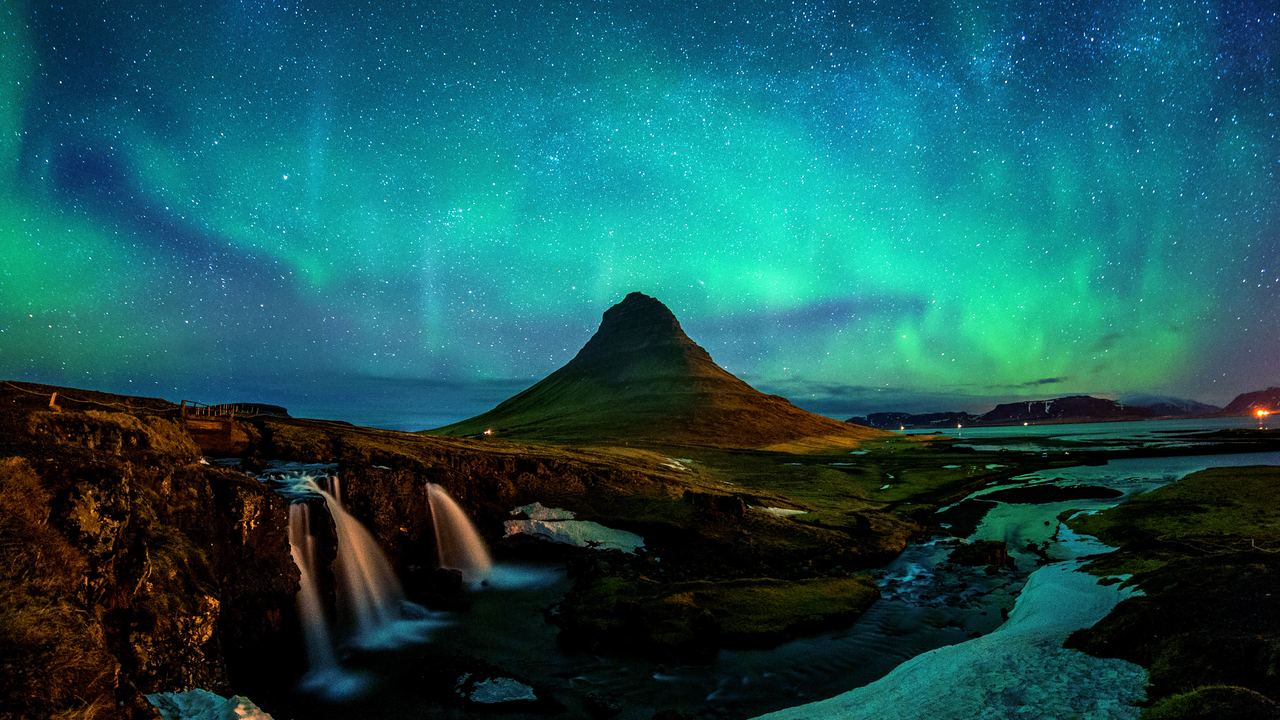
Aurora forecasting has accumulated a vocabulary that gets used freely in apps and listings without anyone defining it. Most of it is straightforward once translated. Some of it is quoted far more often than it deserves.
The right-hand column is the part worth reading: not what the term means, but whether it should change what you do tonight.
Forecasting terms
| Term | What it means | Does it matter to you? |
|---|---|---|
| Kp index | A 0 to 9 scale of global geomagnetic disturbance, averaged over three hours from thirteen observatories outside the aurora zone | Less than its popularity suggests. Planetary, retrospective, and blind to cloud |
| Bz | The north-south component of the interplanetary magnetic field. Southward, written as negative, allows it to connect with earth's field | Yes. Sustained negative Bz is the best short-term signal there is |
| Solar wind speed | How fast the stream is arriving, in km per second. Around 400 is ordinary, above 600 is fast | Yes, alongside Bz. Fast and dense is good |
| G scale | NOAA's storm scale, G1 minor to G5 extreme. Roughly maps onto Kp 5 through 9 | Only if you are far from the oval and need the aurora to come to you |
| Auroral oval | The ring around the magnetic pole where the aurora forms, roughly 65 to 75 degrees geomagnetic latitude when quiet | Yes. Your position relative to it explains more than any single number |
| Magnetic midnight | When your location is furthest from the sun in magnetic terms, usually 21:00 to 01:00 local | Yes. It is why tours run late |
| CME | Coronal mass ejection. A discrete eruption of plasma from the sun, arriving one to three days later | Indirectly. It is what forecasters watch to give days of notice |
| Coronal hole | An open region of the sun's magnetic field letting fast solar wind escape. Recurs about every 27 days | Yes in the declining phase of the solar cycle, which is where we are now |
What you see in the sky
| Term | What it looks like |
|---|---|
| Arc | A quiet, steady band low across the sky, often the first thing to appear and sometimes all you get |
| Band | An arc that has started to fold and develop structure |
| Substorm | The sudden release of energy stored in the magnetotail. An arc brightens, breaks up and starts moving quickly. This is the part people travel for |
| Corona | The display directly overhead, with rays appearing to radiate from a single point. A perspective effect, and it means you are underneath it |
| Rays | Vertical structures following magnetic field lines |
| Curtain or drapery | Folded sheets that look like fabric hanging and moving |
| Pulsating aurora | Patches blinking on and off over seconds, usually late in the night after a substorm has passed |
| STEVE | A narrow mauve ribbon, sometimes with a green picket fence beside it. Not technically an aurora, and only identified in 2016 |
| SAR arc | A faint, wide red arc, very hard to see by eye and usually only found in photographs |
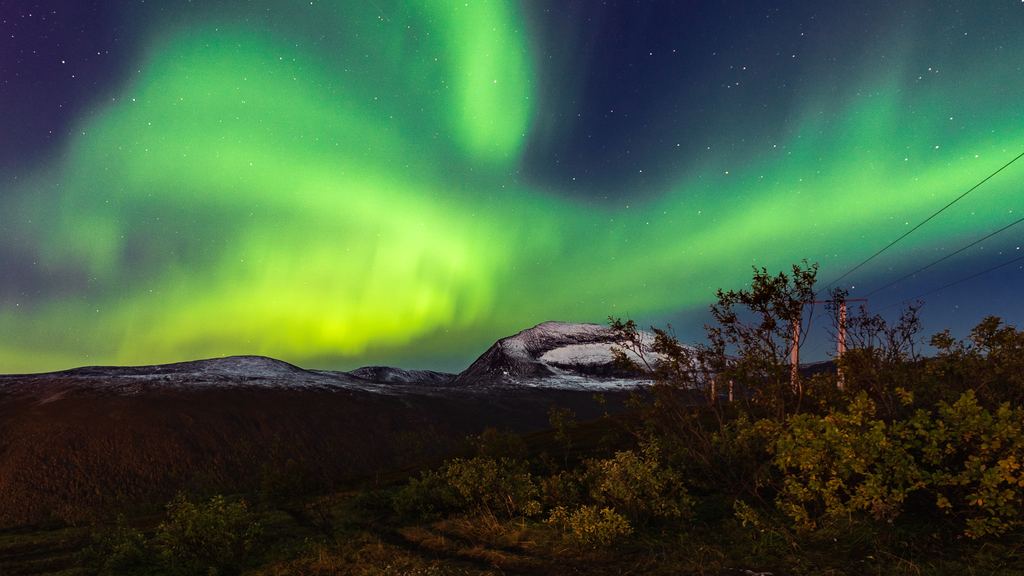
Terms from tour listings
| Phrase | What it usually means in practice |
|---|---|
| Guaranteed viewing | Almost always a free second attempt or a discount on another booking, and only if nothing was seen at all |
| Unlimited mileage | A genuine chase. The vehicle will drive as far as needed, sometimes across a border. A good sign |
| Small group | Undefined unless a number is given. Ask for the maximum |
| Photos included | Anything from two group snapshots to a full edited set. Ask how many, at what resolution, and who owns them |
| Aurora hunt or chase | A mobile tour that picks its destination from the weather that evening |
| Thermal suit provided | An insulated overall, usually good. It does not fix a cotton base layer underneath |
Measurement terms
| Term | What it means |
|---|---|
| Astronomical darkness | The sun more than 18 degrees below the horizon. Below that, scattered sunlight stops interfering |
| Reanalysis | A model reconstruction of past weather that assimilates observations. ERA5 is the standard one. Excellent for climate, and not a forecast |
| Geomagnetic latitude | Your position relative to the magnetic pole rather than the geographic one. The one that decides what you see |
| Median | The middle value of a set. More honest than an average when a few extreme values would distort it, which is why we use it for prices |
| Polar night | The period when the sun does not rise at all. In Tromso it runs from late November to mid January |
The three that actually matter
If you keep only three things from this page:
- Cloud cover. Not on any forecast app's aurora page, and the single largest factor in whether you see anything.
- Bz. When it goes and stays negative, energy is loading into the system. Better than Kp for deciding whether to stay out another hour.
- Where you are relative to the oval. It determines how much activity you need, and it explains why the same Kp number means different things in Tromso and in Edinburgh.
Everything else on this page is context. Those three are decisions.
Words you will hear from a guide
| Term | What it means when a guide says it |
|---|---|
| The oval is over us | The active band is currently at your latitude. Stay out |
| It is building | An arc has appeared and is brightening. The substorm may or may not follow |
| We are going inland | The coast is clouded over and the plan is now the rain shadow behind the mountains |
| Bring your passport | This tour crosses into Finland when the Norwegian coast is closed in. A good sign about the operator |
| Magnetic midnight | The most active hours, usually somewhere between 21:00 and 01:00 local |
| Red light only | White torches destroy everyone's night vision for about twenty minutes. Red does not |
| It is a Kp 2 night | Low planetary activity. Inside the oval this is still perfectly workable, so it is not the discouragement it sounds like |
| Blue hole | A local patch of persistently clear sky, most famously over Abisko, caused by a rain shadow |
Units and numbers, so the figures are readable
A few conventions used throughout this site, stated once here so that no page has to keep re-explaining them.
- Percentages of nights, not percentages of hours. When we say Tromso is 16.8% in December, we mean roughly one night in six met our threshold, not that the sky was clear 16.8% of the time.
- Hours of darkness are averages per night across the month, inside an 18:00 to 02:00 window, in local standard time without daylight saving.
- Geomagnetic latitude rather than geographic, wherever the aurora is concerned, and quoted as approximate because the magnetic pole drifts.
- Median rather than average for anything to do with money, once we publish money, because a few very expensive private tours distort a mean.
- Dates on every figure. If a number has no date attached it cannot be checked later, which makes it an assertion rather than data.
Sources
- Kp index: produced by the GFZ German Research Centre for Geosciences, kp.gfz.de. Introduced by Julius Bartels in 1949; described in Matzka et al. (2021), Space Weather, doi 10.1029/2020SW002641.
- Forecast products and the G scale: NOAA planetary K-index, 30-minute aurora forecast (OVATION model), and the NOAA space weather scales.
- Aurora physics and terminology: NOAA Space Weather Prediction Center.
- Reanalysis: ERA5, produced by ECMWF for the Copernicus Climate Change Service, Copernicus Climate Data Store.
- STEVE: MacDonald, E. et al. (2018), Science Advances, doi 10.1126/sciadv.aaq0030.
- Aurora forecasts by national services: Icelandic Met Office, MET Norway.
Five phrases that should make you ask a follow-up question
Some wording is not wrong, just incomplete in a way that consistently favours the seller. In each case there is one question that resolves it.
- Guaranteed viewing. Ask: what exactly triggers it, and what do I receive? Almost always a free second attempt, and only if nothing appeared at all.
- High success rate. Ask: measured how, over what period, and counted by whom? Success rates in this industry are self-reported and rarely defined.
- Best place to see the northern lights. Ask: best on what measure? Cloud, geomagnetic latitude and darkness hours give different answers, and no destination wins all three.
- Small group. Ask: what is the maximum? An unstated maximum is not a maximum.
- Photos included. Ask: how many, what resolution, and may I use them? All three vary enormously between operators.
None of these questions is confrontational, and all five can be sent in one short message. The quality of the reply is itself the answer: an operator who responds with specifics is running a different kind of business from one who repeats the phrase back at you.
Data verified on. Definitions follow NOAA Space Weather Prediction Center and GFZ Potsdam usage. Listing phrases describe common operator practice, not standardised terms.
The term people misuse most
Kp appears in every aurora app and is quoted far more often than it deserves. Here is what it does and does not measure.