
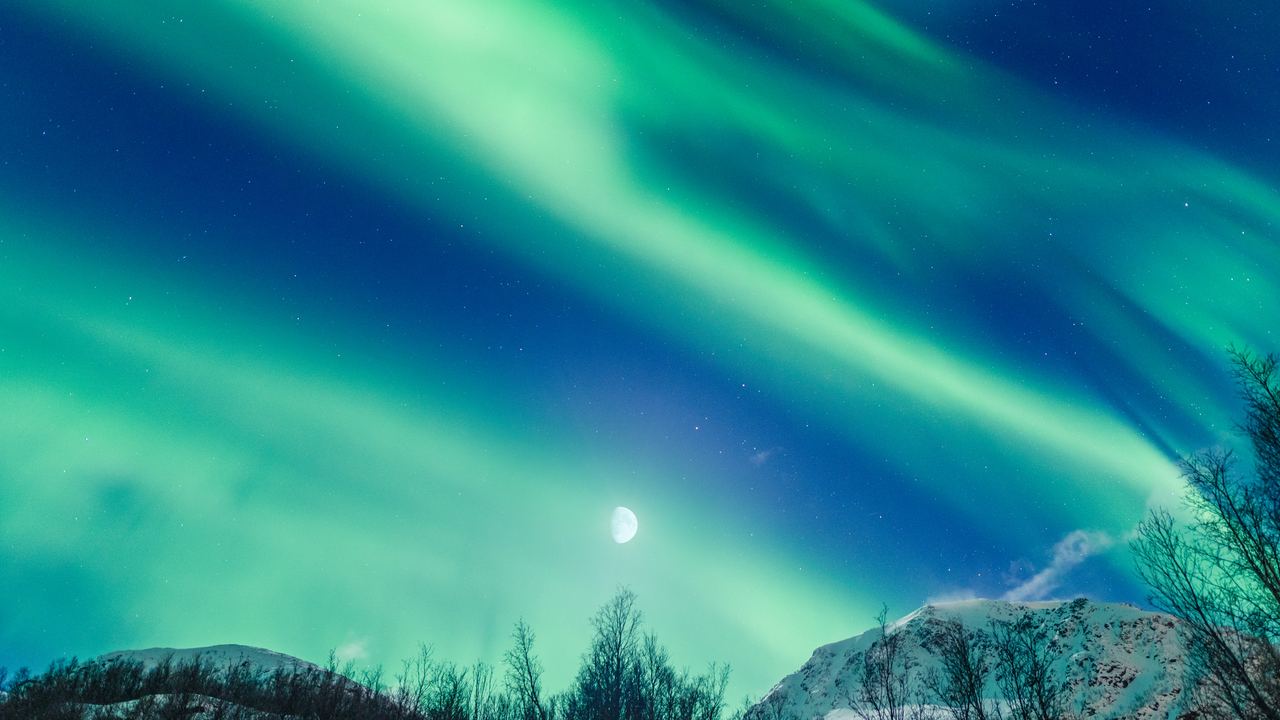
People have been standing under this sky for thousands of years, and until remarkably recently nobody knew what they were looking at. The explanations they arrived at instead are worth reading, and not only as folklore: at least one of them described something real that science took until 2012 to confirm.
Background and vocabulary
One page about what people believed, one about what the words mean.
What people thought the lights were
Souls of the dead, a fox throwing sparks off the snow, spirits playing football with a walrus skull. And the Sami word that means the light you can hear.

An aurora glossary
Kp, Bz, substorm, corona, oval, reanalysis. Plain definitions, and a note on which ones should change what you do tonight.
The one that turned out to be right
The Sami word for the aurora is guovssahas, which translates as roughly the light you can hear. Reports of sound accompanying the aurora persisted for centuries across the Arctic and were dismissed by outsiders as imagination, on the reasonable grounds that nothing happening a hundred kilometres up should be audible on the ground.
In 2012 a team at Aalto University in Finland recorded those sounds and located their source at about 70 metres above the ground. The mechanism appears to be charge accumulating in a temperature inversion layer on cold, still nights, and discharging during geomagnetic activity.
The old belief was right about the fact and wrong about the cause. The sound is real; it comes from just above your head rather than from the sky. That distinction is a good summary of what this section is for: the observations of people who lived here were usually sound, even when their models were not.