
Reindeer & Sami Camps
Camps rather than chases: somewhere to stand still while the sky decides
Reindeer husbandry in Norway is not a tourist invention. It is a legally protected livelihood, reserved to the Sámi, and the herds outside Tromsø are working animals that spend most of the year doing something other than meeting visitors. What these evenings sell is a few hours inside that routine.
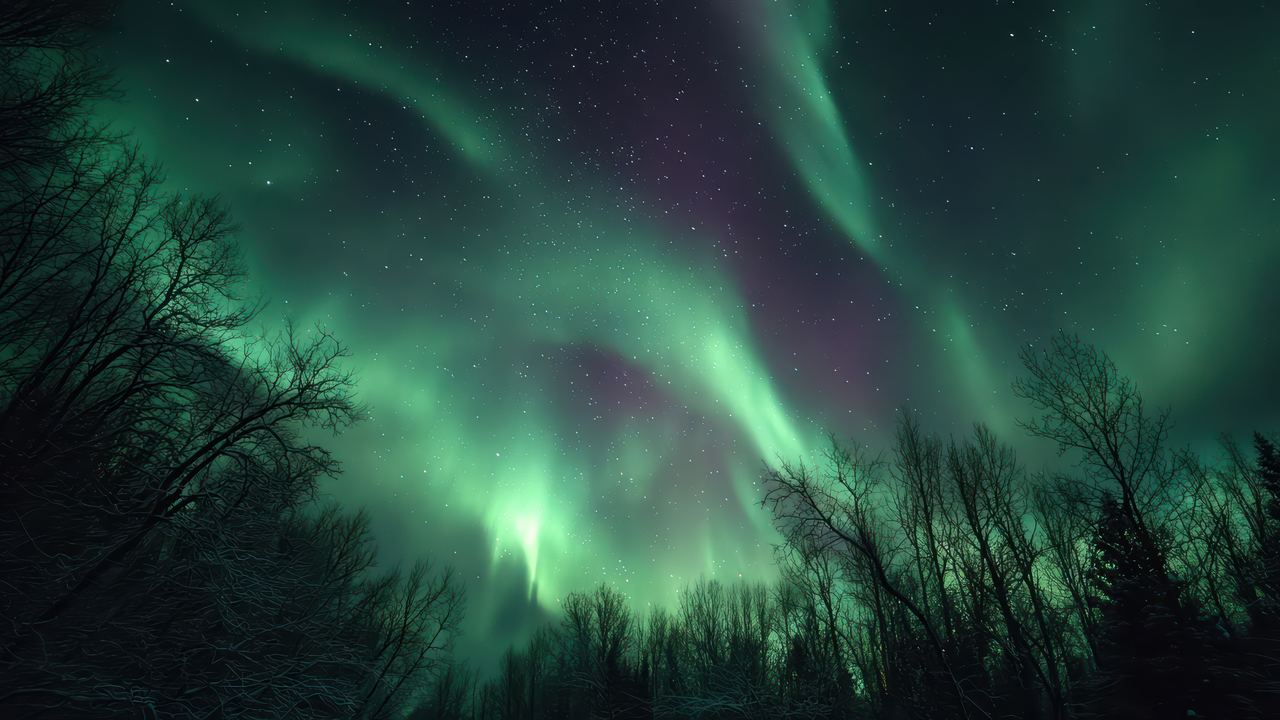
The aurora is the possible extra, never the promise. Every operator on this page is explicit about that, and the honest way to read these listings is as a Sámi camp visit with a dark sky over it.
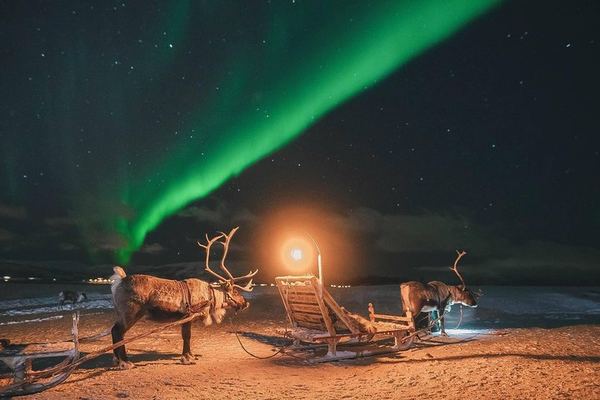
Night Reindeer Sledding with Camp Dinner and a Chance of Aurora
Feed a herd of 300 from your hands, ride the sleigh, then eat bidos stew in a candlelit gamme while the guide performs a joik. Aurora if the sky is clear.
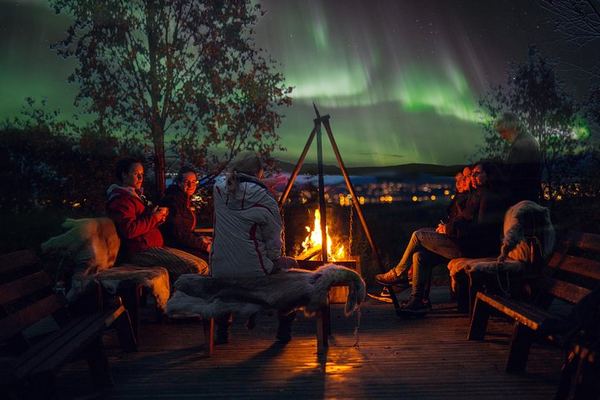
Northern Lights Evening at the Husky Camp near Tromso
A camp instead of a chase: shelter, fire, puppies in the dog yard and one clear northern horizon, rather than a night driving between viewpoints.
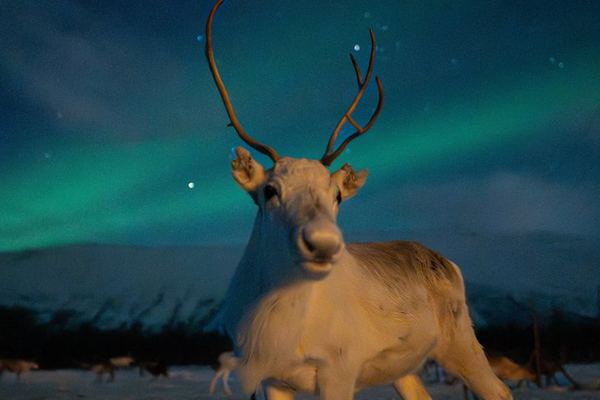
Reindeer Feeding and Sami Culture with a Chance of Northern Lights
Time to stand among calm reindeer that eat from your hand, with Sámi culture and a chance of aurora. It runs when there is too little snow for sledding.
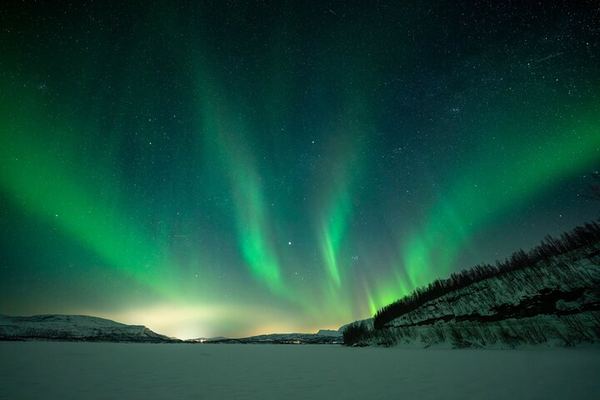
Sami Reindeer Camp Visit and Aurora Night from Tromso
Nine hours in two halves: the reindeer herd and a joik first, then a bonfire in open country with a dedicated aurora guide who photographs you under it.
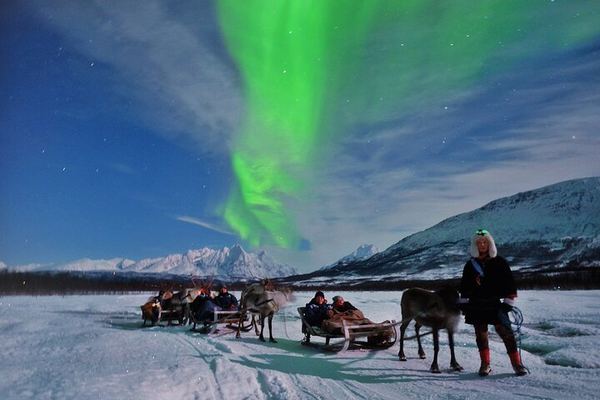
Sami Reindeer Sledding and Feeding with a Chance of Northern Lights
Sled two to a sleigh behind a harnessed row of reindeer, then indoors for joik and Sámi food. The ride needs snow, with a partial refund if it cannot run.
Ratings collected by Viator and Tripadvisor
Camp or chase: the trade you are making
A chase and a camp are opposite bets on the same weather. The chase assumes the cloud is patchy and buys mobility: if it is overcast at Kaldfjord, drive to Skibotn. The camp assumes the sky will be clear enough where it already is, and buys comfort instead: shelter, food, a fire, something to do.
On a night forecast clear, the camp usually gives the better evening. You stand still, your eyes adapt properly to the dark, and you are not spending two of your four hours looking at the inside of a vehicle. On a night with moving cloud, the chase wins outright, because a camp has no answer to a sky that closes over it.
The other difference is dark adaptation, which nobody mentions and everybody feels. It takes the human eye twenty to thirty minutes to reach useful night vision, and every headlight, phone screen and cabin light resets part of it. A camp evening spent outside around one fire will show you a fainter aurora than a chase that keeps starting the engine.
What the five evenings actually include
| The evening | Animals | Food | Culture | Price |
|---|---|---|---|---|
| Feeding only | Herd feeding, unhurried | Included | Sámi guiding | from 158 EUR |
| Feeding and sleigh | Feeding plus a sled ride | Sámi food to taste | Joik, handmade objects still in use | from 205 EUR |
| Night sledding with dinner | Around 300 reindeer, 15 to 20 minute sleigh | Three courses in a gamme, including bidos | Joik and herding life, round the fire in a lavvu | from 195 EUR |
| Camp plus aurora chase | Herd visit, then a drive out | Camp meal | Joik by a Sámi guide | from 173 EUR |
| Animal camp with a clear northern view | Dog yard, puppies included | Included | Guided | from 167 EUR |
Two words in that table are worth knowing before you arrive. A lavvu is the conical Sámi tent, portable by design because the herds move. A gamme is the permanent turf hut, built into the ground, warmer and heavier. Bidos is a reindeer stew traditionally served at weddings and celebrations, which is a more particular thing to be given than a generic camp dinner.
One of the five is a hybrid: a herd visit followed by a drive out. If you are booking in a month with a poor sky, that is the one to look at, because it is the only entry here that keeps the option of moving.
A joik is not a song about something
Every camp on this page includes a joik, and it is usually described as traditional singing, which undersells it. A joik does not describe its subject; in the Sámi understanding it evokes it directly. You do not joik about a person or a place, you joik the person, the place, the animal. It is closer to a portrait than to a ballad.
That distinction is worth carrying into the tent, because it changes what you are listening to. It also explains why joik was suppressed for so long: a form that summons rather than describes was read as pagan by the missionaries who arrived with the Norwegian state, and it was banned in Sámi schools well into the twentieth century.
The context behind the camp visit
Sámi tourism in northern Norway sits on top of a much longer and more difficult story. These dates are the shape of it.
The origins
1917
The first Sámi congress
Sámi delegates from Norway and Sweden meet in Trondheim on 6 February. The date is now Sámi National Day, marked across four countries.
The growth
1989
The Sámi Parliament of Norway opens
Sámetinget is established in Karasjok as an elected body, after decades in which Sámi language and culture were actively suppressed by assimilation policy.
Today
Today
Herding families as hosts
Several of the camps outside Tromsø are run by Sámi families on their own land, alongside the herding year rather than instead of it.
When these evenings run, and the month that suits them
Two constraints pull in opposite directions here, and this page previously followed only one of them.
The sleigh needs snow on the ground, which points at December to March. The sky points somewhere else. Because a camp cannot move, the share of nights on which the sky above Tromsø is simply usable matters more in this category than in any other except the boats, and on that measure December and March are the two worst months of the Tromsø year.
| Month | Usable-sky nights | Darkness per night | Snow for the sleigh | Expected usable dark hours |
|---|---|---|---|---|
| October | 31.9% | 6.4 h | Unreliable | 2.04 |
| January | 23.5% | 7.9 h | Yes | 1.86 |
| November | 20.0% | 7.9 h | Patchy | 1.58 |
| February | 23.3% | 6.7 h | Yes | 1.56 |
| December | 16.8% | 8.0 h | Yes | 1.34 |
| March | 28.4% | 3.5 h | Yes | 0.99 |
| September | 34.0% | 1.8 h | No | 0.61 |
January is where the two constraints meet. Reliable snow for the sleigh, and the best sky-and-darkness combination of any month with snow in it. February is the close second.
December is the trap, and it is the month these camps are busiest, because it is when people come to Tromsø for Christmas. It has the full eight hours of darkness and the worst cloud record of the year at 16.8%, and a camp is the format least able to do anything about that. If your dates are fixed in December, the hybrid departure that includes a drive out is the sensible choice.
One limit on the ranking, stated because it argues against us: it measures how much dark clear sky a month contains, not the chance the aurora does something inside it. Geomagnetic storms are close to twice as frequent at the equinoxes, which favours September and March. Even doubling September leaves it last here, and it has no snow in it either.
| 1 | 2 | 3 | 4 | 5 | 6 | 7 | 8 | 9 | 10 | 11 | 12 |
Before you book
Which month should I choose?
January, and February close behind. Those are the months where reliable snow for the sleigh overlaps with the best sky-and-darkness combination the Tromsø winter offers. December is the busiest month and the worst on our numbers, which matters more here than elsewhere because a camp cannot move when the cloud arrives.
Will I definitely get a sleigh ride?
No. Sledding depends on snow, and the operators say so themselves: one of these tours offers a partial refund if conditions do not allow the ride to run, and reserves the right to shorten it. Feeding and the cultural part of the evening are not weather dependent in the same way.
Is this suitable for young children?
Generally yes, and better than a chase. The evenings are shorter, there is shelter and food, and feeding reindeer by hand holds a child's attention in a way that three hours of waiting in a minibus does not. Check the individual tour for age notes.
Are the reindeer wild?
No. They are semi-domesticated animals in a working herd, used to people and to being fed. They are also unpredictable animals in a crowd, which is why the guides give instructions and expect them to be followed.
Can I photograph the herd and the aurora on the same tour?
Sometimes, but read the detail. At least one operator states plainly that its guide does not photograph during the reindeer visit because the schedule there does not allow it, and takes pictures only later under the lights. That is more honest than most and worth knowing in advance.
Do I need my own warm clothes?
Check each listing. Some camps provide thermal suits and boots; others assume you arrive dressed for standing still outdoors for a couple of hours at -10°C or colder. Standing still is the operative phrase: this is not a walking tour, and the clothes that work for a day in town will not work here.
Data verified on. Cloud: ERA5 via Open-Meteo, 11 seasons. Darkness: ephemerides. Prices, inclusions and herd sizes read from the 5 camp evenings on 10 August 2026.