A Meteor Shower and the Northern Lights, Same Night: One Sky Works Against the Other
The Geminids peak over aurora country on 13-14 December 2026. From Tromso the radiant never climbs past 53 degrees, and a bright aurora is a lamp. The formula behind every published meteor rate says what each of those costs you.
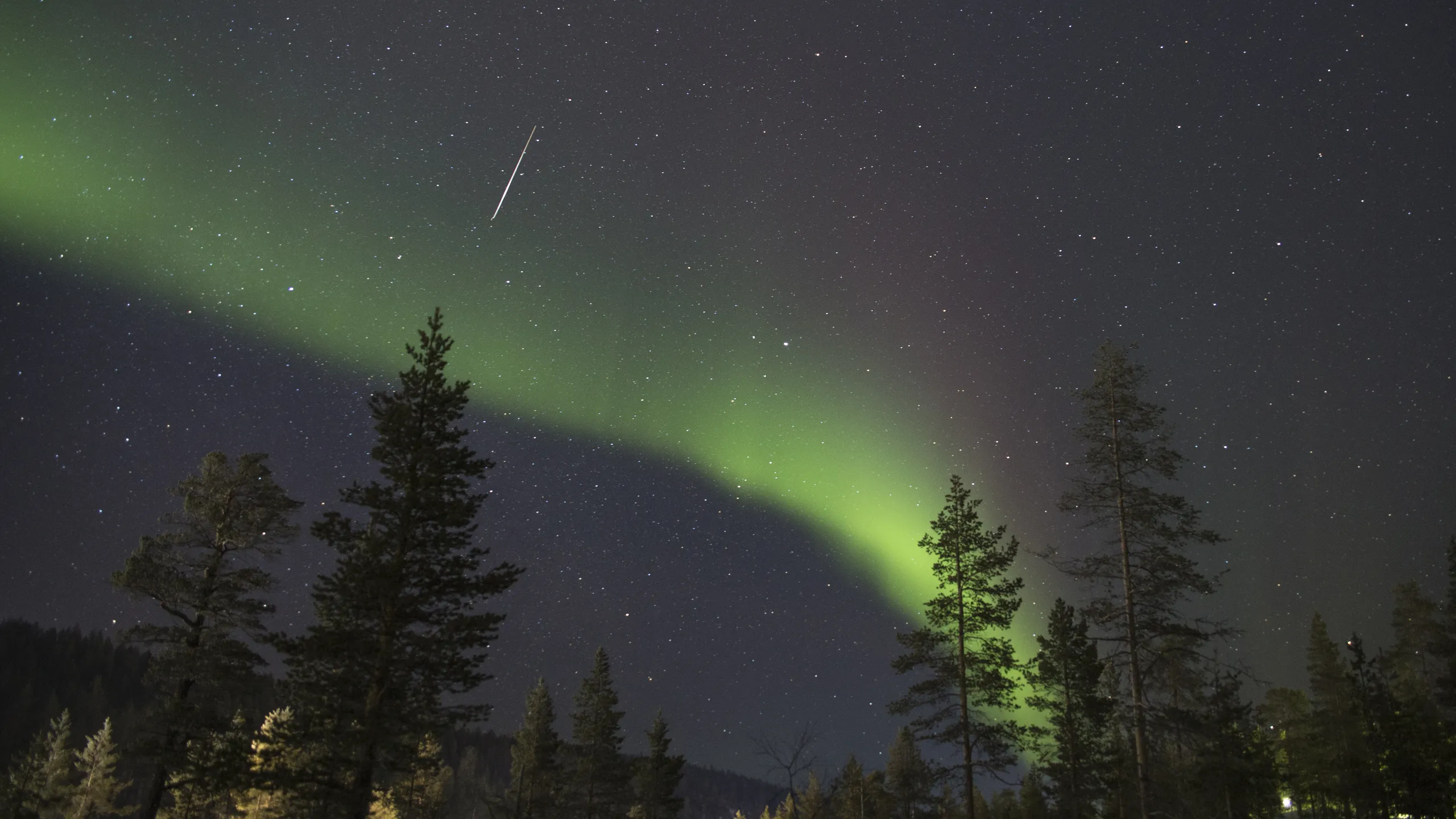
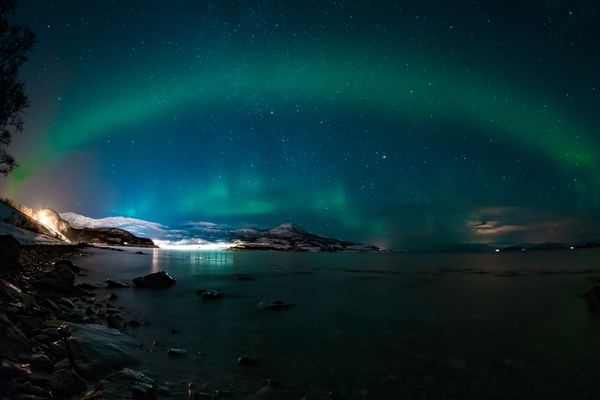
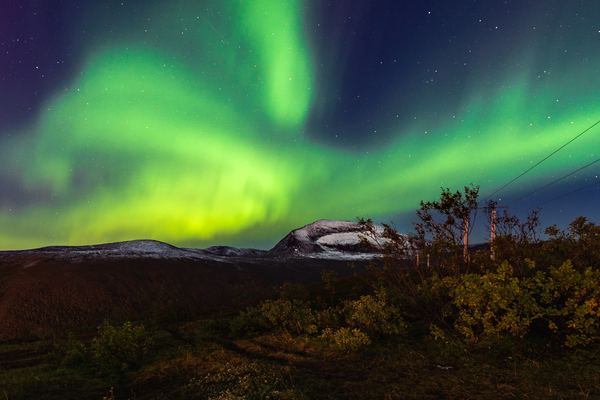
A meteor shower and the northern lights on the same night sound like a bonus: two things in one sky for the price of one cold evening. The Geminids peak over aurora country on the night of 13 to 14 December 2026, and a fair number of December itineraries will be sold on that overlap. The geometry is less generous than the calendar. At the latitude of Tromso the Geminid radiant never climbs higher than about 53 degrees, which caps the rate before anything else goes wrong, and a good aurora is a light source. The brighter one sky gets, the less you see of the other.
This article was planned around the Draconids of 8 and 9 October, which have been and gone. It is published after them deliberately. The arithmetic of watching two things at once does not change between showers, only the numbers do, and the reader who needs it is the one looking at the next peak rather than at last month's.
What we could check, and what we could not
The International Meteor Organization is the body whose figures the rest of this field quotes. On 21 October 2026 its website was mid-rebuild, carrying a notice that parts of it remain unavailable, and the shower calendar entries would not open.
Two consequences follow. We have no published counts for the 2026 Draconid return, so nothing is said here about how it actually performed. And the per-shower numbers below come from the IAU Meteor Data Center, from the American Meteor Society calendar and from a 2017 paper in Monthly Notices of the Royal Astronomical Society, each opened and read on the date given, rather than from the IMO working list that most articles on this subject are quoting at second hand.
Every rate you have read assumes the radiant is overhead
"Up to 120 an hour." "150 at peak." Those figures are zenithal hourly rates, and the word zenithal is doing the work. Galina Ryabova and Jurgen Rendtel define it in their 2017 study of Geminid activity as "the number of shower meteors N seen per hour by one observer under standard conditions, i.e. radiant in the zenith (elevation hR = 90 degrees), limiting stellar magnitude LM = +6.5 mag and unlimited field of view". Nobody has ever observed under those conditions. It is a yardstick for comparing one year against another, not a forecast of your evening.
The correction back to the real world sits inside their equation, which divides the raw count by sin hR, the sine of the radiant's altitude. Run it the other way and it gives you the ceiling at a given latitude. The Geminid radiant lies at declination +32.5 degrees, from the IAU Meteor Data Center's table of established showers. A point at that declination can never rise higher than 90 degrees minus the gap between it and your latitude. In Tromso, at 69.65 degrees north, that comes to 52.8 degrees, and the sine of 52.8 degrees is 0.80.
So before cloud, before the moon, before any aurora at all, someone standing outside Tromso is working with four fifths of the rate the headline number describes, and only at the single best moment of the night. The same shower watched from Madrid is worth 0.99.
| Place | Latitude | Highest the radiant gets | Fraction of the standard geometry | Does it ever set? |
|---|---|---|---|---|
| Alta | 69.97 N | 52.5 degrees | 0.79 | No |
| Tromso | 69.65 N | 52.8 degrees | 0.80 | No |
| Abisko | 68.35 N | 54.2 degrees | 0.81 | No |
| Rovaniemi | 66.50 N | 56.0 degrees | 0.83 | No |
| Fairbanks | 64.84 N | 57.7 degrees | 0.84 | No |
| Reykjavik | 64.15 N | 58.3 degrees | 0.85 | No |
| Yellowknife | 62.45 N | 60.0 degrees | 0.87 | No |
| Madrid, for comparison | 40.40 N | 82.1 degrees | 0.99 | Yes |
That column is a ceiling at the radiant's best moment of the night, not a prediction of what anybody counts. Everything else only subtracts from it.
There is a consolation, and it is a real one. At 69.65 degrees north anything above declination +20.4 degrees never sets, and +32.5 clears that by twelve degrees, so the Gemini radiant stays above the Tromso horizon all night and bottoms out around 12 degrees rather than disappearing. In Madrid it rises and sets like everything else. The Arctic trade is a lower ceiling in exchange for a longer window, laid over a December night that already runs eight hours of astronomical darkness.
The same arithmetic runs the other way for the showers on either side of the Geminids. The October Draconid radiant sits at declination +52.4 degrees and the Quadrantid radiant at +49.5. From Tromso those reach 72.8 and 69.8 degrees, worth 0.96 and 0.94 of the standard geometry. Aurora country is a mediocre place to watch the biggest shower of the year and a very good place to watch the two on either side of it. The marketing runs the opposite way round, because the Geminids are the famous one.
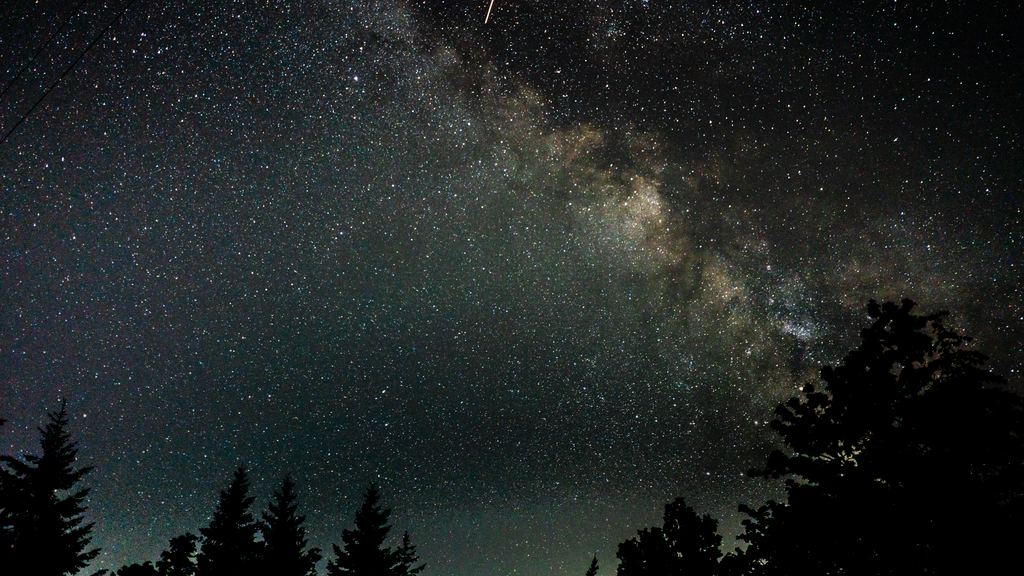
The radiant is in the south. The aurora usually is not.
This is the part no rate calculation covers, and it is where the title of this article comes from.
Gemini sits well south of every destination in that table, which means the radiant culminates due south. The auroral oval at these latitudes sits to the north on a quiet night and only comes overhead when activity picks up. For most of an ordinary evening the two things you came out for are in opposite halves of the sky.
That costs more than it sounds. Meteors are caught with peripheral vision, by someone who has been still long enough for their eyes to adjust and who is looking at nothing in particular. Swinging round to check the northern horizon every few minutes undoes exactly that, and so does every glance at a phone. The same adjustment is what lets a faint aurora read as anything other than grey cloud, which we wrote about separately in what the northern lights look like to the naked eye.
The practical answer is to stop treating them as two activities. Face east or west, and lie back if there is anything to lie on. Both halves of the sky are then in front of you at once and neither is behind you. Reclining is also the only way to watch for an hour without your neck giving out, which is advice older than any of the data here and still the best available.
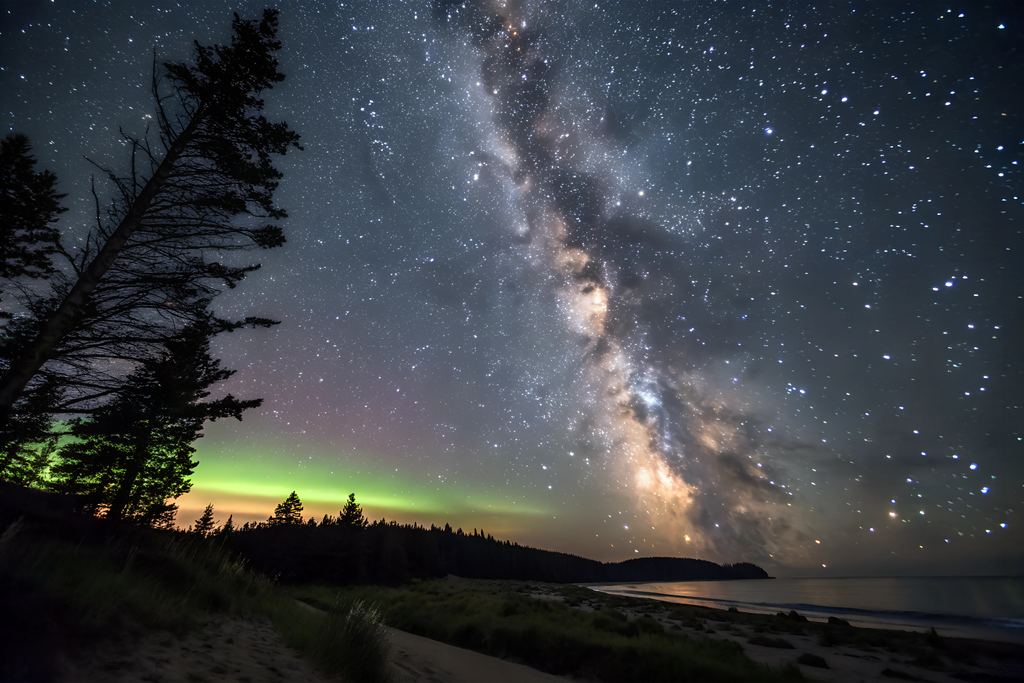
The quiet aurora night is the better meteor night
A thin arc low on the northern horizon leaves the rest of the sky dark. That is the night on which a shower actually delivers, and it is the night most people write off as a failure.
Our permanent page on cloud sets out how often each destination gets a sky worth standing under, and what the figure does and does not mean.
A good aurora is light pollution
The other term in that same equation is r raised to the power of 6.5 minus LM, where LM is the faintest star you can see and r is the population index, which describes how much more numerous the faint meteors are than the bright ones. Ryabova and Rendtel use r = 2.4 for the Geminid peak. That exponent is unforgiving. Lose one magnitude of limiting magnitude and you lose a factor of 2.4 in meteors; lose two and the factor is 5.8.
An aurora bright enough to photograph without trying is, to a meteor observer, a lamp. We have not found a published measurement of how many magnitudes a given display costs, and we are not going to invent one, because it would depend on its brightness, its extent and where in the sky it sits. The formula gives the shape of the cost rather than its size, and the shape is steep. The same paper adds that counts made under bright conditions "may suffer from a small sample and from an under-correction", so the correction is least trustworthy exactly when you most need it.
On a night when the aurora does what you paid for, the meteor shower is mostly lost. On a night when it stays a thin arc low on the northern horizon, the meteors are yours.
Both skies peak on their own schedule, and the schedules are independent. Geomagnetic activity has nothing to do with the Earth crossing a dust stream left by an asteroid, and no amount of planning puts the best hour of one inside the best hour of the other. What you can do is work out which of the two you are getting as the evening goes on, and stop fighting it.
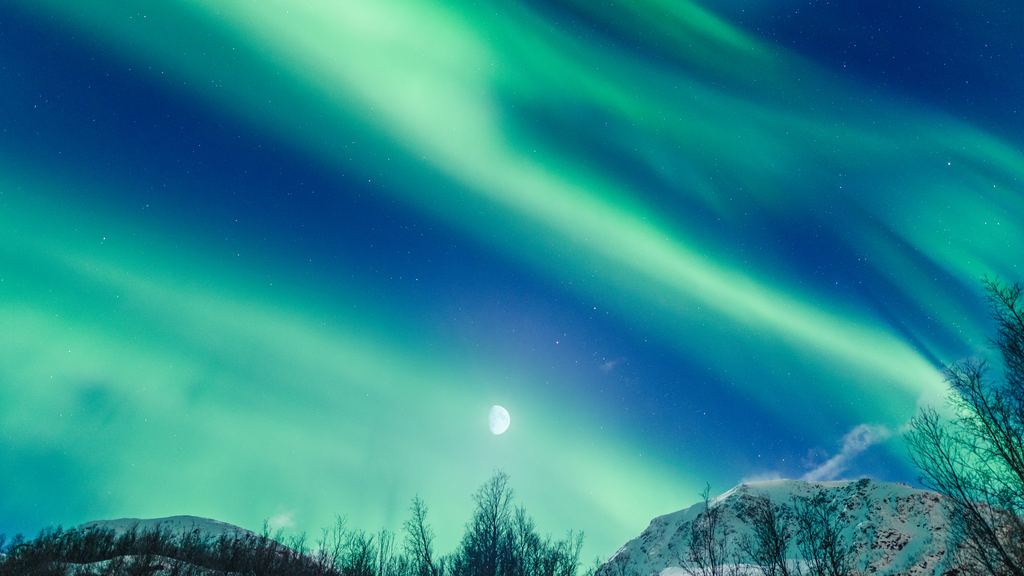
Two numbers for the same moon, and both of them are small
The moon is the interference everyone already knows about, and this season it behaves. New moon falls on 9 December 2026, which puts the Geminid peak four to five nights later, with a waxing crescent that sets early in the evening and leaves the dark hours alone.
How thin a crescent depends on who you ask, and the two answers do not agree. The American Meteor Society calendar, read on 21 October 2026, puts the moon at 15% illuminated on the peak night. Our own ephemeris table for the 2026-27 season gives 21 to 28% across the two nights of the peak. A gap like that usually comes from evaluating at a different instant, and here it changes nothing: both describe a crescent that is out of the way once it has set. It is recorded because a site that objects to unsourced percentages has to show its own when they disagree. The full set of new and full moons for the season is on our page on moon, darkness and the nights worth booking.
December has all of the darkness and some of the worst sky
Here is where our own numbers answer, and where the Geminids turn into a harder sell in aurora country than the date suggests.
December carries the most darkness of the whole season at these latitudes. It also carries, at several of them, the least usable sky. In the previously published cloud series Tromso meets our cloud criterion on 16.8% of December nights, the lowest figure anywhere in its own row, while Fairbanks meets it on 47.4% and Yellowknife on 41.0%.
| Destination | Nights meeting our cloud criterion | Average hours of astronomical darkness, 18:00-02:00 | Geminid radiant ceiling |
|---|---|---|---|
| Abisko | 13.5% | 8.0 | 54.2 degrees |
| Tromso | 16.8% | 8.0 | 52.8 degrees |
| Rovaniemi | 22.3% | 8.0 | 56.0 degrees |
| Reykjavik | 38.7% | 6.9 | 58.3 degrees |
| Yellowknife | 41.0% | 7.7 | 60.0 degrees |
| Fairbanks | 47.4% | 7.5 | 57.7 degrees |
Those percentages are a planning indicator and not a probability of seeing anything. The rule counts a night as usable when at least two of the nine hourly samples from 18:00 through 02:00 local time are at or below 50% cloud cover, and the samples need not be consecutive, so the figure does not describe two unbroken hours of clear sky. The series covers ten September to March seasons within September 2015 to April 2025, taken from the Open-Meteo archive with no weather model named in the saved request, and it was not recalculated for this article. Nothing in it accounts for a tour that drives somewhere else. The assumptions and limits are set out on our page on when the sky opens.
Read across, the table says something the December brochures do not. The month that gives Europe its longest night gives it the smallest chance of a sky to use the night on, and the two North American entries reverse both halves: less darkness, far more of it clear, and a radiant a few degrees higher because they sit further south. For a Geminid trip specifically that is an argument for the wrong continent, which is not an argument we expected the numbers to make.
Three nights, and the one that is hardest to use
| Shower | Peak | Radiant declination | Highest from Tromso | Moon at peak | Rate quoted under a dark sky |
|---|---|---|---|---|---|
| October Draconids | 8-9 October 2026, past | +52.4 | 72.8 degrees | Not applicable | No published counts available to us |
| Geminids | Night of 13-14 December 2026 | +32.5 | 52.8 degrees | Waxing crescent, 15% (AMS) or 21-28% (our ephemeris) | NASA: 40-50 an hour, up to 120 in perfect conditions |
| Quadrantids | Near 03:30 UT on 4 January 2027 | +49.5 | 69.8 degrees | Waning crescent, 18% (AMS) | AMS: about 25 an hour on average |
The Quadrantids are the awkward one. The American Meteor Society puts the 2027 maximum near 03:30 UT on 4 January and notes that it lasts roughly six hours, which is unusually narrow for a major shower. From Tromso that is half past four in the morning, hours after the last minibus has dropped everyone back at their hotel. A peak that short either falls inside your window or it does not, and nobody sells a departure built around it.
The Geminids are the opposite, and that is their real advantage over the headline rate. The American Meteor Society gives the activity period as 4 to 17 December, and NASA quotes 40 to 50 meteors an hour under dark skies with up to 120 in perfect conditions. Neither figure survives contact with a 53 degree radiant and an aurora overhead, which is the point of everything above. But a shower spread over a fortnight is one you can plan a trip around, and the nights either side of the peak are not wasted.
If you have already booked a tour
The logistics of an aurora chase happen to suit a meteor shower better than anything else you could buy. A chase exists to find clear sky and will drive a long way to get it, and clear sky is the one thing both phenomena need absolutely. In a month when Tromso meets our cloud criterion on roughly one night in six, being driven to whichever valley is open beats standing still and hoping.
What works against you is everything else about the evening. Bonfires, vehicle headlights, the interior light that comes on each time somebody opens a door, the phone screens that appear the moment the aurora does anything. Each one resets the adjustment that makes faint meteors visible, and a shower is mostly faint meteors. If both skies matter to you, walk a short way from the fire once the group has settled, and tell the guide why, so that nobody comes after you with a torch.
Three questions are worth asking before booking a December departure: what time the tour returns, whether there is a stop long enough to stand still for half an hour, and whether the operator will drive on past the first clear patch rather than parking at it. None of those are usually on the product page. For the camera side of the same night our guide covers settings that work in the cold; the short version is that an aurora wants short exposures to keep its structure and a meteor wants the shutter open for as much of the night as possible, and one camera cannot do both.
Tromso chases that go looking for the clear sky
Picked from the Tromso minibus and jeep category on 21 October 2026, by review volume, after setting aside the departures sold on a viewing guarantee. What recommends them for a shower night is the same thing that recommends them for an aurora night: they move. Prices, routes and group sizes are on each listing.
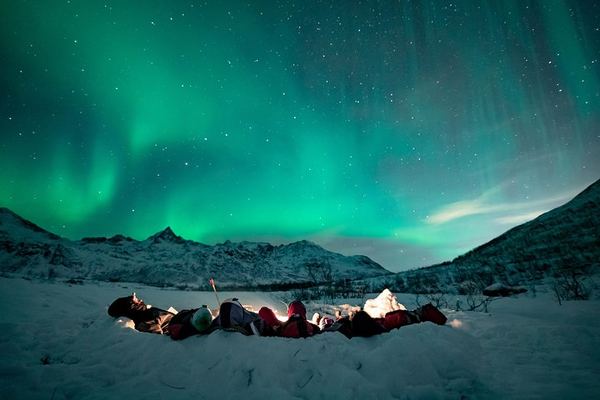
Tromsø Aurora Hunt with Bonfire, Hot Meal, Thermal Suit and Photos
Thermal suits out, campfire lit and a hot meal served while you wait. The guides set up your camera, and their own photographs reach you free afterwards.
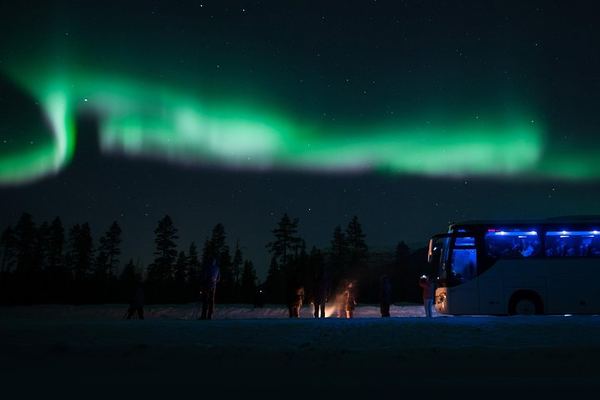
Northern Lights Big Bus Chase from Tromso with Chasing Lights
The budget chase, and honest about it: clear sky comes before scenery, some stops are roadside, and the route can cross into Finland. Dress in layers.
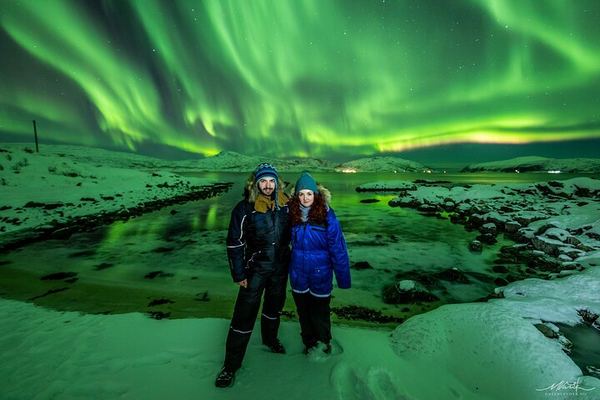
Northern Lights Adventure with Greenlander, Maximum 8 People
A working chase in a modified 4x4 Mercedes: hot meal, tripods, thermal suit and aurora portraits. Expect snow underfoot and a genuinely late finish.
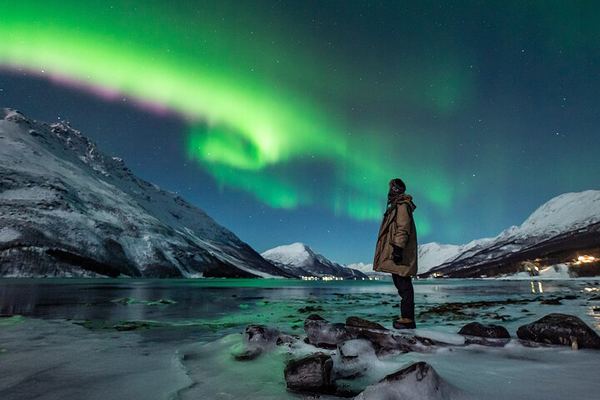
Northern Lights Minibus Chase from Tromso with Chasing Lights
The minibus version of the chase: a smaller group, more room to change plan mid-evening, and a route that follows cloud and road, sometimes into Finland.
Ratings collected by Viator and Tripadvisor
Straight answers
Can you see a meteor shower and the northern lights on the same night?
Yes, and photographs of both in one frame are real. What the photographs do not show is the trade. Both need the same clear, dark sky, so a good night for one is a good night for the other, but a bright aurora raises the sky brightness and a shower is mostly faint meteors. The two also sit in different parts of the sky from aurora country: the Geminid radiant culminates due south, while the aurora usually arrives in the north. You can watch both on one night. You cannot give both your full attention in the same hour.
When do the Geminids peak in 2026, and will the moon be in the way?
The peak is the night of 13 to 14 December 2026, with activity running from 4 to 17 December. Both the American Meteor Society and NASA give those dates. The moon is a thin waxing crescent that sets early: the American Meteor Society calendar says 15% illuminated, our own ephemeris table gives 21 to 28% across the two nights. The figures disagree slightly and the conclusion is the same, because new moon falls on 9 December and a crescent that young is gone before the radiant is high.
Why do fewer Geminids appear from Tromso than from southern Europe?
Because the published rates assume the radiant is directly overhead, and in the Arctic it never is. The Geminid radiant sits at declination +32.5 degrees, so from Tromso at 69.65 degrees north it can never rise above 52.8 degrees. The standard correction multiplies the rate by the sine of that altitude, which comes to 0.80 against 0.99 from Madrid. The compensation is that at Tromso the radiant never sets at all, and December supplies eight hours of astronomical darkness to use it in.
Does a bright aurora ruin a meteor shower?
It takes a serious bite out of it. The correction used by meteor observers raises the population index, 2.4 at the Geminid peak, to the power of the magnitudes of limiting magnitude you have lost. One magnitude costs a factor of 2.4, two magnitudes a factor of 5.8. We have found no published measurement of how many magnitudes a particular display costs, so we will not put a number on it. The direction is not in doubt, and the researchers who built that correction warn that it is least reliable under bright skies.
Where should you look to catch both?
East or west, lying back if you can. That puts the southern half of the sky, where the Geminid radiant is, and the northern half, where the aurora normally starts, both within view without turning your head. Meteors are caught at the edge of vision rather than by staring at the radiant, so looking at nothing in particular is the correct technique rather than a lapse in concentration.
Is an aurora tour a reasonable way to watch a meteor shower?
Better than it sounds, for one reason: a chase tour spends the evening looking for clear sky, and that is the scarcer resource in December. Against it, the evening is built around a fire, headlights, hot drinks and a group, all of which ruin the eye adjustment that faint meteors need. Ask what time the tour returns, whether there is a stop long enough to stand still for half an hour, and whether the guide will keep driving past the first opening.
Sources
Every external figure above comes from one of these pages, each opened on 21 October 2026.
- IAU Meteor Data Center, shower parameters, for the radiant declinations of GEM, DRA and QUA: ta3.sk, Meteor Data Center stream data
- American Meteor Society, meteor shower calendar 2026-2027, for activity periods, the Quadrantid maximum time and the moon percentages: amsmeteors.org/calendar
- G. O. Ryabova and J. Rendtel, Increasing Geminid meteor shower activity, MNRAS 2017, for the definition of the zenithal hourly rate, the sin hR and population index terms, and the under-correction warning: arxiv.org/pdf/1712.01516
- NASA, Geminids, for the activity period, the hourly rates and the parent body: science.nasa.gov
- NASA, Astronomy Picture of the Day, 19 December 2009, for the altitudes at which both phenomena occur: science.nasa.gov, Aurora Shimmer, Meteor Flash
- EarthSky, Draconid meteor shower guide, for the radiant standing highest at nightfall: earthsky.org
- International Meteor Organization, calendar page, which on the date of writing carried only a restoration notice: imo.net
The radiant ceilings and the fractions beside them are our own arithmetic on those declinations: 90 degrees minus the difference between the declination and the latitude, then the sine of the result. Anyone can repeat it. The cloud and darkness figures are previously published outputs of our own series and were not recalculated for this article; their method and limits are on the page on when the sky opens.
Data verified on . Shower figures read 21 October 2026 from the IAU Meteor Data Center, the AMS calendar and NASA. Cloud and darkness values previously published, not recalculated. About This Site