
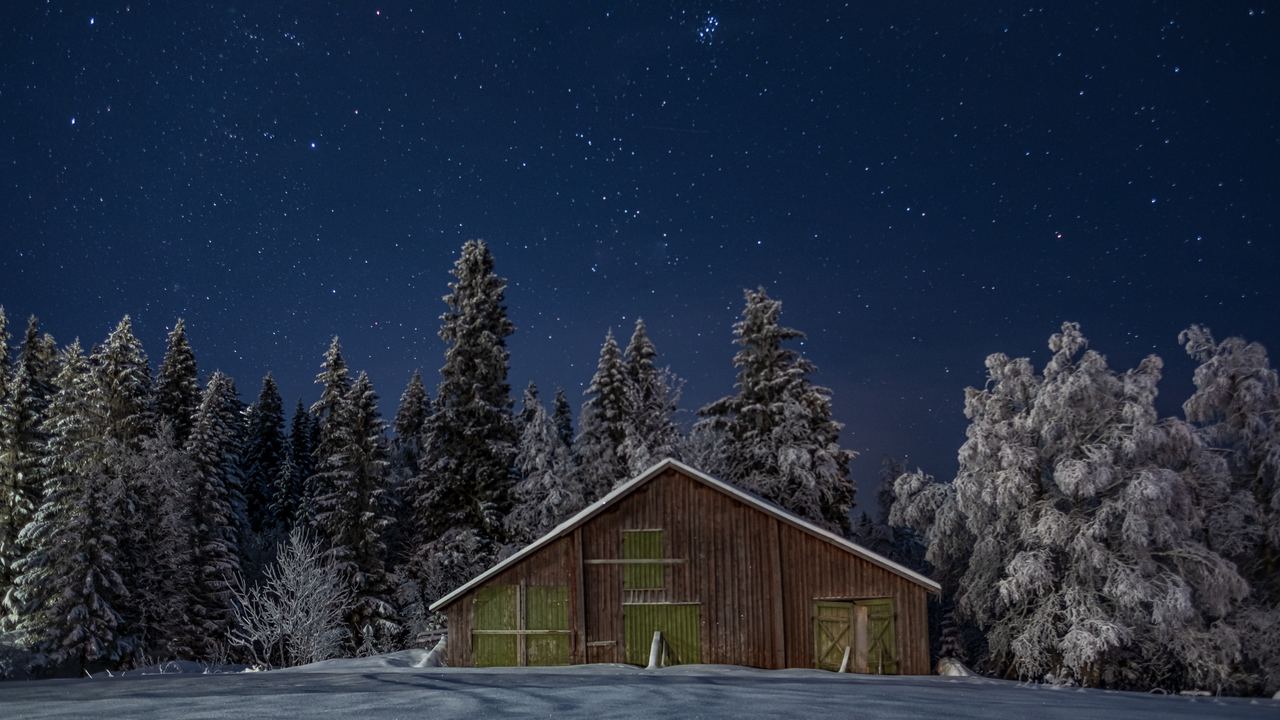
Lodges & Cabins
10 heated rooms on hilltops, from 87 EUR, and the only Fairbanks format whose best month is January
Alaskan aurora lodges look like a comfort product and are actually a physics one. Fairbanks lies at about 136 metres in the Tanana Valley, and in winter the air there stratifies: cold, dense air sinks into the valley floor and sits, while the air above stays warmer. The result is a temperature inversion strong enough that Cleary Summit, twenty miles out and 680 metres up, or Murphy Dome at 893 metres, can be ten to twenty degrees warmer than the car park at your hotel.
Mountains are supposed to be colder. Here they are not, and every operator on this page has built a business on that fact. Get above the inversion and you are simultaneously warmer, clear of the ice fog that settles over the town below minus 35, and looking at a northern horizon with nothing standing in front of it.
The other thing this category solves is stamina, and that turns out to matter more here than we first wrote. An aurora night is three to five hours of waiting punctuated by twenty minutes of something happening, and at minus 30 most people do not last. A heated room with a view converts a night you would have abandoned at eleven into one you finish.
Which has a consequence for the calendar. Fairbanks has its best sky in midwinter, not at the equinoxes, and the only thing arguing against January is the cold. This is the one format that answers that objection directly, so it is also the only Fairbanks format whose best month is unambiguously January.
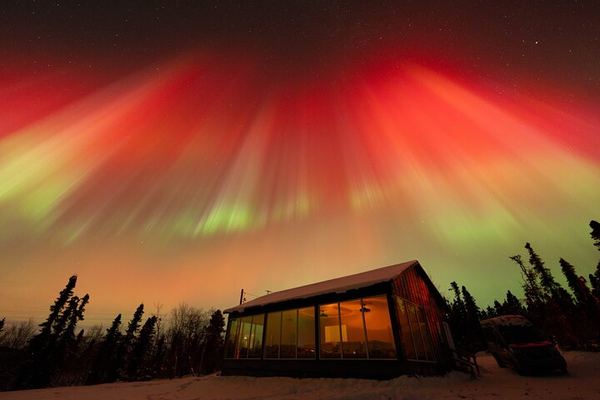
Aurora Glass House at Cleary Summit with Photography Service
Floor to ceiling windows at the top of Cleary Summit, so you compose from the warm and step out only for the shot. At minus twenty that changes the night.
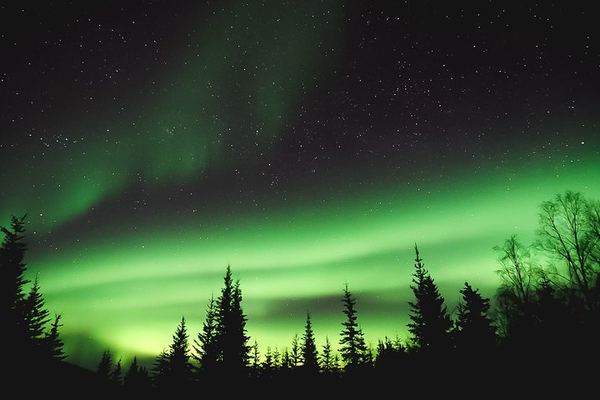
Aurora Viewing Lodge Tour near Fairbanks with a Local Guide
Individually chosen lodges away from the city glow, so you wait indoors, step out when the aurora appears, and come back to warm up as often as you like.
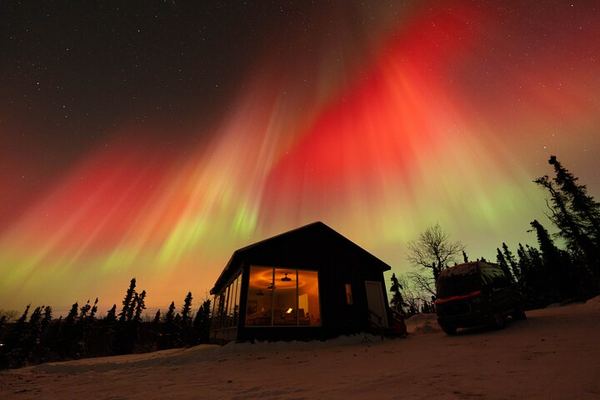
Cleary Summit Aurora Glass House Northern Lights Tour from Fairbanks
Opened in 2025 with over 270 degrees of view from a heated room. A summit puts the horizon below you; glass lets you watch for hours with warm hands.
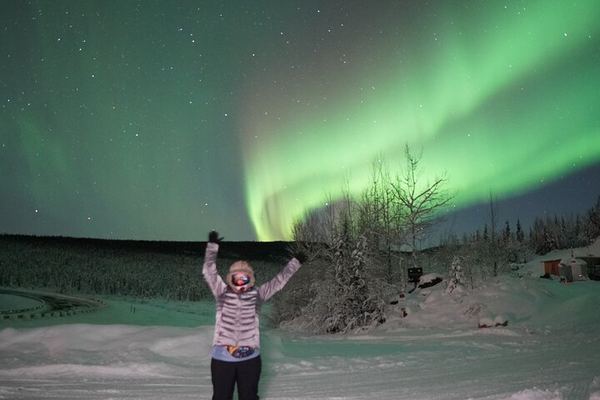
Fairbanks Northern Lights and Aurora Photography in a Heated Geodesic Dome
Choose your night: stay at the off-grid homestead with its heated dome and a view of the sky, or go chasing in the van. Portraits or camera lessons either way.
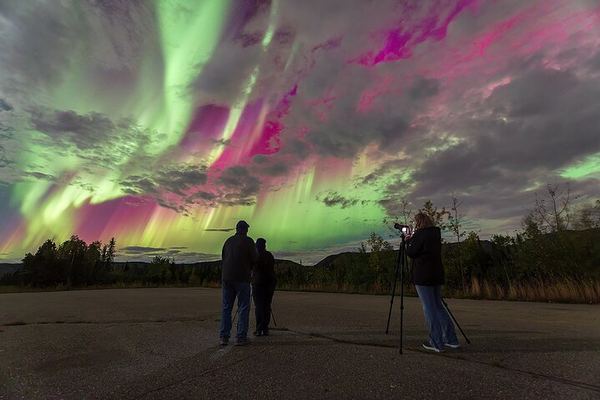
Fairbanks Northern Lights Lodge and Chase Tour, Max 10 Guests
Clear nights are spent at a private wilderness lodge; when cloud moves in, the van goes chasing instead. Most operators do one or the other, not both.
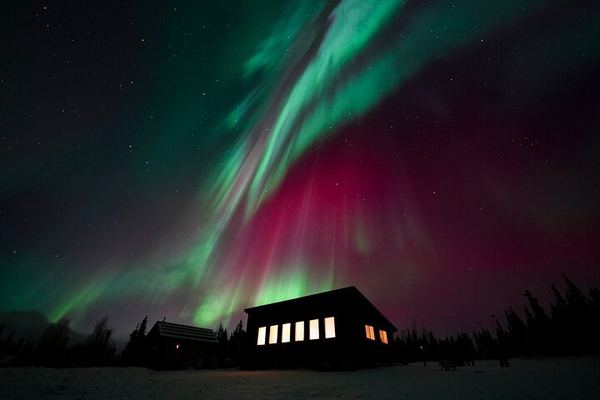
Mountaintop Aurora Cabin near Fairbanks with 360 Degree Views and Photography
High ground with clear sightlines all round, so a low display on the northern horizon still shows, and 10 acres means nobody stands in your photograph.
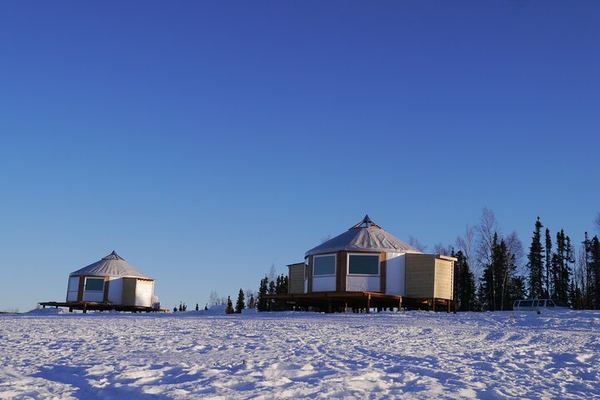
Northern Lights Lodge Viewing near Fairbanks with Hotel Pickup
Lodge viewing outside Fairbanks: large windows and a heated room, with hotel pickup. The aurora is a natural phenomenon, so nobody can promise a display.
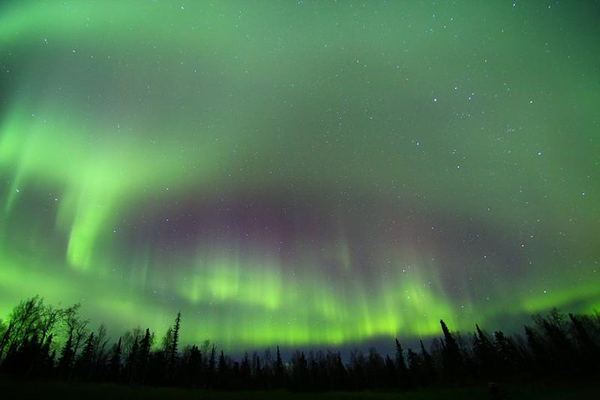
Northern Lights Viewing at Murphy Dome near Fairbanks
Elevation is the point: the ground falls away on all sides, so a weak display low in the sky is visible instead of hidden behind a treeline or a ridge.
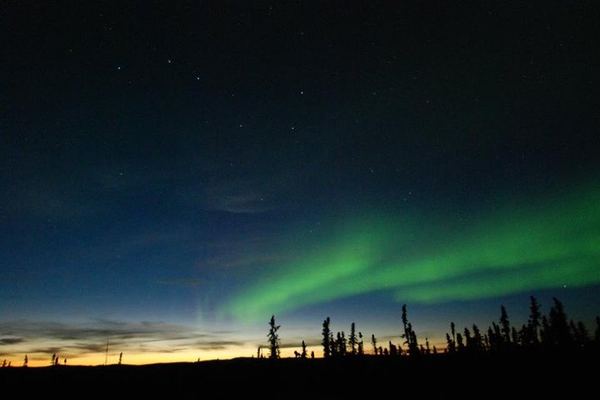
Northern Lights Viewing with a Home Cooked Off Grid Dinner near Fairbanks
Dinner as guests in an off grid Alaskan yurt, where no mains power also means no street lighting, which is exactly the condition an aurora watch needs.
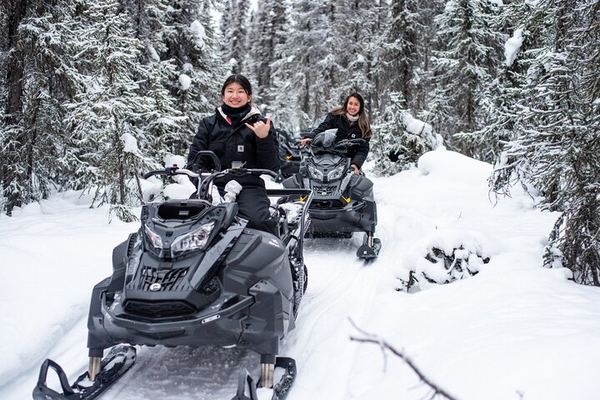
Reindeer and Snowmobile Day Trip to Borealis Basecamp with Lunch
Feed the herd with experienced handlers, then ride the Trans Alaska Pipeline route and a working trapline, with wide views over the White Mountains.
Ratings collected by Viator and Tripadvisor
The ten sites
The cheapest aurora products in Alaska are on this page, and the reason is simple: you are paying for a seat in a building rather than for a vehicle that will drive 200 miles.
| Site | Price | What it is |
|---|---|---|
| Aurora Glass House, Cleary Summit | 87–158 EUR | A glass-walled cabin on a summit with more than 270 degrees of view. Two operators sell access to it |
| Mountaintop cabin, 360 degrees | 96 EUR | Ten acres of open yard around a large viewing cabin, unobstructed in every direction |
| Murphy Dome | 114 EUR | The highest road-accessible point near Fairbanks, with the ground falling away on all sides |
| Lodge viewing with hotel pickup | 141–176 EUR | A warm lodge outside the city's light dome; you wait inside and step out when it starts |
| Heated geodesic dome, off-grid homestead | 176 EUR | Stay at the dome or take the van out chasing. You choose on the night |
| Off-grid cabin with a home-cooked dinner | 176 EUR | No mains power means no street lighting either, which is exactly the condition required |
| Private wilderness lodge, max 10 | 316 EUR | Chases on clear nights, holds at the lodge otherwise. The only one that does both properly |
| Borealis Basecamp day trip | 210 EUR | Reindeer and a snowmobile run along the pipeline by day, lunch included |
Two of the ten will take you out chasing if the night calls for it, and the rest are fixed. That is the one distinction worth checking before you book. A fixed site is a bet on one patch of sky, and Fairbanks is dry enough that the bet usually pays: at 48.9% of season nights with usable sky, it is the best base rate in this catalogue, and a fixed site here is a far better proposition than a fixed camp in Lapland at 20%.
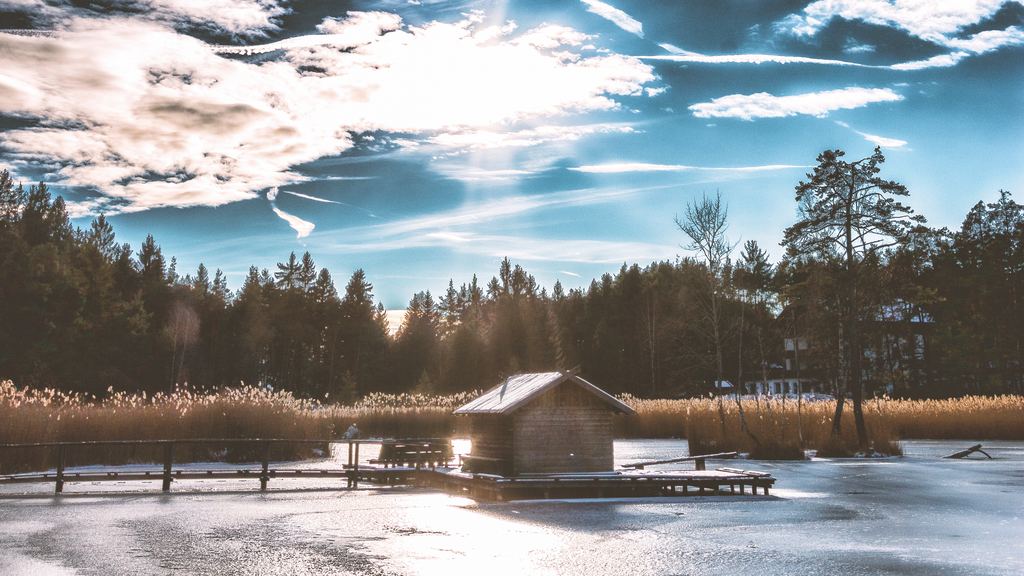
Glass: what it gives and what it takes
Three of these sites are built around glass, including a glass house on Cleary Summit that its operator says opened in 2025. From a heated chair you can watch the whole northern sky, which on a January night in Alaska is a genuinely different proposition from standing in it.
The trade is real and nobody advertises it. A lit room destroys your night vision in about two minutes, the glass reflects the interior back at you, and frost builds on the outside over the course of an evening. A faint arc, which is what most displays are for the first hour, is close to invisible from inside a warm bright room. The good operators kill the lights the moment anything appears and open the door; the honest question to ask when booking is whether they do.
Photography through glass has the same problem doubled, because the reflection lands on your sensor as well. If the picture matters, plan to be outside for it and use the room for the waiting, which is what it is genuinely excellent at.
Why the northern horizon decides everything
Almost every listing here mentions an unobstructed view, and it reads like filler until you understand the geometry. A display generally begins as a low arc lying across the north, and only climbs overhead if the night escalates. So the first hour, and on a quiet night the whole night, is decided by what is standing between you and the horizon at ground level.
Spruce forest is the enemy. Around Fairbanks the trees are not tall by world standards, but they do not need to be: fifteen degrees of blocked sky is enough to hide a quiet aurora completely. That is why Murphy Dome, a bald hill with the land dropping away on every side, is a named destination rather than just a road, and why a cabin advertising ten acres of cleared yard is advertising something functional.
When to go, and why we changed our answer
This page previously recommended the shoulder months and treated midwinter as the season to endure. That was the Scandinavian rule applied to a place it does not fit, and the numbers say the opposite.
Two things decide how much aurora time a month contains: how often the sky is usable, and how many hours of real darkness there are to use it in. Multiplied together they rank the Fairbanks season like this.
| Month | Usable-sky nights | Darkness per night | Expected usable dark hours |
|---|---|---|---|
| January | 58.1% | 6.9 h | 4.01 |
| December | 47.4% | 7.5 h | 3.55 |
| February | 53.0% | 5.7 h | 3.02 |
| November | 41.3% | 7.0 h | 2.89 |
| October | 46.5% | 5.7 h | 2.65 |
| March | 51.9% | 3.9 h | 2.02 |
| September | 44.0% | 3.1 h | 1.36 |
January is nearly three times better than September, which we had been recommending. On every other Fairbanks page that finding comes with a caveat about the cold, because at minus 35 the equipment fails and people give up. This is the format where that caveat does not apply. A heated room on a summit that is already ten to twenty degrees warmer than the valley is precisely the thing that lets you use a January sky, and it is why the cheapest product in Alaska is also, in the right month, one of the most effective.
Two limits, stated because they cut against us. Our data window covers September to March, so the April end of the operators' season is outside it. And below roughly minus 35 the valley fills with ice fog, a shallow effect a 28 km reanalysis grid will under-resolve: the 58.1% describes the regional sky, which is what these hilltop sites actually sit in, and it overstates what someone downtown sees. On this page that limitation happens to work in the format's favour, and it is worth saying so out loud rather than letting it pass unremarked.
| 1 | 2 | 3 | 4 | 5 | 6 | 7 | 8 | 9 | 10 | 11 | 12 |
Before you book a lodge night
When should I come?
January, and this is the one Fairbanks format where we say that without hedging. It is the best month for sky and darkness combined, the only argument against it is the temperature, and a heated room on a hilltop that sits ten to twenty degrees warmer than the town is the direct answer to that argument.
Is a lodge worse than a chase?
On a marginal night, yes: a van can drive to a hole in the cloud and a building cannot. But Fairbanks has the best base rate in this catalogue at 48.9% of season nights, so a fixed site here is a reasonable bet in a way it is not in Lapland at 20%. And two of these ten will take you out anyway if the night demands it.
Can I see the aurora through the glass?
A strong display, easily. A faint one, no, and most of them start faint. Interior light and reflections cost you exactly the part of the display you need help seeing. Treat the glass as somewhere to wait and expect to step outside for the good bit.
Why is this cheaper than the chases?
No vehicle, no fuel and no 200-mile night. The 87 EUR glass house is the cheapest aurora product in Alaska and it sits on top of a summit with 270 degrees of sky, which is not a compromise you would guess from the price.
Is it really warmer on the hills?
Routinely, in winter. Cold air drains into the Tanana Valley and stagnates while the air above stays milder, so a summit 700 metres up can be ten to twenty degrees warmer than Fairbanks itself. It also sits above the ice fog that forms over the town in deep cold, which is a shallow valley effect rather than real cloud.
Data verified on. Cloud: ERA5 via Open-Meteo, 11 seasons. Darkness: computed ephemerides. Prices and review counts read off the 10 sites on 10 August 2026.