
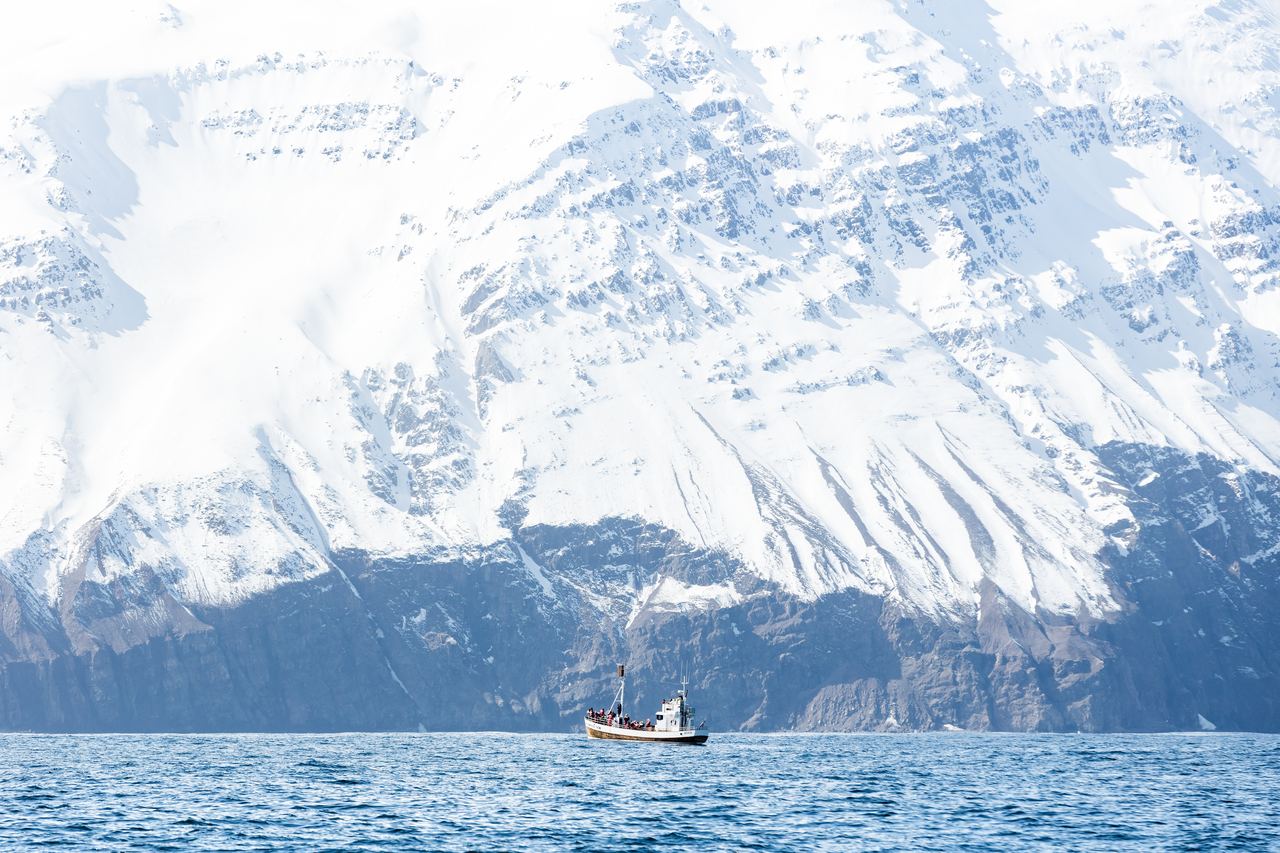
By Boat
Seven sailings from the Old Harbour, and the cheapest way to get under a dark sky in Iceland
Almost every aurora destination has the same problem: the town is bright, and the tour is mostly the drive out of it. Reykjavík does not, because the dark starts at the harbour wall. The Old Harbour is a walk from downtown, and ten minutes after casting off the city glow is behind the stern.
That is the whole economic story behind these prices. No minibus, no two-hour drive, no fuel spent chasing a gap in the cloud — which is also, honestly, the limitation.
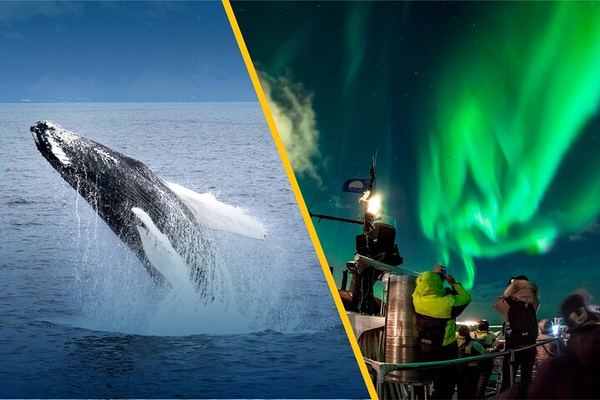
Iceland Super Saver: Northern Lights Cruise plus Whale Watching in Reykjavík
Two boat tours bought together and taken on whichever days suit your trip. Coveralls before boarding: standing still on a winter deck is a different cold.
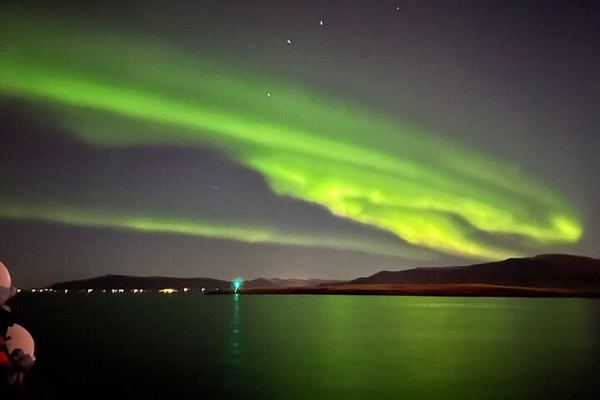
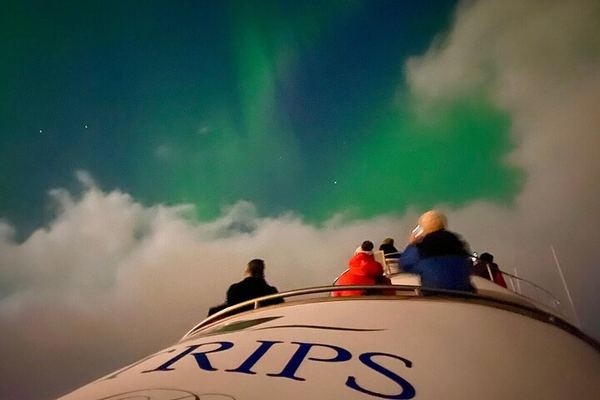
Northern Lights Boat Cruise from Reykjavík Old Harbour with Sea Trips
Out on the North Atlantic the water picks up whatever is happening overhead. Check in at Aegisgardur 5b half an hour early; a free ticket if nothing shows.
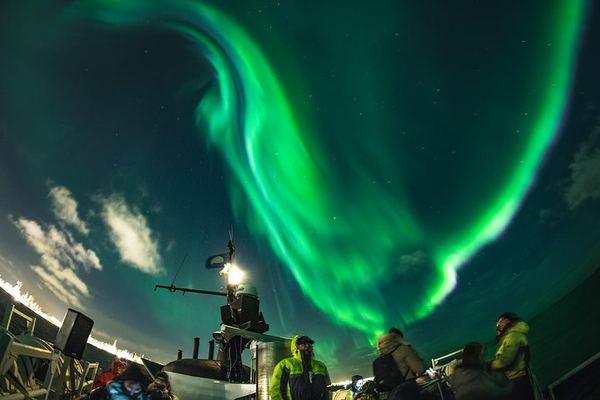
Northern Lights by Boat from Reykjavík Old Harbour, with a Backup Plan
If the forecast cancels the sailing, the evening moves to the Whales of Iceland exhibition at 21:00, so one of the two happens whatever the weather does.
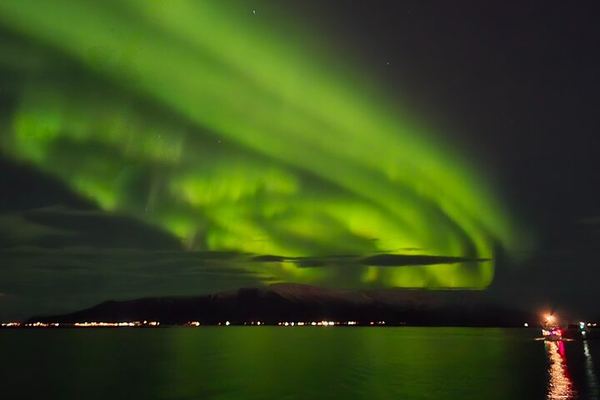
Northern Lights Cruise aboard the Amelia Rose from Reykjavík
Genuinely dark water sits minutes from the harbour, which is why this hunt sails instead of driving. No lights means a free return sailing, valid three years.
Northern Lights Cruise from Downtown Reykjavík
The Old Harbour is a short walk from downtown, so there is no long transfer before the watching starts and none after it. The city glow drops behind the stern.
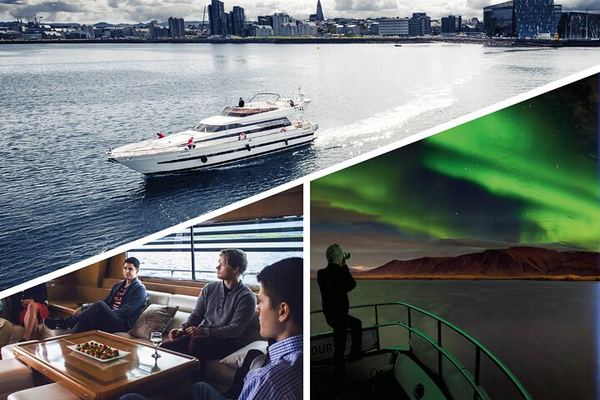
Northern Lights Yacht Cruise from Reykjavík aboard the Harpa, Max 35
Thirty-five passengers at most means room at the rail and a warm interior to duck into, with a bar, café and blankets. Free re-sail if the aurora stays away.
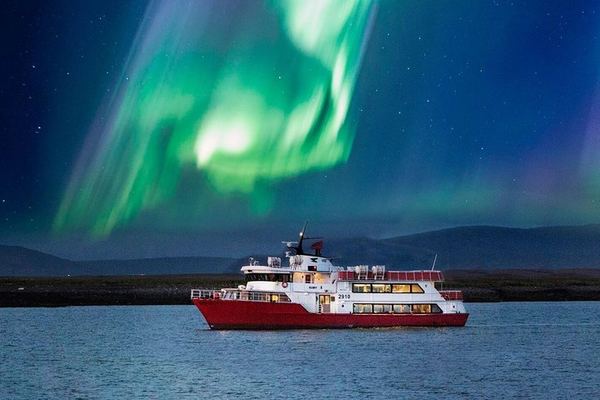
Winter Whale Watching and Evening Northern Lights Cruise from Reykjavík
A three hour whale sailing at 09:00 or 13:00, hours of your own around the Old Harbour, then a night departure further out into Faxaflói bay for the aurora.
Ratings collected by Viator and Tripadvisor
Below the Arctic Circle, and it does not matter
Reykjavík sits at about 64°N. The Arctic Circle is at 66.5°N. On the face of it the city is in the wrong place for the northern lights, and people regularly conclude they need to fly further north.
They do not. The aurora forms in an oval centred on the magnetic pole, which is nowhere near the geographic one, and Iceland's position relative to that magnetic centre puts the whole island under the oval on an ordinary night. The Arctic Circle is a line drawn from the sun's behaviour, not the Earth's magnetic field, and it has no bearing on this at all.
The practical consequence is that Iceland does not require the internal journey that Norway does. In Norway you fly to Oslo and then onward to 69°N; in Iceland you land at Keflavík and you have arrived.
What the seven sailings offer
| The sailing | Boat | Price | What sets it apart |
|---|---|---|---|
| Old Harbour cruise with a backup | Shared | from 70 EUR | A free second sailing if the lights do not appear, which is the policy that matters most |
| Sea Trips from the Old Harbour | Shared | from 76 EUR | Coveralls issued before boarding, snow-capped mountains on the horizon throughout |
| Amelia Rose | Shared | from 83 EUR | Dark North Atlantic water minutes from the harbour |
| The Harpa | max 35 | from 86 EUR | Room at the rail, a warm interior, a bar and café, blankets for the deck |
| Downtown departure | Shared | from 92 EUR | No transfer at either end; walk to the boat and walk home |
| Aurora plus whale watching | Two sailings | from 171 EUR | Two separate trips, taken on days of your choosing |
| Winter whales and evening aurora | Two sailings | from 174 EUR | A 3 hour daytime whale trip at 09:00 or 13:00, plus the night sailing |
The free-rebook policy at the bottom of the price range is worth more than the seven euros that separate it from the next boat up. An aurora cruise that will take you out again for nothing has converted a single coin flip into two, and on a three-night trip that is the single most useful thing an operator can offer.
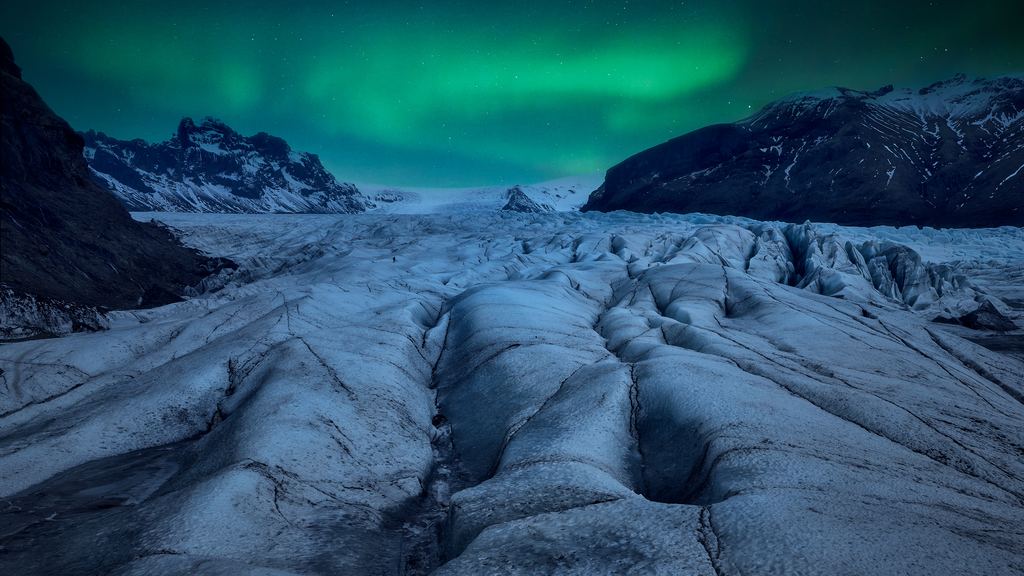
Why a boat works better here than anywhere else
A boat cannot chase. It is committed to the water it sailed into, where a minibus that meets cloud can drive out from under it. Everywhere else in this catalogue that is the format's fatal weakness. In Reykjavík it is close to irrelevant, and the reason is in the cloud record.
Across eleven seasons of reanalysis, the sky above Reykjavík is usable on 35.6% of season nights, and it never moves more than nine points from that figure in any month. It is the steadiest record of the fourteen destinations we measure. Tromsø, by contrast, swings from 34.0% down to 16.8%, which is why a boat there is a gamble and a van is not.
Put plainly: a boat in Reykjavík gives up much less than a boat in Tromsø, because there is far less to gain from driving in the first place. At 70 EUR against 120 for the cheapest Norwegian cruise, it is also half the price.
The whale overlap in Faxaflói
The bay Reykjavík sits on is a whale bay, and unlike the herring-driven fjords of northern Norway it works in winter without moving. The winter species list is minke whales, white-beaked dolphins, harbour porpoises and humpbacks, and the low winter sun does the photographs a favour that summer's flat overhead light does not.
Two of the seven listings here are packages: a daytime whale sailing plus an evening aurora sailing, bought together and taken on whichever days suit. Structurally that is the smartest thing on this page. It fills the daylight hours, which in an Icelandic December are short and often wet, and it means one booking covers two of the three things people come here for.
When these boats sail, and the month that surprises people
The bay does not freeze, so darkness sets the season. What decides the best month is the two things together: how often the sky is usable, and how many hours of real darkness there are to use it in.
| Month | Usable-sky nights | Darkness per night | Moon-free nights | Expected usable dark hours |
|---|---|---|---|---|
| December | 38.7% | 6.9 h | 55% | 2.67 |
| November | 37.0% | 6.4 h | 50% | 2.37 |
| January | 33.9% | 6.3 h | 58% | 2.14 |
| October | 34.5% | 5.1 h | 48% | 1.76 |
| February | 31.1% | 5.1 h | 57% | 1.59 |
| March | 33.5% | 3.5 h | 61% | 1.17 |
| September | 40.7% | 2.7 h | 40% | 1.10 |
December is the best month for a Reykjavík aurora cruise, which is the exact opposite of the advice that holds in Tromsø, where December is the worst month of the year. Iceland's sky barely notices midwinter and the darkness peaks then, so the two line up instead of fighting.
September is the weakest, despite having the best cloud figure of the year at 40.7%. There are 2.7 hours of astronomical darkness in a September night here, and the sailings are two to three hours long: a boat leaving at nine in September is out during twilight for a good part of its trip. This page used to say September was fine. On the numbers it is the month to skip.
One limit, stated because it argues against the ranking: it measures how much dark clear sky a month contains, not the chance the aurora does something inside it. Geomagnetic storms are close to twice as frequent at the equinoxes, favouring September and March. Even doubling September leaves it behind December here.
| 1 | 2 | 3 | 4 | 5 | 6 | 7 | 8 | 9 | 10 | 11 | 12 |
What to expect on deck
Colder than you think, and colder than the same temperature on land. The North Atlantic in February produces a wind that finds every gap, and standing still on an open deck is the least efficient way to stay warm that exists. Most of these boats issue coveralls or blankets; check which one yours does, because it decides whether you spend the evening outside or looking through a window.
Motion is real here in a way it is not in the sheltered fjords of Tromsø. These sailings go out into open water. If you are prone to seasickness, take something before boarding rather than after: it does not work retrospectively.
And photographs will be difficult. A moving deck rules out the long exposures aurora photography depends on. If images are the point of the trip, one of the land-based photography departures will serve you better; if seeing it with your own eyes is the point, the open horizon out here is hard to beat.
Common questions
Which month should I sail in?
December, then November and January. Reykjavík's sky barely changes across the season and the darkness peaks in midwinter, so the two line up instead of fighting each other as they do in Norway. September is the month to skip: the best cloud figure of the year and only 2.7 hours of true darkness to use it in.
Is a cruise better than a land tour in Iceland?
It is cheaper, shorter and starts in the centre of town, and the usual objection matters less here than anywhere: a boat cannot chase cloud, but Reykjavík's sky is the steadiest in this catalogue, so there is less to chase. Given how little these cost, taking one of each on a two-night trip is a reasonable strategy.
What happens if we see nothing?
Depends on the operator, and the difference is worth money. At least one of these sails you again free of charge. Others simply run the trip. Read that line before comparing prices.
How long are the sailings?
Typically 2 to 3 hours including boarding, much shorter than the 5 to 9 hour chases in northern Norway. That is a real advantage with children or an early flight. It also means the month matters: in September a two-hour sailing can be largely inside twilight.
Can I combine this with the Blue Lagoon or the Golden Circle?
Easily. The sailings run in the evening, so a full day of land touring still leaves the night free. That is the main reason boat departures suit a short Reykjavík stay.
Data verified on. Cloud: ERA5 via Open-Meteo, 11 seasons. Darkness and moon: ephemerides. Prices, durations and rebooking policies read from the 7 cruises on 10 August 2026.