
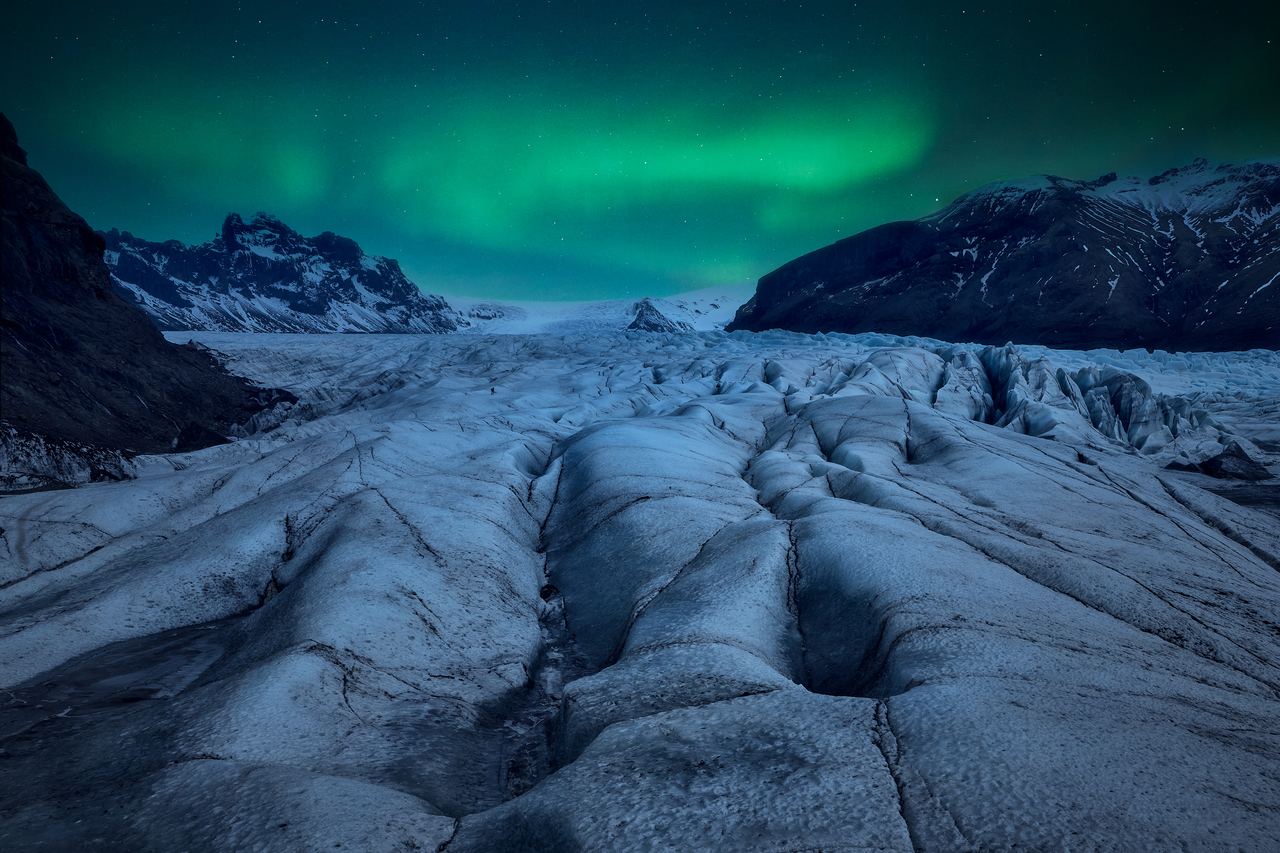
Multi-Day Trips
Two to seven days, because the only real defence against Icelandic weather is more nights
Iceland's weather is the reason this category exists. A day trip from Reykjavík to Jökulsárlón and back is around 760 km of driving in eight hours of winter daylight, which is why most of them do not attempt it. A multi-day trip stops being a race and starts being a route.
The aurora benefits from the same arithmetic, with one important condition attached. Three nights give you three chances only if they are three independent chances, and weather is not independent from one night to the next: a stationary system sits over the same place for days. What breaks the correlation is distance. Three nights spent in different parts of the country are close to three separate rolls; three nights in the same hotel are not.
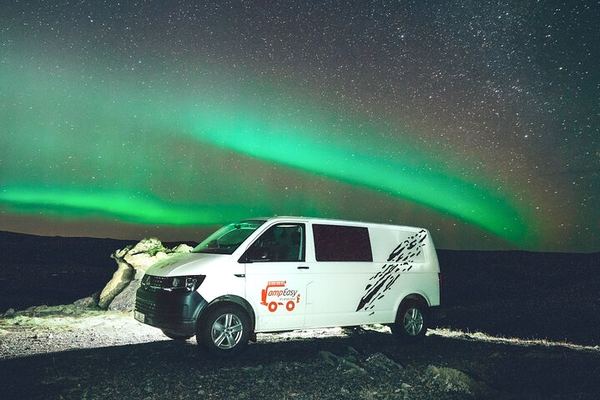
Five Day Self Drive Campervan Break in Iceland with Ice Cave and Aurora
Five days and four nights with the route, the campsite fees and three activities already booked, including a super jeep ice cave run from Skaftafell.
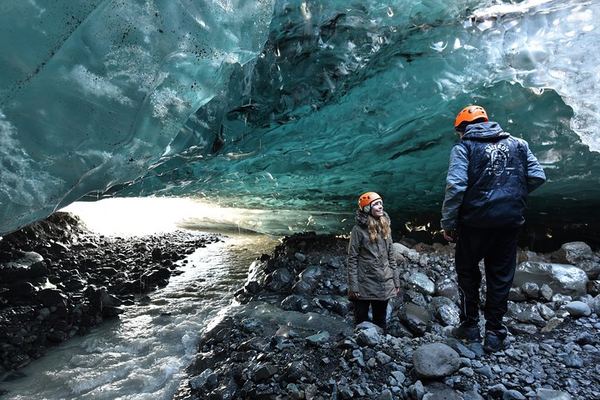
Four Day Blue Ice Cave, South Coast, Golden Circle and Snæfellsnes Tour
Golden Circle, Snæfellsnes and the south coast to Jökulsárlón, ending with a super jeep run into a blue ice cave. The aurora is on the card all four nights.
Four Day Iceland Tour: Golden Circle, South Coast, Volcano Hike and Aurora
The routes most visitors squeeze into day trips, done properly: Golden Circle, south coast, a glacier hike on Vatnajökull and the recent eruption site.
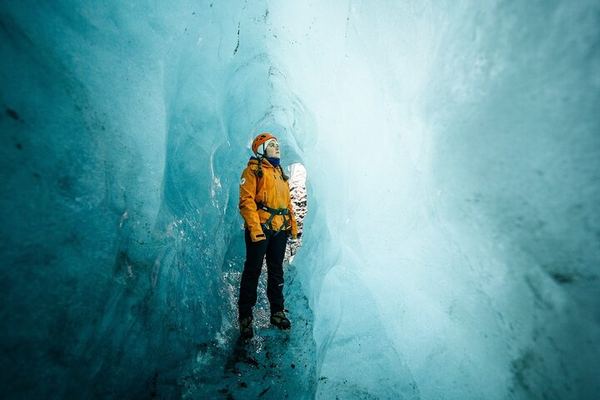
Private Two Day South Coast Tour: Glacier Lagoon, Ice Cave and Aurora
Waterfalls, Reynisfjara and Fjaðrárgljúfur canyon on day one, then Jökulsárlón and a Super Jeep to an ice cave inside Vatnajökull. Private group throughout.
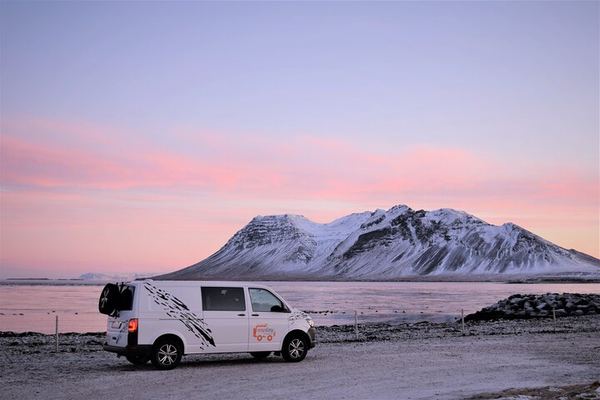
Seven Day Self Drive Campervan Tour of South and West Iceland with Aurora
Seven days and five nights on a route built for winter, with a blue ice cave hike, a glacial valley run and the Icelandic Lava Show already booked in.
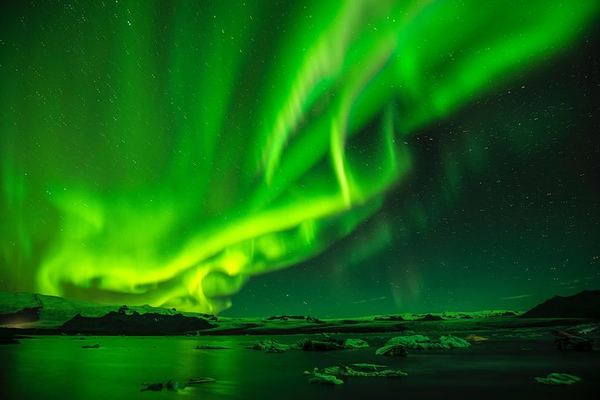
Three Day Aurora Hunt and Glacier Lagoon Tour with Snæland Travel
Two nights near Vík, an evening aurora hunt when the sky allows, and a day at Jökulsárlón and Diamond Beach. Golden Circle and Friðheimar on the way out.
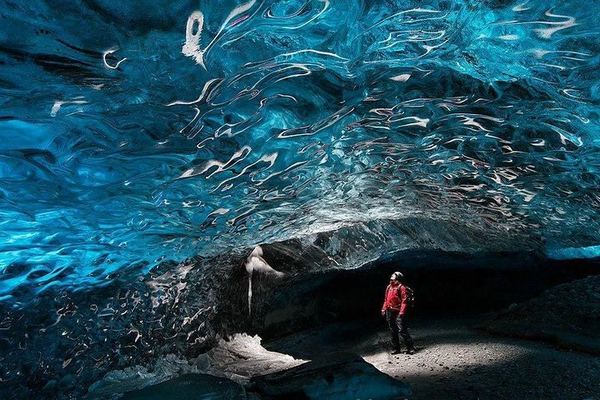
Three Day Iceland Tour: Ice Cave, Glacier Hike and Northern Lights
Two ways of meeting the ice, on the surface and inside it, plus the Golden Circle and the south coast to Diamond Beach. Short cave season, so book early.
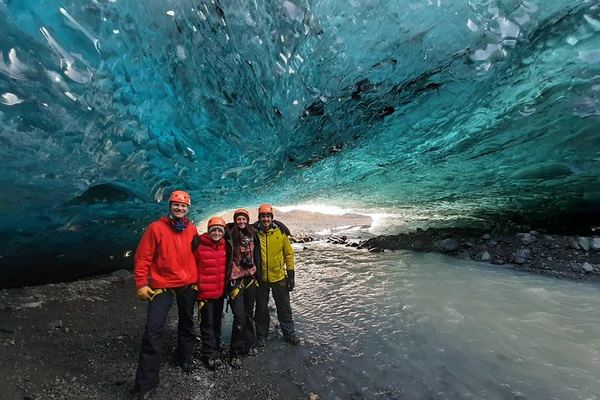
Three Day Tour: Ice Cave, South Coast, Golden Circle and Aurora
Jökulsárlón sits 380 km from Reykjavík, which is why this takes three days instead of one long drive. Blue ice cave, glacier hike and free farm ice cream.
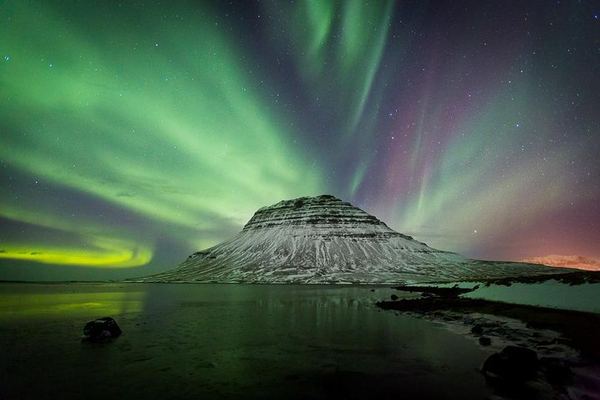
Two Day Snæfellsnes Tour with Lava Caving and Northern Lights
Kirkjufell, Arnarstapi and the black church at Búðir on day one, then underground into Víðgelmir, one of the largest lava caves in Iceland, on day two.
Ratings collected by Viator and Tripadvisor
Three formats, three different holidays
| Format | Length | Price | Who drives | The trade |
|---|---|---|---|---|
| Guided minibus or coach | 3 to 5 days | 814 to 1,260 EUR | Someone else | Accommodation and activities booked; you follow the itinerary |
| Self-drive campervan | 5 to 7 days | 935 to 1,305 EUR | You | Route, activities and campsite fees pre-arranged; the driving and the winter roads are yours |
| Short guided break | 2 days | 440 EUR | Someone else | One night out of Reykjavík, usually Snæfellsnes or the south coast |
| Private guided | 2 days | 6,515 EUR per group | Someone else | Your own vehicle and guide, split across the party |
The campervan option is the one people misjudge. It is not a budget version of the guided trip, the prices overlap almost exactly, it is a different relationship with the country. The itinerary, the booked activities and the campsite fees are all handled in advance; what you take on is driving Icelandic roads in winter, at night, in weather that closes them without much notice.
What extra nights are actually worth
Everyone in this business says "stay more nights" and nobody puts a number on it. Here is one, with its assumptions in plain view.
Across eleven seasons of reanalysis, the sky above Reykjavík is usable on 35.6% of season nights. If each night were an independent roll of that die, the chance of getting at least one usable sky works out like this.
| Nights | If nights were independent | What actually happens |
|---|---|---|
| 1 | 36% | 36%. Nothing changes a single night |
| 2 | 59% | Lower. Two consecutive nights in one place often share a weather system |
| 3 | 73% | Closer to true if you move 200 km between them |
| 4 | 83% | The point where a fixed base stops being the limiting factor |
| 7 | 95% | Only realistic on a route: a week in one hotel is not seven rolls |
The middle column is arithmetic and the right-hand column is the honest version. Weather is autocorrelated: a low sitting over the south coast will sit there for three days, and three nights underneath it are one bad night repeated. That is the single strongest argument for the products on this page over three separate evening tours from the capital. A route that moves you from Reykjavík to the south coast to the glacier lagoon is not just filling the days, it is sampling different weather.
It is also why the two-day trips west to Snæfellsnes are better value than they look: one night 200 km from the city is a genuinely different roll from one night in Reykjavík.
What fills the daylight
In December, Reykjavík gets a little over four hours of usable daylight. Every trip on this page is built around that constraint, and the recurring components are worth understanding before you compare itineraries.
The blue ice cave is the one with a real season. The caves that form in Vatnajökull each autumn are melted out by spring, and the number of certified guides who can take groups into them does not expand to meet demand. This is the element most likely to be sold out, and the reason several of these trips tell you to book early rather than as a sales tactic.
The glacier hike is a separate activity from the cave and appears on several itineraries alongside it. One is on top of the ice with crampons and an axe; the other is inside it. Trips that include both are not duplicating themselves.
Jökulsárlón, the glacier lagoon, is roughly 380 km from Reykjavík. That distance is the single clearest reason to take three days instead of one, and it is why the two-day trips go west to Snæfellsnes instead.
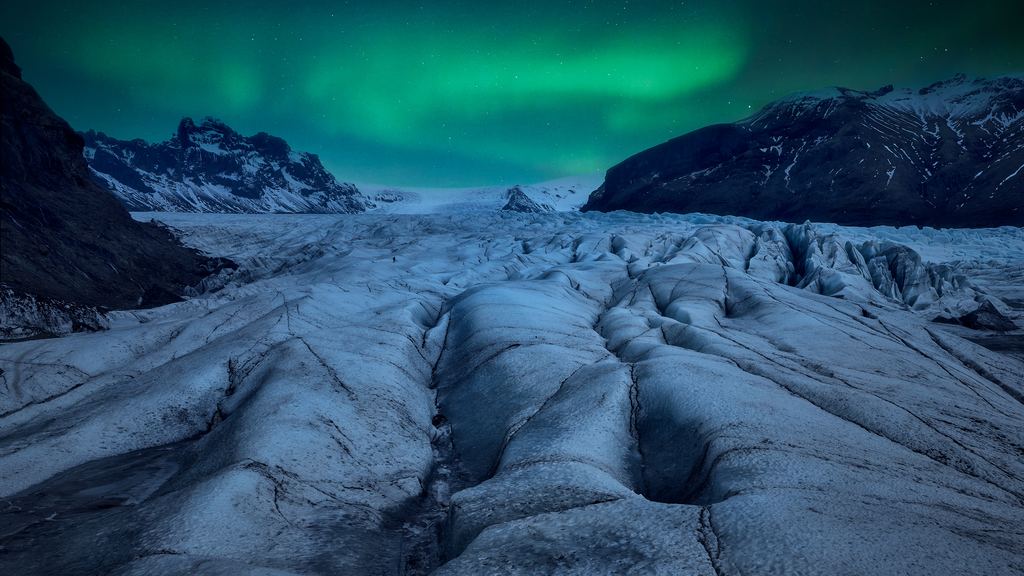
Snæfellsnes: the short version of Iceland
The two-day trips head for the Snæfellsnes peninsula, which is often described as Iceland in miniature and for once the cliche is doing real work. Within a couple of hours' driving it holds Kirkjufell, the most photographed mountain in the country; the black church at Búðir; the lifting stones on the beach at Djúpalónssandur that fishermen once used to test whether a man could crew a boat; and a lava tube around 8,000 years old that you descend into.
For an aurora trip it has a specific advantage: it is far enough from Reykjavík to escape the city's light entirely, and far enough to be under different weather, while still being close enough that a two-day booking is realistic on a short holiday.
When to go
Two seasons overlap here and the shorter one governs. The ice caves run roughly November to March. The aurora is available from September to April, but the months are not equal: what matters is how often the sky is usable multiplied by how many hours of real darkness there are to use it in.
| Month | Usable-sky nights | Darkness per night | Expected usable dark hours | Ice cave |
|---|---|---|---|---|
| December | 38.7% | 6.9 h | 2.67 | Yes |
| November | 37.0% | 6.4 h | 2.37 | Yes |
| January | 33.9% | 6.3 h | 2.14 | Yes |
| October | 34.5% | 5.1 h | 1.76 | Marginal |
| February | 31.1% | 5.1 h | 1.59 | Yes |
| March | 33.5% | 3.5 h | 1.17 | Ends |
| September | 40.7% | 2.7 h | 1.10 | No |
December, November and January are the months, and unusually they are also when the ice caves are at their best. Iceland's sky barely notices midwinter, so unlike Norway there is no penalty for coming when the nights are longest.
September looks best on cloud alone and is worst in practice: 2.7 hours of astronomical darkness, and no ice cave. If you are building a trip around the components on this page, it is the month to skip.
One limit on that ranking, because it argues against us: it measures how much dark clear sky a month contains, not the chance the aurora does something inside it. Geomagnetic storms are close to twice as frequent at the equinoxes. Even doubling September leaves it behind December here.
| 1 | 2 | 3 | 4 | 5 | 6 | 7 | 8 | 9 | 10 | 11 | 12 |
Before you book
How many nights do I need to be reasonably confident of seeing the aurora?
Three to four, and where you spend them matters as much as how many. From Reykjavík's 35.6% base rate, three independent nights would give about 73% and four about 83%. But nights are not independent: a weather system parked over the south coast makes three nights there into one night repeated. A route that moves 200 km between stops is what turns the arithmetic into something real.
Is a campervan realistic in an Icelandic winter?
For a confident winter driver, yes, and the vans are equipped for it. For anyone who has not driven on snow and ice before, the guided version costs about the same and removes the part of the trip most likely to go wrong.
Which month should I pick?
November to January. Those three months have the best sky-and-darkness combination Reykjavík offers and the ice caves are open throughout. It is the opposite of the advice that applies in Norway, where midwinter is the trap, and it holds because Iceland's cloud record barely changes across the season.
Will the itinerary change?
Frequently. Icelandic roads close, and every operator here reserves the right to reorder or substitute. Judge these trips on what they include rather than the exact order, because the order is provisional in winter by definition.
Do the guided trips actually stop for the aurora?
Yes, and this is worth checking listing by listing. Some build a dedicated evening hunt into the schedule; others rely on the accommodation being somewhere dark and on stopping if something appears en route. The first is a plan and the second is a hope.
Data verified on. Cloud: ERA5 via Open-Meteo, 11 seasons. Darkness: ephemerides. Prices, durations and included activities read from the 9 trips on 10 August 2026.