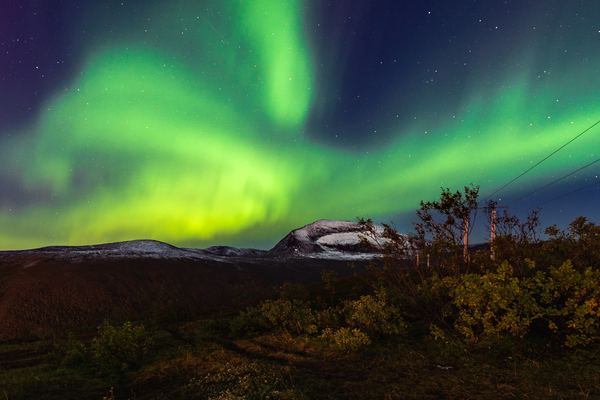
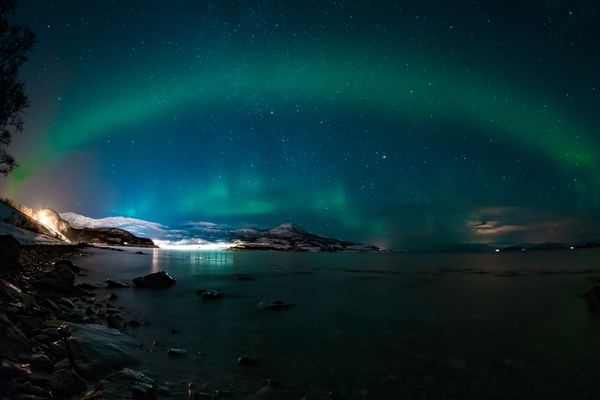
Is a Glass Igloo Worth It for the Northern Lights? The Roof Does Not Move the Cloud
A glass roof changes where you wait, not how often the cloud clears. In Saariselkä one night meets our cloud rule 27.9% of the time, two nights 43.3%, and the roof changes neither.
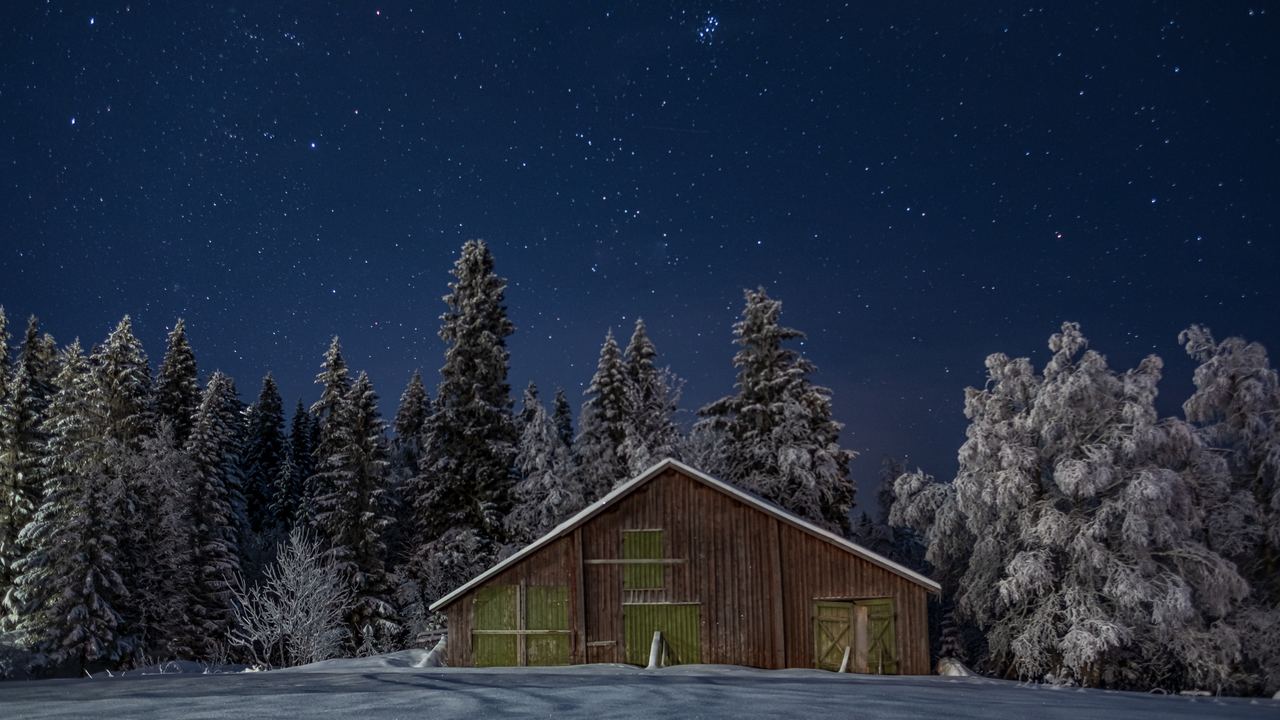
A glass igloo sells you a roof. It takes away the cold, the standing about and the drive back at 2 a.m., and for some travellers that is worth real money. What it cannot take away is the cloud, and the cloud decides most northern lights nights. In the Saariselkä area one night meets our cloud rule 27.9% of the time, and in December 20.6%. A glass igloo changes neither figure.
So the question is not whether a glass igloo is nice. It is what you are paying the premium for, and whether that is the sky. Below we set out what the roof changes, what our cloud series says about a fixed bed under it, what two operators say about the aurora alarm, and what to ask before paying.
Is a glass igloo worth it for the northern lights?
It depends on which of two products you are buying. The first is a room with a glass roof, which is a comfort purchase: you can look up from bed, you stay warm, and a good night costs you no sleep if an alarm does the watching. The second is a way of seeing the aurora, and that is where the glass igloo is weakest, because it fixes you to one spot for the whole night.
The resort pages we retrieved on 18 November 2026 are honest about the first product and quiet about the second. Kakslauttanen describes the glass roof as giving "an open view of the Arctic sky right from your bed" and says the igloos are available through a season that runs from around the third week of August to around the end of April. Availability is a booking window. It says nothing about when the lights show up, and the wording around the resort's own aurora activities is conditional: "if you are lucky", and the car-based hunt is described as "weather dependent".
What a glass igloo roof does not change: the cloud
Our cloud series counts a night as usable when at least two of nine hourly samples between 18:00 and 02:00 show 50% cloud cover or less. The samples need not be consecutive. We use ten September-to-March seasons between 2015 and 2025 from the Open-Meteo historical archive. The series is for a single point at Saariselkä, which is the area around Kakslauttanen but not the resort's own coordinates, and one at Rovaniemi, where Arctic SnowHotel and Glass Igloos operates. These are previously published results of our own series.
Read the figures as a ceiling. A night that meets the rule had sky for part of the evening. It was not necessarily a night with aurora, and the share of such nights is not a probability of seeing the lights.
| Destination | Sep | Oct | Nov | Dec | Jan | Feb | Mar |
|---|---|---|---|---|---|---|---|
| Saariselkä | 34.7% | 29.4% | 17.0% | 20.6% | 21.3% | 23.3% | 48.7% |
| Rovaniemi | 41.7% | 33.2% | 20.0% | 22.3% | 22.9% | 30.4% | 50.0% |
The worst months are exactly the ones that sell best as a winter trip. November and December are the cloudiest months in this series, December has the longest darkness, and a glass igloo booked for Christmas buys the longest nights at the lowest share of open sky. March is the opposite: 48.7% at Saariselkä and 50.0% at Rovaniemi. If a glass igloo is a priority, that is the month in which the roof is most often looking at something.

A roof does not help under cloud
A snowy forest under a low cloud ceiling. A bed under glass in this weather shows a grey lid, and the alarm has nothing to report. Cloud is the first condition in the chain that ends in a sighting, and no building can change it. The rest of the chain is activity, a dark enough sky and a moment when you are looking, which we set out in when the sky actually opens.
How many glass igloo nights does it take?
One night in a glass igloo is one draw. Cloud also has memory. In our series, after a night that meets the rule the next night in Saariselkä meets it 44.6% of the time. After one that does not, 21.3%. So the second night in an igloo is not an independent second chance, and a stay that starts under cloud tends to stay there. We worked through the same effect for Tromsø in our piece on how many nights you need.
| Destination and period | 1 night | 2 nights | 3 nights |
|---|---|---|---|
| Saariselkä, September to March | 27.9% | 43.3% | 55.3% |
| Saariselkä, December | 20.6% | 33.3% | 43.9% |
| Rovaniemi, September to March | 31.5% | 47.2% | 59.2% |
| Rovaniemi, December | 22.3% | 37.1% | 49.1% |
Two nights at Saariselkä in December meet the rule in one case in three. In two stays out of three, neither night qualified. Three nights get you to 43.9%, so even then it is likelier than not that none of the three nights qualified. None of this says a glass igloo is a bad idea. It says that if the aurora is the reason, one or two nights in one bed is a weak plan.
The fixed-spot problem
Every figure above describes a fixed point, and a glass igloo is a fixed point. A guided hunt is not. The Rovaniemi hunts in our catalogue move on the night: one lists up to three locations over four hours, another a drive 20 to 25 km out of the city lights, a third has no fixed route and runs from four to eight hours depending on conditions. They can leave a patch of cloud that an igloo cannot.
We have not measured how much a moving tour gains over a fixed bed, and our method cannot say. The two-state model describes a fixed viewing spot only, and we do not infer an operator's success rate or the advantage of a chase from it. What we can say is the direction: a tour can change where you stand, and a bed cannot. That is the whole case for keeping at least one night in a glass igloo stay free for a hunt.

The aurora alarm: what operators say it does
The alarm is the real selling point of a glass igloo, and it is worth reading closely. Arctic SnowHotel and Glass Igloos in Rovaniemi states on its own pages that each igloo has an alarm you switch on, and that you are "gently alerted with a buzzing sound whenever the Northern Lights appear in the sky". It is free, and a night watcher monitors the sky. The same pages say the glass roof has "an electric defrosting system, which our staff activates when needed" to keep the view clear after snowfall, and that the igloos are equipped "to maximize your chances of seeing the Northern Lights".
That wording is accurate and modest. An alarm turns the aurora into something you do not have to stay awake for. It does not make it more likely. The pages we retrieved do not say what triggers the alarm: whether it is a visible display, a camera, or an activity index. The index question matters, because a planetary index measured far from the Arctic is a weak guide to what is overhead, as we describe in where the Kp index comes from.
The same operator also writes that Rovaniemi has "Auroras on almost all clear nights" and that the lights appear "on about 150 nights per year". The second figure has no metric or period attached. It is the kind of number we cannot use, for the reasons in our reading of eight aurora guarantees. The first is a claim about clear nights that our cloud series cannot test. On Kakslauttanen's accommodation and northern lights pages we found no mention of an alarm at all. That may only mean the service is described elsewhere, so ask.
What a glass igloo costs against a tour
Neither operator page we retrieved shows a nightly rate for an individual glass igloo. Kakslauttanen's accommodation page lists only packages: "from €501 /night" for winter accommodation with breakfast and dinner, and "from €278 /night" for a flexible autumn rate. They are not tied to a room type on the page. Arctic SnowHotel's glass igloo page lists upgrade packages of €85 and €129 for two persons and no base rate. Booking engines often show a price only after you pick dates, so a figure you see later may differ. We are not publishing an igloo price we could not read.
The comparison we can make is partial and we flag it as such. On 18 November 2026 our Rovaniemi catalogue lists 44 minibus and jeep departures and 11 camps. The ones we chose below run from €75 to €129 a night. Three hunts at €129 come to €387, so the lowest winter package at Kakslauttanen would pay for those three and leave €114, though the package includes dinner and breakfast and the room type is not stated, so it is not a like-for-like sum. It shows the scale: a stay buys a bed, and a tour buys a chance to move. The catalogue also lists four evenings built around a private glass igloo dinner at €385, which are meals and not stays.
Rovaniemi hunts that move with the sky
Chosen on 18 November 2026 from the Rovaniemi minibus and camp categories, by number of reviews, leaving out the glass igloo dinners. Prices, durations and what is included are on each listing.
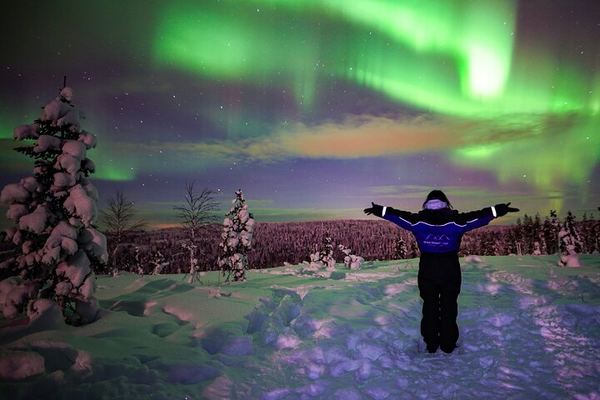
Northern Lights Wilderness Tour from Rovaniemi, Max 8 Guests
Torches, phone screens and camera displays all leak light, so a group of eight puts less of it between you and a faint aurora. Photographs included.
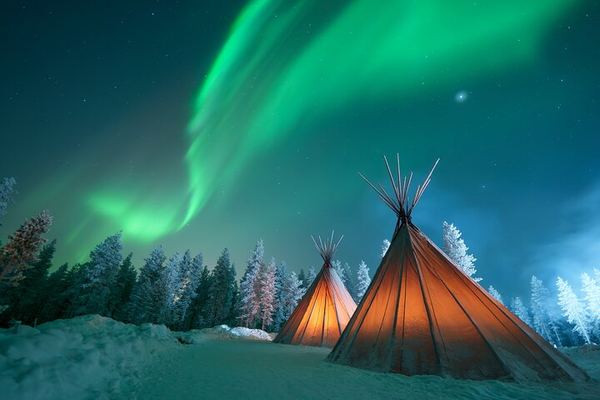
Rovaniemi Northern Lights Hunt with Campfire, Lappish BBQ and Transfer
A transfer out of Rovaniemi to untouched country, and a Lappish barbecue over the campfire while the sky is watched. Departure time varies with the night.
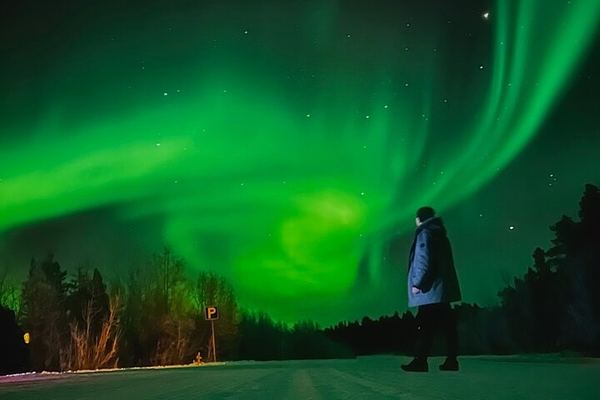
Rovaniemi Aurora Hunt with Lappish BBQ and Glögi at Three Stops
Three viewing spots chosen from the forecast and adjusted for cloud, with sausages over the fire and glögi, the mulled wine made for standing outdoors.
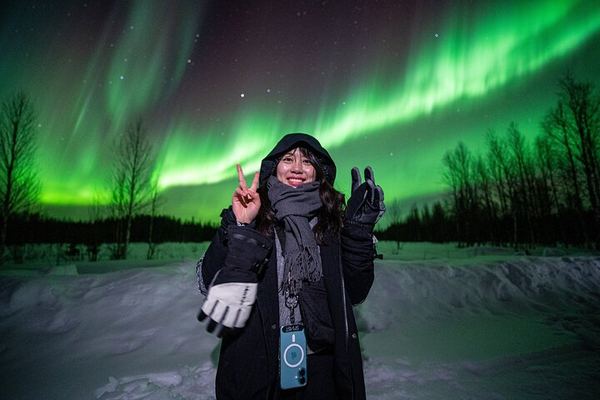
Northern Lights Bus Tour from Rovaniemi with Local Guides
No fixed route: live forecasts and cloud maps decide where the bus stops, as far as the Swedish border. Photos are taken for you, departures 18:00-21:00.
Ratings collected by Viator and Tripadvisor
Questions to ask before you pay for a glass igloo
None of the points below is a verdict on an operator. They are the things we could not find on the pages we could open, and a booking is the moment to get them in writing.
- What is the price for the igloo itself, per night and per room, and what do the "from" packages include?
- What triggers the aurora alarm, and who decides? A night watcher is not the same as an index threshold.
- What happens if the sky is cloudy all stay? Most pages do not say. Our guide to refunds, cancellations and cloudy nights explains why a cloudy night and a cancelled one are treated differently.
- Can the dates move? Cloud has memory, so flexibility has value. We could not find change terms for the igloos on the pages we opened.
- Is the glass heated or defrosted, and does staff or the guest control it?
- Can you add a guided hunt on one of the nights, and what does it cost?
Black Friday falls on 27 November. A discount on a fixed bed does not change the cloud figures above, and the next new moon is on 9 December, so a December stay that matters should be chosen by moon and month as well as price. Our guide to what an aurora trip costs sets the rest of the spending in context, and the pages for Saariselkä and Rovaniemi list what is on offer there.
Straight answers
Is a glass igloo worth it for the northern lights?
It is worth it as a warm, comfortable place to watch from, and worth much less as a way of seeing the aurora. The roof does not change the cloud. In the Saariselkä area one night meets our cloud rule 27.9% of the time over the season and 20.6% in December. That is a ceiling for a fixed spot, not a sighting rate.
Can you see the northern lights from a glass igloo every night?
No. A glass roof shows what is above the igloo, and when cloud covers it there is nothing to see. Arctic SnowHotel's own page describes its igloos as built to maximise your chances, not to guarantee a sighting.
How many nights should you book in a glass igloo?
More than one, and not only in one bed. At Saariselkä two nights give a 43.3% chance that at least one meets our cloud rule, and three give 55.3%, across September to March. In December the same three nights give 43.9%. These describe cloud, not sightings.
Does a glass igloo have an aurora alarm?
Some do. Arctic SnowHotel says each igloo has a free alarm and a night watcher. We could not find an alarm described on the Kakslauttanen pages we retrieved, so confirm it with the resort, and ask what triggers it.
When is the best month for a glass igloo?
On cloud alone, March: 48.7% of nights at Saariselkä and 50.0% at Rovaniemi meet our rule, against 17.0% and 20.0% in November. March also has fewer hours of true darkness than midwinter, a trade-off we cover in our data pieces.
Sources
The cloud and persistence rates are previously published results of our own series, with the method on our page about when the sky opens; the weather archive is the Open-Meteo Historical Weather API. Operator statements come from pages retrieved on 18 November 2026: Kakslauttanen's glass igloos and accommodation pages, and Arctic SnowHotel's glass igloos and northern lights pages. They are booking sites, and prices and terms change. Quotations are of the wording on those pages on that date. We did not find cancellation terms for the igloos on the pages we could open. Catalogue prices and counts were read from our own listings on 18 November 2026. We looked for independent guest accounts of frost and condensation and found only promotional pages and one thin set of reviews, so we say nothing on it.
Data verified on . Cloud series previously published, ten Sep-Mar seasons. Operator pages retrieved 18 Nov 2026; prices are 'from' packages, not igloo rates. Catalogue read same day. About This Site