Five Nights Chasing the Northern Lights: How Many Will Actually Be Clear?
In Tromsø the likeliest result of five nights is zero clear ones (32.0%) or one (30.6%). A night-by-night distribution from our cloud series, with its limits stated.
A five-night northern lights trip sounds like a safe amount of time. On our cloud data it is less safe than it sounds. In Tromsø the single most likely outcome of five nights is not a good night but none at all, at 32.0%, and the next most likely is exactly one, at 30.6%. Together those make almost two trips in three that get no more than one night when the sky opens.
That is a statement about cloud, not about the aurora, and it describes a fixed spot rather than a tour that drives out to find clear sky. Below we set out what we computed, how, and what it leaves out, so a five-night trip can be planned on the spread of outcomes and not on a single hopeful number.
Five nights of northern lights: how many will be clear?
We took the persistence figures behind our earlier piece on how many nights you need in Tromsø and asked a different question of them. That piece gives the chance of at least one clear night. Here the question is how many of five consecutive nights are likely to be clear, which is closer to what a traveller wants to know on the first evening.
Each night either meets our cloud rule or does not. The rule counts a night when at least two of nine hourly samples between 18:00 and 02:00 show 50% cloud cover or less. The samples need not be consecutive. The chain is the same two-state one as before: the chance that a night qualifies depends on whether the previous night did. The inputs are the published rates for each destination, September to March pooled, ten seasons. Running the chain for five nights gives the whole distribution and not only the at-least-one row. In every row, one minus the "none" figure matches the published at-least-one figure to within rounding.
| Destination | None | Exactly one | Two or more | Average number of nights meeting the rule |
|---|---|---|---|---|
| Tromsø | 32.0% | 30.6% | 37.4% | 1.27 |
| Reykjavík | 15.3% | 28.8% | 56.0% | 1.78 |
| Rovaniemi | 24.3% | 28.5% | 47.1% | 1.56 |
| Abisko | 42.5% | 32.2% | 25.3% | 0.94 |
| Fairbanks | 7.6% | 18.2% | 74.2% | 2.44 |
Two things stand out. In Tromsø and Abisko, most five-night runs have at most one night that meets the rule: 62.6% and 74.7%. And the average for Tromsø is 1.27 nights, so five nights buy about one and a quarter, with only 16.1% of runs giving three or more. Fairbanks sits at the other end, where 74.2% of runs give two or more. It is a different climate and a different trip, and we compare the continents in other pieces.
Why clear nights come in pairs, and cloudy ones in blocks
Cloud has memory. In Tromsø, after a night that meets the rule, the next night meets it 44.3% of the time. After a night that does not, the figure is 19.1%. Across all nights it is 25.4%. A clear night is therefore more than a lucky draw: it is a sign the pattern may hold for another. The reverse is the part that hurts on a five-night trip, because cloudy nights arrive in blocks, and a run that starts under cloud is likelier to stay there.
That is why the "none" figure is bigger than simple arithmetic gives. Treat the five nights as independent draws at 25.4% and the chance of none is 23.1%. With persistence built in it is 32.0%, almost nine points higher. The same effect is why three nights in Tromsø is closer to a coin flip than the independent maths suggests.
A night that meets the rule is still not a sighting
Meeting the rule means the sky was open for part of the evening. It does not mean the aurora was active, that anyone was looking at the right moment, or that the display was bright enough to read as colour. Activity is a separate ingredient, and a planetary index measured far from the Arctic is a weak guide to it: see where the Kp index comes from.
What a good night looks like to an eye, as opposed to a camera, is the subject of our piece on why you will probably see grey. Read the table above as a ceiling. The share of nights meeting the rule is not a probability of seeing the aurora, and the true distribution sits below it.
How to spend five nights without paying for five tours up front
The distribution suggests a few habits. They follow from the arithmetic, not from a trip we took.
- Do not lock in every departure on day one. A cloudy night is among the most likely single outcomes, and once one has passed the next is less likely to be clear. Flexibility only helps if the operator allows it, so read the change and cancellation terms before paying. Our guide to refunds, cancellations and cloudy nights explains why a cancelled tour and a cloudy one are treated differently.
- Look at the cloud forecast before the aurora score. Cloud decides whether there is anything to see. The score matters once there is a gap.
- Treat a clear night one as information. In Tromsø it more than doubles the chance that night two is clear. A cloudy first night does not doom the trip, but it makes a second cloudy night likelier than the average suggests.
- Weigh nights against destination. In our table, seven nights in Tromsø give 79.1% for at least one night meeting the rule. Five nights in Reykjavík give 84.7% and five in Rovaniemi 75.7%. Extra nights in a cloudier place buy less than the same nights elsewhere, a comparison we make in the guide to Tromsø, Reykjavík and Rovaniemi.
The moon decides which five nights
You cannot pick the clouds, but you can pick the week. New moon fell on 9 November 2026 and the next full moon is on 24 November, in the ephemeris table for the season in our repository. A five-night run that starts now has thin moonlight. One that straddles 24 November has a bright sky for part of it. The full list of new and full moons for the season is on our page about moon, darkness and the nights worth booking.
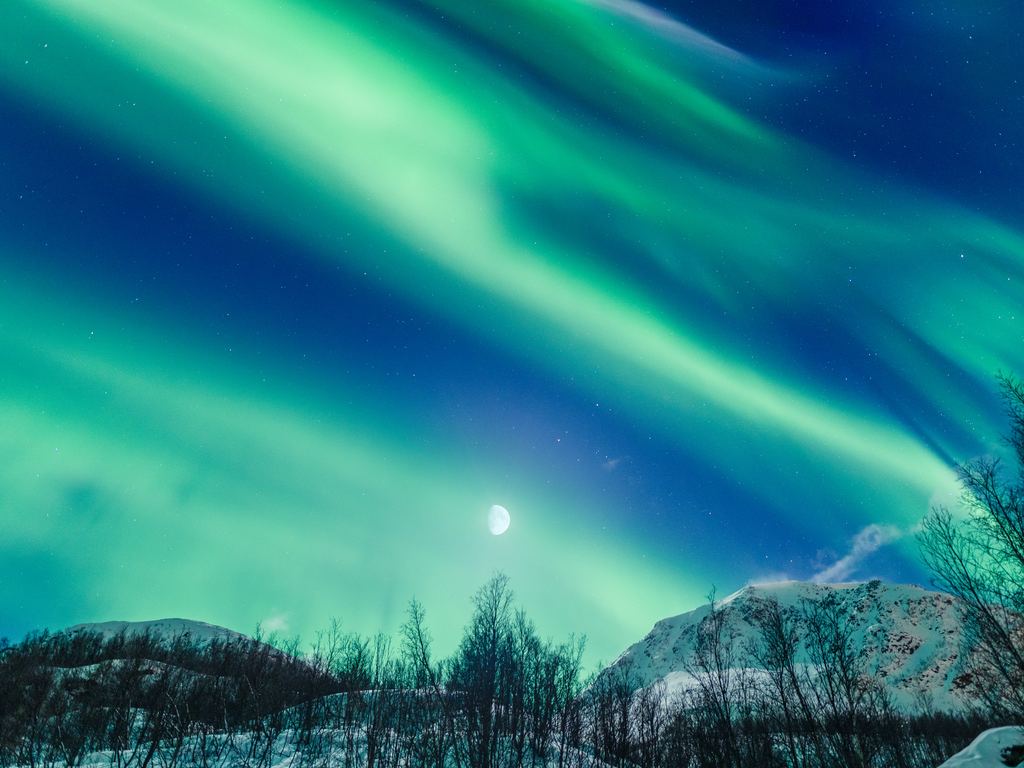
What five nights of tours cost on the Tromsø listings
Our catalogue lists 52 minibus and jeep departures from Tromsø. Prices read on 11 November 2026 run from €65.00 for a bus safari to €2,305.96 for a private tour. Among the most-reviewed departures, leaving out any that promise a viewing guarantee or quote a success rate in their description, the listed prices run from €116.76 for a big bus chase to €318.16 for a small-group 4x4. Five departures at those prices come to €583.80 and €1,590.80. Listed prices change, and each listing says what is included.
That sum is what the plan of a tour every night costs, and it is a reason to decide beforehand how many of the five nights will be tour nights. We do not put a value on a single night, because the model does not price one, and a tour that drives for clear sky is not a fixed point. Our Tromsø page lists every departure.
What this calculation leaves out
The series describes one point near each city, not a region. The cloud data come from the Open-Meteo historical archive, ten September-to-March seasons between 2015 and 2025, with no weather model named in the saved request. A single run of five consecutive nights is one draw from the distribution, so a trip that gets three clear nights or none is not a sign that the model is wrong.
The two-state chain captures one-day persistence, not blocks of bad weather that last a week, and on those it is optimistic. It also describes a fixed viewing spot, so a chase tour that drives away from cloud does better than the table says. We have not measured by how much. And none of it includes geomagnetic activity, which is the other thing the aurora needs.
Tromsø departures, picked by review volume
Chosen on 11 November 2026 from the Tromsø minibus and jeep category, by number of reviews, leaving out any departure that promises a viewing guarantee or quotes a success rate. Prices, durations and what is included are on each listing.
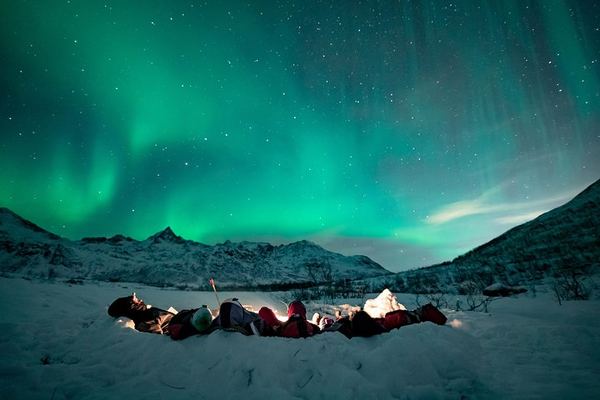
Tromsø Aurora Hunt with Bonfire, Hot Meal, Thermal Suit and Photos
Thermal suits out, campfire lit and a hot meal served while you wait. The guides set up your camera, and their own photographs reach you free afterwards.
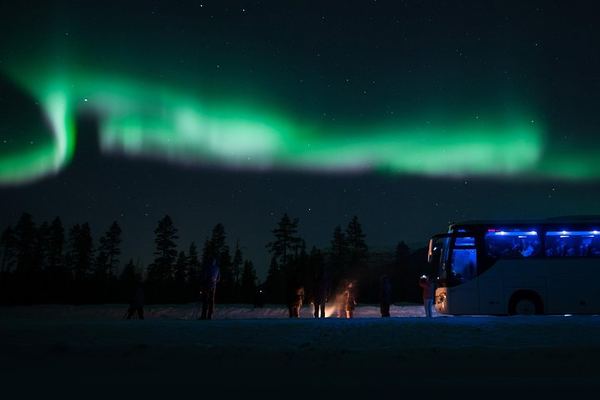
Northern Lights Big Bus Chase from Tromso with Chasing Lights
The budget chase, and honest about it: clear sky comes before scenery, some stops are roadside, and the route can cross into Finland. Dress in layers.
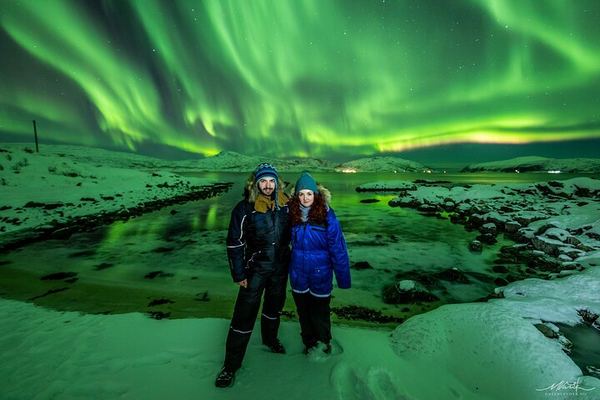
Northern Lights Adventure with Greenlander, Maximum 8 People
A working chase in a modified 4x4 Mercedes: hot meal, tripods, thermal suit and aurora portraits. Expect snow underfoot and a genuinely late finish.
Northern Lights Minibus Chase from Tromso with Chasing Lights
The minibus version of the chase: a smaller group, more room to change plan mid-evening, and a route that follows cloud and road, sometimes into Finland.
Ratings collected by Viator and Tripadvisor
Straight answers
How many nights do you need for a northern lights trip?
It depends on where. On our cloud rule, five consecutive nights in Tromsø give a 68.0% chance that at least one night qualifies, and seven nights give 79.1%. Five nights in Reykjavík give 84.7%. These describe cloud, not sightings, and they pool September to March.
How many clear nights should I expect in five nights?
In Tromsø the average is 1.27 nights meeting our cloud rule. The most likely outcomes are none, at 32.0%, and exactly one, at 30.6%. Two or more happen in 37.4% of five-night runs.
Is five nights enough to see the northern lights in Tromsø?
It gives a 68.0% chance of at least one night meeting the cloud rule, which is a ceiling and not a chance of seeing the aurora. No number of nights makes it certain. Whether five is enough depends on what counts as a success for you.
If the first night is cloudy, will the rest be cloudy too?
Not necessarily, but it is likelier. In Tromsø the next night meets the rule 19.1% of the time after a night that did not, against 44.3% after one that did. That is an average over ten seasons, not a forecast for your week.
Should I book all five tours before I arrive?
The arithmetic favours keeping some nights open, because cloudy nights cluster. Whether you can move a booking depends on the operator, so read the change and cancellation terms first. We cannot say what any one operator allows.
Sources
The cloud and persistence rates are previously published outputs of our own series, with the method set out on our page about when the sky opens. The five-night distributions were calculated for this article from those published rates and checked against the published at-least-one figures. The moon dates come from our ephemeris code and were not cross-checked against a second source. Prices, review counts and the 52 departures are read from our own catalogue on 11 November 2026. The weather archive is the Open-Meteo Historical Weather API. We looked for traveller accounts of five-night trips to quote and could not open the pages, so none is quoted here.
Data verified on . Cloud series previously published. Five-night distributions newly derived from its published rates, 11 Nov 2026. Prices read from our catalogue that day. About This Site