Iceland Airwaves and the Northern Lights: Two Reasons for the Same Trip
Iceland Airwaves runs 5-7 November 2026, in the month our series scores highest for Reykjavík. What the cloud, the moon and the festival timetable allow, and why a tour and an 18:00 session cannot share a night.
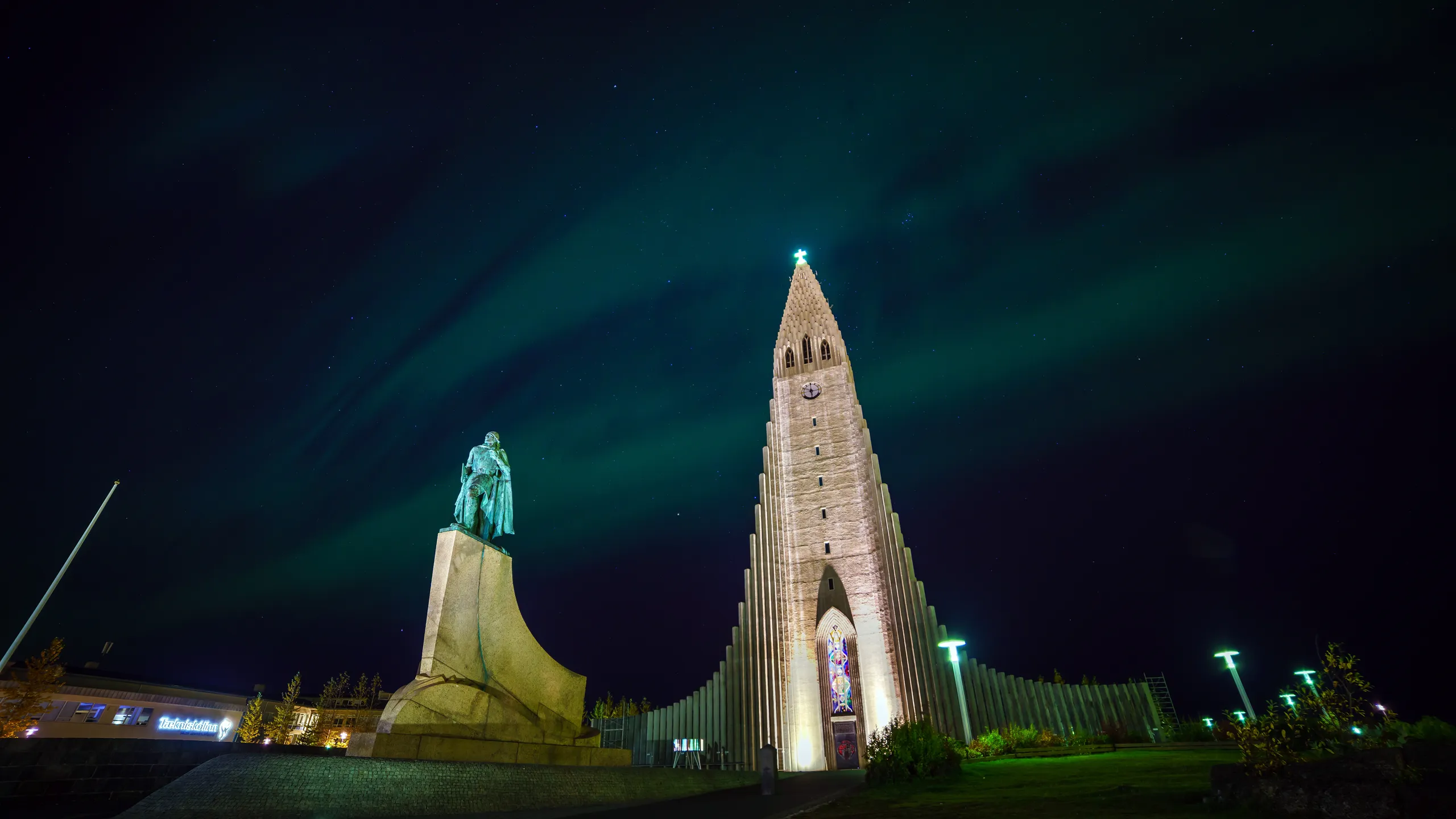
Iceland Airwaves and the northern lights share a month. The festival runs from 5 to 7 November 2026 in downtown Reykjavík, and November is the month our own series scores highest for the city. Nobody planned the overlap, but it means the trip a festival-goer is already making is, on our numbers, a decent aurora trip. The interesting question is how to fit both into three or five nights without losing one to the other.
Most of what gets written about the pairing says to book a tour for whichever night you are free. The practical problem is smaller and more awkward than that. Evening festival sessions start at 18:00, a Reykjavík aurora tour can pick you up from 20:30, and the two do not fit into one night. What follows is what the dates, our cloud and darkness series and the moon allow, and what we could not check.
Iceland Airwaves dates, and where we checked them
Two pages were opened on 4 November 2026: the festival's own website and the page of the ticket seller tix.is. The festival site lists the dates as 4, 5 to 7 and 8 November. The ticket seller gives the programme as 5 to 7 November and lists three special events separately: Shygirl on 4 November, Daði Freyr with the Iceland Symphony Orchestra in the Eldborg hall of Harpa on 5 November, and The Streets, also at Eldborg, on 8 November. A trip built around all of it has five nights. The core programme has three.
The ticket page also shows evening sessions starting at 18:00 on each of 5, 6 and 7 November at the main venues, and midday sessions at Hjá Jóni, in the Parliament Hotel, on 5 and 6 November. That is as far as we could read. The festival site carries a news item dated 3 September about venues and day-splits whose text did not come through, so we cannot say which acts play which night or when any set ends. Check that before choosing a tour departure. The rest of the planning depends on it.
November is Reykjavík's best northern lights month on our index
Reykjavík does not have the darkest winter sky in our table. At 64°N it gets 6.4 hours of astronomical darkness inside the 18:00 to 02:00 window in an average November, against 7.9 in Tromsø. What it has is cloud that behaves. In the series we published earlier, 37.0% of Reykjavík's November nights meet our cloud rule, against 20.0% in Tromsø and 20.0% in Rovaniemi.
Multiply the cloud share, the hours of darkness and a geomagnetic factor and Reykjavík's November comes out at 2.26, the highest of its seven months. Tromsø's November is 1.51. Tromsø's own best month is October, at 2.27, so at their respective peaks the two cities are level on this index. In November, Reykjavík is well ahead.
| Destination | Nights meeting our cloud rule | Average hours of astronomical darkness, 18:00-02:00 | Comparative index |
|---|---|---|---|
| Reykjavík | 37.0% | 6.4 | 2.26 |
| Tromsø | 20.0% | 7.9 | 1.51 |
| Rovaniemi | 20.0% | 7.6 | 1.45 |
| 1 | 2 | 3 | 4 | 5 | 6 | 7 | 8 | 9 | 10 | 11 | 12 |

What the 2.26 does not mean
The cloud rule counts a night when at least two of the nine hourly samples between 18:00 and 02:00 show 50% cloud cover or less. The samples need not be consecutive, so it is not two clear hours in a row.
The series covers ten September-to-March seasons between 2015 and 2025, from the Open-Meteo archive with no weather model named in the saved request, and it describes one point near the city rather than the whole coast. A night that meets the rule is not a night with an aurora. The index compares months and places. It does not forecast anything.
Five nights instead of one: the arithmetic of a festival trip
A visitor who takes one tour on one night has the monthly figure to work with: 37.0% of Reykjavík's November nights meet the cloud rule. Staying longer helps, but less than multiplying would suggest, because weather does not reset at midnight. If every night were independent, three in a row would give 73.4%. Measured on consecutive nights, with persistence built in, it is 68.6%. We wrote up the same effect for Tromsø in our piece on how many nights you need, where three nights come to 51.2%.
| Nights in a row | At least one meets the cloud rule |
|---|---|
| 1 | 35.7% |
| 2 | 55.1% |
| 3 | 68.6% |
| 4 | 78.1% |
| 5 | 84.7% |
| 7 | 92.6% |
The festival gives three nights of official programme and up to five of travel. On the rule, five nights are worth about 85% and three about 69%. The table cannot say what happens if only two of those nights are spent outdoors and they are not adjacent. We have not computed that case. Nights two apart share less weather than neighbours do, so the figure should land between the consecutive value, 55.1%, and the independent one, 58.7%. That is an inference from the persistence effect, not a result.
The moon stays out of the way for the whole festival
New moon falls on 9 November 2026 in our ephemeris table for the season. In our own calculation for Reykjavík the moon is about 11% illuminated at 22:00 on 5 November, about 6% on 6 November and about 2% on 7 November, and it stays below the horizon through 03:00 on every night from 4 to 8 November. Iceland keeps to UTC all year, so those are local clock times. Every festival evening, and the nights on either side of it, is dark of moon. By 8 November the disc is effectively unlit.
The figures come from the ephemeris code in our repository, a reduced form of the Meeus lunar formulas, and we did not cross-check them against a second published source this time. The full list of new and full moons for the season is on our page on moon, darkness and the nights worth booking.
The festival and the aurora do not compete for the same sky. They compete for the same evening.
Where Iceland Airwaves evenings and northern lights tours collide
The fixed points are few. Festival sessions start at 18:00 on 5, 6 and 7 November. The Small Group Northern Lights Tour from Reykjavík, Max 19, the most-reviewed departure in our Reykjavík catalogue, lists pickup from 20:30 between 1 October and 31 March and lasts four hours, so it returns after midnight. The Midnight Adventure by Minibus lasts three hours, with pickup starting 30 minutes before the tour. A pickup at 20:30 means leaving the evening's programme in its first few hours. How much that costs depends on the day-split we could not read.
Three ways through it:
- Give up one night of the festival. The simplest option, and the one to take on the night with the act you would miss least.
- Use the nights around the core programme. Arrive a day early or stay a day late, and you have an evening with no session of the 5 to 7 programme in it. By 8 November the moon is gone.
- Pick a departure with no transfer. The boat cruise from the Old Harbour starts a short walk from downtown, according to its listing. Ask the operator for the departure time before booking, because we do not have it.
One more thing in the product terms. The small-group minibus and the midnight minibus offer a free repeat evening if no lights show, and refund only if the tour never runs while you are in Iceland. A repeat evening is worth little to someone whose festival ticket already fills the other nights. The useful question for any operator is what it does on a night it judges hopeless.
What the official aurora forecast says, and what it leaves out
The Icelandic Met Office publishes an aurora page with a cloud forecast and an activity score from 0 to 9 for midnight. On 4 November 2026 it showed cloud forecasts for six days in six-hour steps and stated that aurora needs dark and partly clear skies. It did not explain how the activity score is calculated, and its sun, moon and aurora panels read 'Information unavailable'.
The practical use is the one the page points to. The cloud map decides whether there is anything to see, and the score matters only once there is a gap. Our piece on where the Kp index comes from covers what a single planetary number can and cannot tell you about one evening. For the city itself, our page on Reykjavík tours lists what departs from the harbour and the hotels, and the guide's comparison of Tromsø, Reykjavík and Rovaniemi sets the city against the Arctic destinations.
Reykjavík departures, picked by review volume
Chosen on 4 November 2026 from the Reykjavík minibus and jeep and boat categories, by number of reviews. None is picked for a viewing guarantee. Pickup times, durations and prices are on each listing.
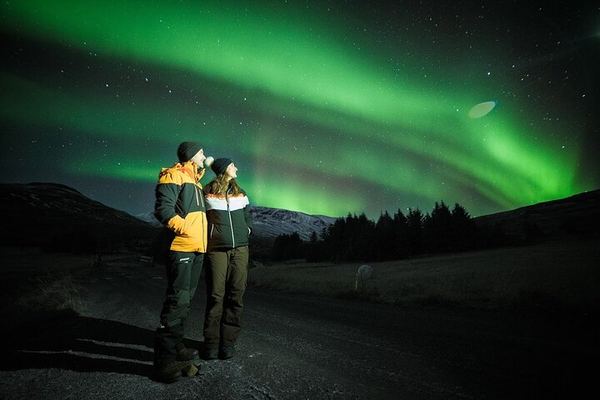
Small Group Northern Lights Tour from Reykjavík, Max 19, with Photos
Guides who forecast for a living avoid the lay-bys every coach has parked at. Icelandic wool blankets, cocoa, and your photographs by email within 8 days.
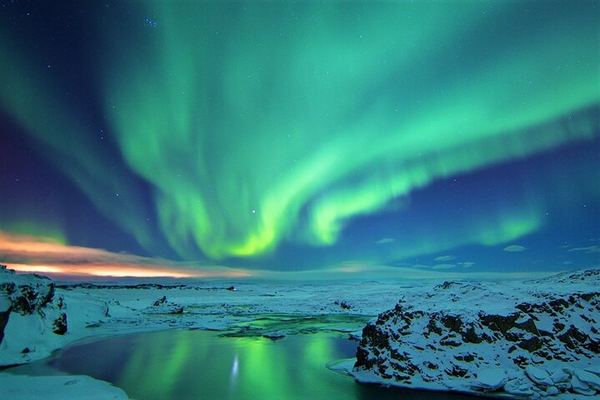
Northern Lights Bus Tour from Reykjavík with Hot Chocolate
The straightforward version of the hunt: no jeep, no small-group premium, a coach that drives to wherever the sky is clear, with hot chocolate for the wait.
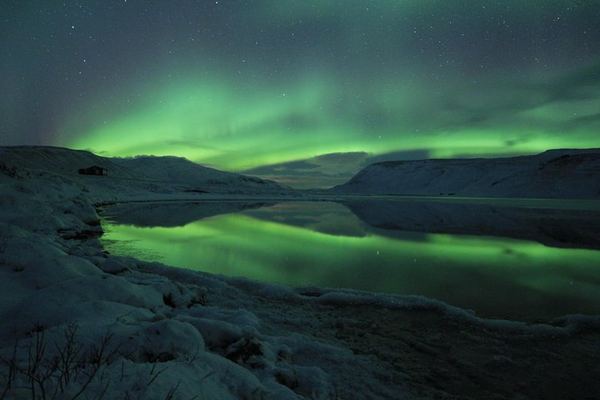
Northern Lights Midnight Adventure by Minibus from Reykjavík
A heated minibus and a guide who spends the evening working out where the sky is worth stopping under, then photographs everyone so no camera is needed.
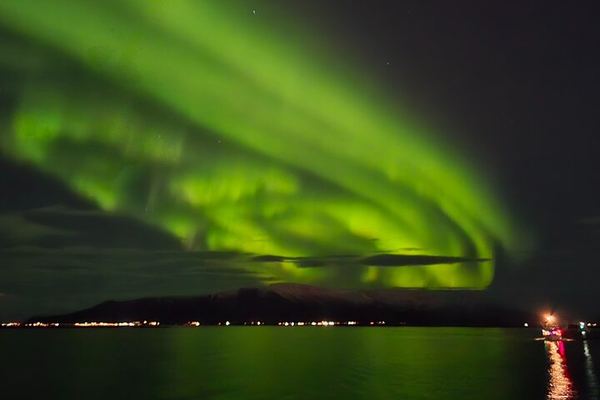
Northern Lights Cruise from Downtown Reykjavík
The Old Harbour is a short walk from downtown, so there is no long transfer before the watching starts and none after it. The city glow drops behind the stern.
Ratings collected by Viator and Tripadvisor
Straight answers
When is Iceland Airwaves 2026?
The core programme runs from 5 to 7 November 2026 in Reykjavík, according to the ticket seller tix.is. The festival's own site lists 4, 5 to 7 and 8 November, which includes three special events outside the core programme: Shygirl on 4 November, Daði Freyr with the Iceland Symphony Orchestra on 5 November and The Streets on 8 November. Both pages were opened on 4 November 2026.
Can you see the northern lights in Reykjavík during Iceland Airwaves?
Sometimes. In our earlier series, 37.0% of Reykjavík's November nights meet our cloud rule, which counts a night when at least two hourly samples between 18:00 and 02:00 show 50% cloud cover or less. That is a measure of cloud, not a probability of seeing an aurora. The moon is close to new through the festival, which helps, and tours drive out of the city lights.
How many nights do you need to have a fair chance?
On the same rule, a run of three consecutive nights in Reykjavík has a 68.6% chance of containing at least one night that qualifies, and five nights 84.7%. Those figures pool September to March, so they are not specific to November, and they describe cloud rather than aurora.
Does an aurora tour clash with the festival?
Probably, on at least one night. Evening sessions start at 18:00 on 5, 6 and 7 November, and the most-reviewed small-group minibus lists pickup from 20:30 and a four-hour tour. We could not read which acts play when, so the exact overlap is unknown. The nights of 4 and 8 November fall outside the core programme.
Will the moon spoil the aurora during the festival?
It should not. New moon is on 9 November 2026. In our own calculation the moon is about 11%, 6% and 2% illuminated at 22:00 on 5, 6 and 7 November, and it stays below the horizon through 03:00 on those nights.
Is Reykjavík or Tromsø better for the northern lights in November?
On our November figures Reykjavík leads: 37.0% of nights meet the cloud rule against 20.0% in Tromsø, and the comparative index is 2.26 against 1.51. Tromsø has more darkness, 7.9 hours against 6.4, and its best month is October. For a festival trip the choice is already made, and the numbers say it was not a bad one.
Sources
Every external fact above comes from one of these pages, each opened on 4 November 2026.
- Iceland Airwaves, festival website, for the dates and special events: icelandairwaves.is
- tix.is, Iceland Airwaves 2026 listing, for the 5 to 7 November programme, the 18:00 evening sessions and the Hjá Jóni sessions: tix.is/en/event/20516
- Icelandic Met Office, aurora forecast page, for the 0 to 9 scale, the six-day cloud forecast and the notes on dark and partly clear skies: en.vedur.is/weather/forecasts/aurora
Tour durations, pickup times and review counts are read from our own catalogue listings on the same date. The cloud, darkness, index and consecutive-night figures are previously published outputs of our own series, with the method set out on the page on when the sky opens. The moon figures come from our ephemeris code. None of them was recalculated for this article.
Data verified on . Festival dates and Met Office page read 4 Nov 2026. Cloud and darkness series previously published, not recalculated. Moon figures from our own ephemeris code, not cross-checked. About This Site