

Photography
Twelve departures where somebody else handles the camera, or teaches you to
The single most useful thing to understand before booking one of these is that the camera sees more than you do. In near darkness the human eye switches to rod cells, which are far more sensitive than cone cells but effectively colour blind. A sensor has no such switch. A display that looks like pale grey smoke to the naked eye comes out of a fifteen second exposure as a saturated green curtain.
This is not a trick and nobody is faking anything. It does mean two honest people can disagree about whether the aurora was visible on a given night, and it is the reason operator success rates need reading carefully: several of them count a display that only the camera registered.
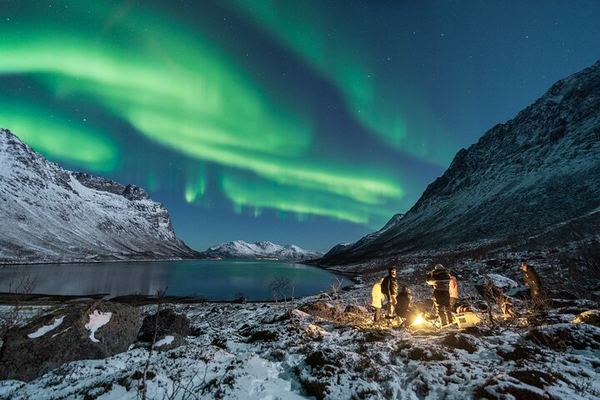
All Inclusive Northern Lights Hunt with The Green Adventure, Photos Included
Thermal suit and meal built into the price, a campfire with marshmallows, and expedition soup made in Tromsø that beats standing closer to the flames.
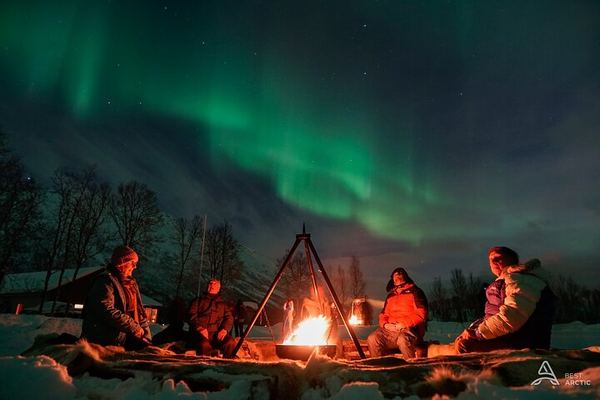
Aurora Safari by Coach with Private Heated Camps and Onboard Toilet
Wait by the campfire, in a hut or inside a lavvo, with a hot meal and proper toilets. Somewhere heated is what lets you stay out until the sky performs.
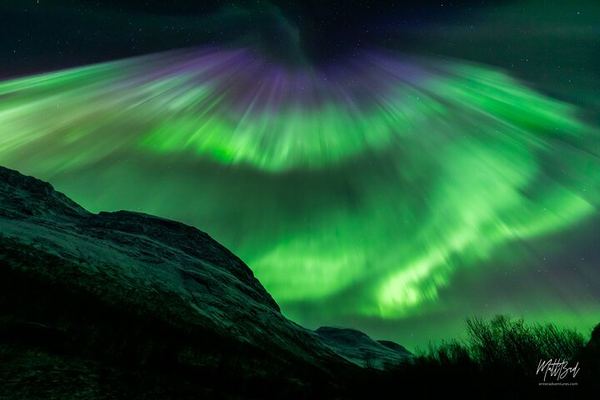
Guided Northern Lights Bus Tour from Tromso with Free Photos
A heated bus set up for a long night of waiting, with photographs included at no cost. Read the meeting notes twice: this operator can ask for your passport.
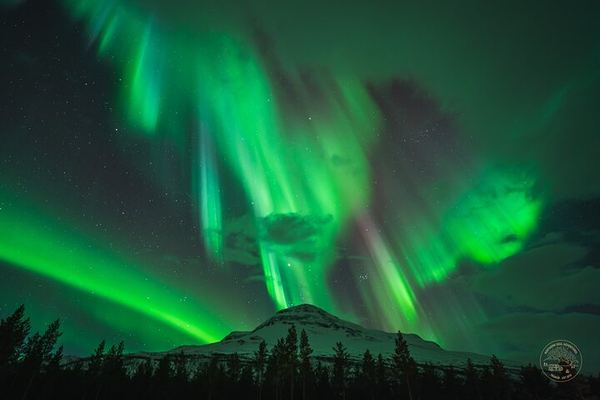
Minibus Northern Lights Chase from Tromso with Photography
The minibus trades the 4x4's reach for a lower price per head. A network of guides in contact all evening is how one vehicle knows the sky 60 km away.
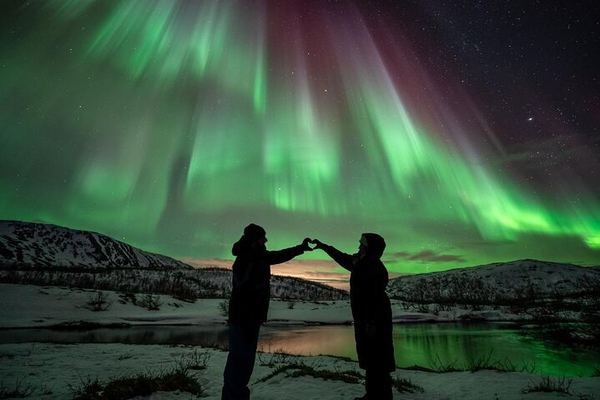
Northern Lights Big Bus Chase from Tromso with Free Photos
Seven to nine hours in a heated bus with WiFi and toilets, sometimes crossing into Finland or Sweden. It can return at 02:30, so leave the morning free.
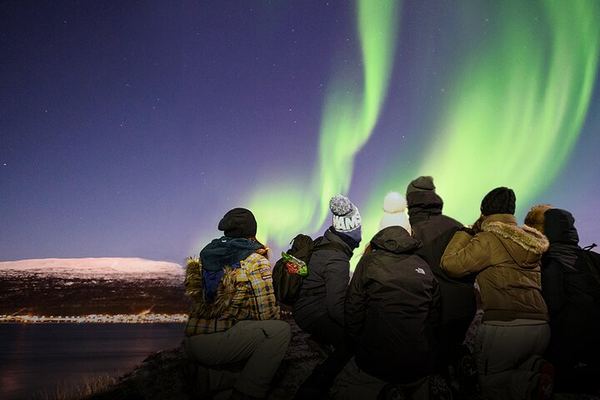
Northern Lights Chase from Tromso with a Professional Photographer
No fixed route: the guides follow continually updated weather and solar data. Book 15 to 20 April and expect a shorter, weaker night, as the operator says.
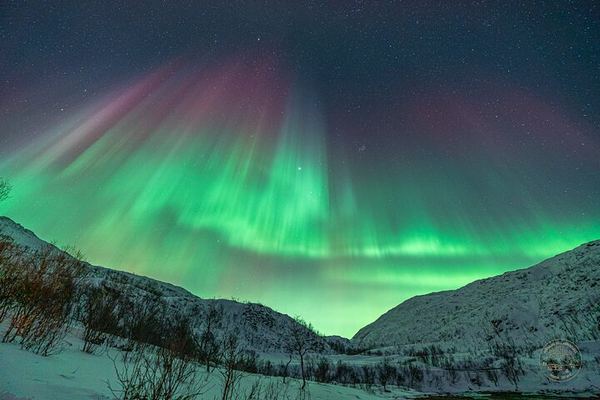
Private Northern Lights Chase from Tromso with Photography
Only your own group in the Arctic-equipped van, so the guide spends the whole wait on your camera settings and you decide together when to move on.
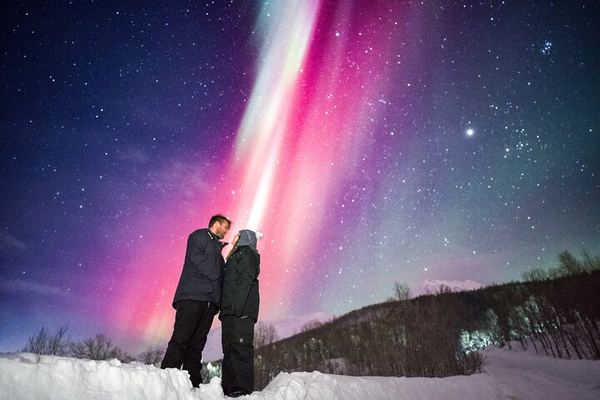
Small Northern Lights Tour, Max 8 Guests, with Pickup and RAW Photos
The guide shoots on professional gear and hands over the original RAW files, unwatermarked and uncounted, so you edit the night yourself. Eight guests.
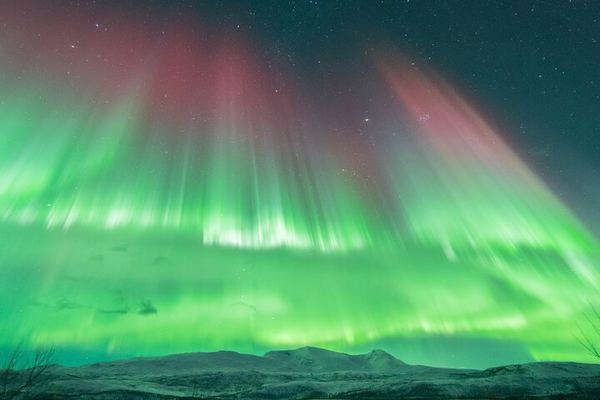
Tromso Aurora Hunt with Campfire and a Professional Photographer
Pickup at the Scandic Ishavshotel, then a night spent in contact with other hunters, which is how a group learns the cloud broke 40 km away. Soup included.
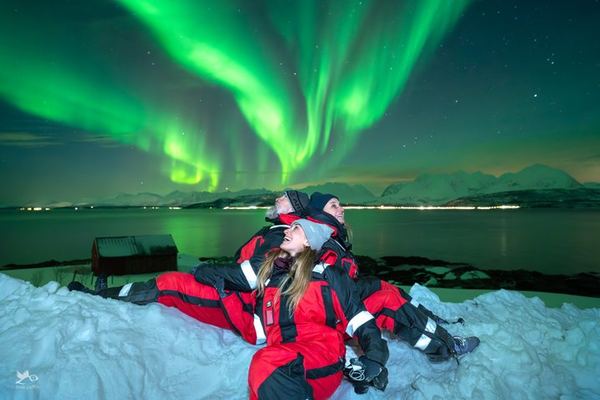
Tromso Northern Lights by Minibus with a Warm Dinner and Free Photos
Insulated overalls, a small campfire and a homemade meal, with portraits shared free afterwards. Ask in advance if you want the Spanish-speaking guide.
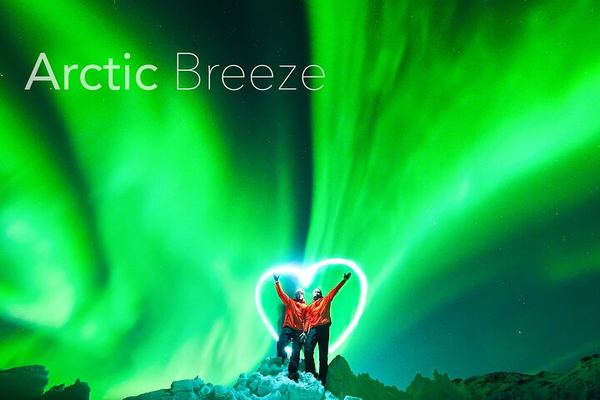
Tromso Northern Lights Chase with Arctic Breeze, Photos Included
One of the original Tromsø operators, in a Mercedes minibus with a photographer aboard. Thermal suits, fireside drinks, 50% off if the lights stay away.
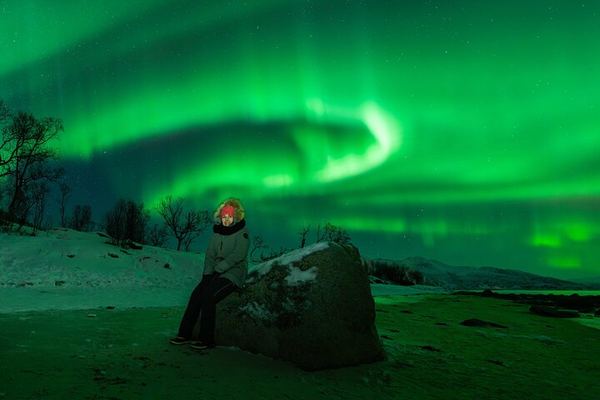
Tromso Northern Lights with Campfire, Reindeer Sausages and Photos
A family operator taking twelve guests, with local reindeer sausage and homemade vegan chai by the fire. Twelve people can change plan at 9pm; a coach cannot.
Ratings collected by Viator and Tripadvisor
What 'free photos' actually means
Almost every aurora tour in Tromsø now advertises free photographs, and the phrase covers four quite different things. Sorting them out before booking is the difference between a set of images you can print and a handful of files sized for Instagram.
| What you get | Typical wording | What it is good for | Found on |
|---|---|---|---|
| Web-sized JPG | "free social media quality pictures" | Sharing. Not large prints. | Several departures, with print resolution sold separately |
| Full JPG, no charge | "high resolution photos, free" | Prints and albums | Most of the mid-priced tours here |
| Original RAW, no watermark | "delivered in RAW format, no limit on photos" | Editing them yourself, which is where aurora files gain the most | One departure, and the only one in all 307 we list |
| Studio-lit portrait | "portrait under the aurora" | A picture of you that is actually exposed, not a silhouette | Several, and it is the harder technical problem of the two |
That last row is worth dwelling on. Photographing the aurora is a solved problem: put the camera on a tripod, open the aperture, expose for a few seconds. Photographing a person under the aurora is not, because the two subjects need completely different amounts of light. Without a controlled flash the human is a silhouette, and with a badly aimed one the sky disappears. Guides who describe their lighting method rather than just promising portraits are telling you they have solved it.

If you are bringing your own camera
The guides on these tours will help with settings, and the good ones do it before you leave, indoors, where your hands still work. Three things go wrong in the dark, in this order.
Focus. Autofocus has nothing to lock onto and will hunt forever. The fix is manual focus set on a bright star using live view at maximum magnification, done once and then taped or locked so it cannot drift. More aurora photographs are ruined by soft focus than by any exposure error.
Exposure. A starting point of a few seconds at a wide aperture and a high ISO gets you an image; from there it is a trade. Longer exposures collect more light but smear the structure of a fast-moving display into a green wash. On an active night, shorter and noisier is usually the better picture.
Batteries. Lithium cells lose a large part of their capacity at -20°C. A battery that reads empty in the cold often recovers in an inside pocket, so carry spares against your body rather than in the bag, and rotate them.
Phones are no longer hopeless. Recent night modes stack several frames into one image and can produce a genuinely recognisable aurora, provided the phone is held still, which in practice means propped on something or clipped to the tripod the guide brought.
Which price band buys what
At the bottom of the range, around 92 to 120 EUR, you are on a large bus with a photographer on board who will take pictures of the group. The images are a bonus attached to a cheap seat, not the reason for the tour.
Between roughly 175 and 260 EUR sit the minibus departures where photography is genuinely part of the design: smaller groups, a guide who is a working photographer, tripods provided, and time built into the stop for people to actually shoot rather than glance.
Near 300 EUR you reach the eight-seat vans, where the count matters more than the vehicle. Eight people and one photographer is a workable ratio for individual attention; forty-five and one is not.
The 1,820 EUR private booking is a different calculation entirely. Read as a vehicle plus a photographer for a night, split among a family or a group of friends, it is competitive with premium shared seats and buys the thing shared tours cannot: the guide stays with your camera all evening, and the group decides when to move on.
The season, and why photography needs a narrower window
One operator on this page states plainly that bookings between 15 and 20 April are affected by lengthening daylight, that the aurora will not read as strongly even under a clear sky, and that the tour may run shorter. It is the only place in this catalogue where a company volunteers that a date range it is still selling will produce a weaker result, and it is exactly right: twilight that the eye ignores still lifts the sky in a long exposure.
What almost nobody says is that September is April's twin at the other end of the season, and it is worse. Running the numbers for Tromsø, the month with the best cloud record of the year turns out to have almost no darkness in it.
| Month | Usable-sky nights | Darkness per night | Moon-free nights | Expected usable dark hours |
|---|---|---|---|---|
| October | 31.9% | 6.4 h | 48% | 2.04 |
| January | 23.5% | 7.9 h | 58% | 1.86 |
| November | 20.0% | 7.9 h | 50% | 1.58 |
| February | 23.3% | 6.7 h | 57% | 1.56 |
| December | 16.8% | 8.0 h | 58% | 1.34 |
| March | 28.4% | 3.5 h | 39% | 0.99 |
| September | 34.0% | 1.8 h | 17% | 0.61 |
For photography the darkness column is not a secondary consideration, it is the constraint. 1.8 hours of astronomical darkness in September means the sky is still being lifted by twilight for most of a tour that leaves at eight, exactly the effect the April warning describes. Add the moon column, where September sits at 17% of nights unaffected, the worst figure of any month at any destination we measure, and the case closes.
October is the month. Second-best sky of the year, six and a half hours of properly dark sky, half the nights free of moonlight, and open ground still visible in the foreground before everything goes white. January is the deep-winter alternative and the best of the snow months. March, which the industry recommends on equinox grounds, gives you 3.5 hours of darkness and 39% moon-free nights, and it sits second from bottom.
One limit, stated because it argues against this ranking: it measures how much dark clear sky a month contains, not the chance the aurora does something inside it. Geomagnetic storms are close to twice as frequent at the equinoxes, which favours September and March specifically. Even doubling September leaves it behind October here.
| 1 | 2 | 3 | 4 | 5 | 6 | 7 | 8 | 9 | 10 | 11 | 12 |
Questions worth asking the operator
Which month is best for photographing the aurora here?
October, then January. Photography needs darkness more than viewing does, because twilight that your eye ignores still lifts the sky in a multi-second exposure. September has the best cloud figures of the Tromsø year and only 1.8 hours of true darkness, plus the worst moonlight of any month we measure anywhere. It is the same problem that one operator here warns about for mid-April, at the other end of the season.
Will the photos be usable at print size?
Ask specifically. "Free photos" is compatible with a 1,200 pixel JPG. If a large print matters, look for tours that say high resolution or RAW, or budget for the paid upgrade some operators sell alongside their free web files.
How soon do the images arrive?
Between the same night and about a week. The departures here quote figures from three days to a shared link the following day. If you leave Tromsø in 48 hours, this is worth confirming rather than assuming.
Do I need a camera at all?
No, and on most of these tours you are better off without one. Wrestling with unfamiliar settings in the dark is the fastest way to spend a display looking at a screen instead of the sky. Let the guide shoot and watch it with your own eyes.
Is a photography tour more likely to find the aurora?
Not because of the cameras, but often yes in practice. A guide whose product is images has a strong incentive to keep driving for clear sky, and several of these departures extend the night rather than return empty handed. In a town where the sky is usable on about a quarter of nights, that willingness is worth more than the equipment.
Data verified on. Cloud: ERA5 via Open-Meteo, 11 seasons. Darkness and moon: ephemerides. Prices, delivery formats and group sizes read from the 12 departures on 10 August 2026.