

Hot Springs
6 departures to one hot spring 60 miles out, where the water that keeps you warm also powers the freezer that keeps the ice museum frozen
Chena Hot Springs was found in 1905 by gold miners working the country east of Fairbanks, and the resort that grew around it is now the single most-booked aurora destination in Alaska: one departure on this page carries 1,334 traveller reviews on its own. The proposition is easy to understand. You sit in 41-degree water in an outdoor rock pool while the air above you is at minus 30, and the northern lights may or may not appear over the ridge.
The honest version needs one qualification, which no listing makes. A hot spring is a wonderful place to be and a mediocre place to watch the sky from. At minus 30 the pool generates a wall of steam that sits directly over the water, your hair freezes solid within a few minutes of putting your head above the surface, and glasses are useless from the moment you arrive. Every one of these six tours takes you to viewpoints away from the water for the actual watching, and that is not a detail: it is the difference between the tours and simply driving yourself out there.
The other reason to buy the guide is the road. It is 60 miles each way on a dead-end route through the Tanana State Forest, in the dark, in winter, with moose on it. Somebody else doing that drive is a substantial part of what you are paying for.
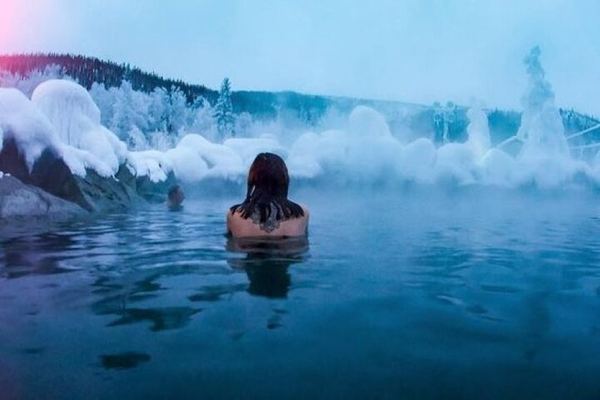
Chena Hot Springs and Northern Lights Evening from Fairbanks
Sixty miles out, with the Aurora Ice Museum and its ice bar first, then the outdoor mineral springs under the stars. Check which refund policy applies to you.
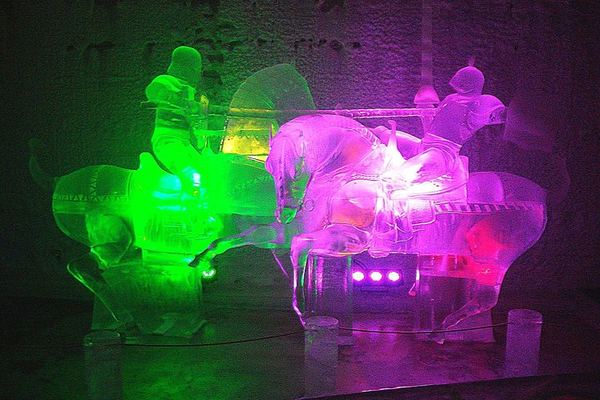
Chena Hot Springs and Northern Lights Night Tour from Fairbanks
This one runs later than most: out until 2 am and back between 3 and 4 am, which keeps you outside through the whole window when the aurora is most active.
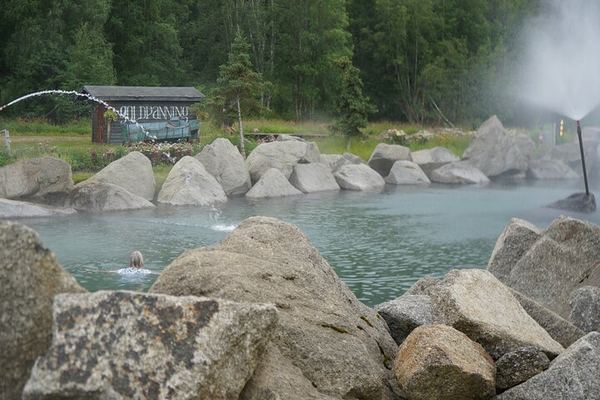
Chena Hot Springs Aurora Night with a Dedicated Guide and Portraits
The guide stays with the group all night rather than dropping you at the resort, and if the aurora shows, a professional portrait session is included.
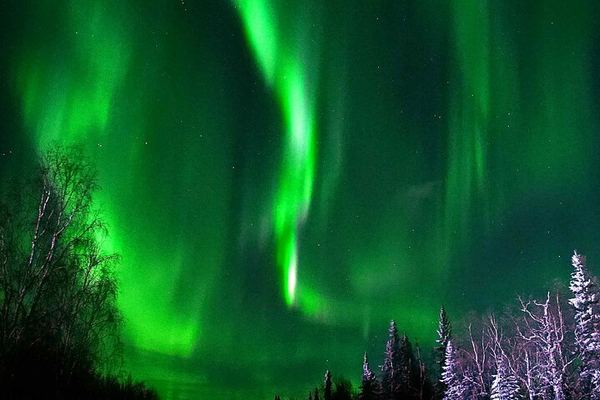
Chena Hot Springs Aurora Tour from Fairbanks with Ice Museum
Sixty miles through the Tanana State Forest, the Ice Museum, then the springs. Sitting in 40°C water while the air is at minus thirty is its own argument.
Chena Hot Springs Guided Night with Ice Museum and Aurora Photos
Timed museum admission, coin lockers, an age limit on the rock lake: a guide is what gets you all of the resort rather than half, in the dark at minus twenty.

Fire and Ice: Chena Hot Springs, Ice Museum and Aurora from Fairbanks
Eat at the resort or skip dinner for a longer soak, the choice is yours. Pickup between 4:30 and 5:30pm, back as late as 2am if the display is worth it.
Ratings collected by Viator and Tripadvisor
The hot spring that runs a freezer
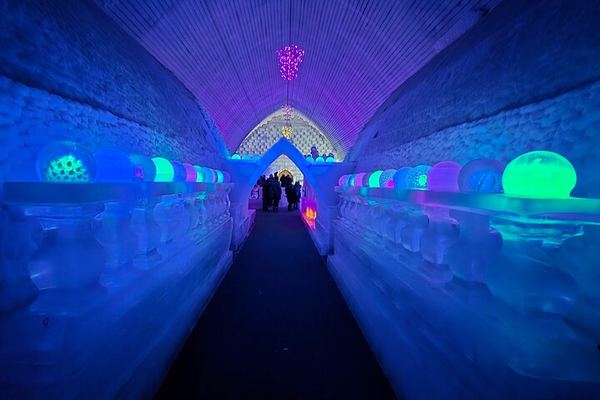
The Aurora Ice Museum at the resort is the largest year-round ice structure of its kind, with carved chandeliers, ice sculptures and a bar where a drink arrives in a martini glass cut from ice. It is kept at around minus 7 degrees through an Alaskan summer, which raises an obvious question about the electricity bill.
The answer is the reason this place is genuinely remarkable. The resort runs its own geothermal power plant on the same spring water that fills the pool, at a resource temperature of about 74 degrees, which when it was installed was the lowest-temperature geothermal source anywhere used for commercial power generation. That plant runs the chillers. The hot spring, in other words, freezes the ice museum. It also heats a greenhouse growing tomatoes and lettuce through a Fairbanks winter, and it is why a resort at the end of a 60-mile dead-end road is not on the grid at all.
Five of the six departures here include the ice museum, and it is worth the time. It is also indoors and lit, so plan it for the early part of the evening rather than the hours when the sky is most likely to perform.

How the six differ
Same destination, same road, same water. The variables are the guide, the timing and what is included, and the price band is narrow enough that it is worth choosing on the differences rather than the number.
| Departure | Price | Reviews | What sets it apart |
|---|---|---|---|
| Dedicated guide and portraits | 198 EUR | 41 | The guide stays with the group all night rather than dropping you and returning. Portraits included |
| Guided night with ice museum and photos | 203 EUR | 81 | Guides handle the resort logistics so you use all of it, and photograph the aurora if it appears |
| Ice museum then springs, timed to the aurora | 211 EUR | 126 | Built around the hours the aurora is most likely rather than the resort's opening times |
| Fire and Ice | 238 EUR | 56 | Ice museum first, then a choice: eat at the resort restaurant, or skip dinner and stay in the water |
| The most-booked evening | 242 EUR | 1,334 | The volume option: ice museum, ice bar, springs. By far the most reviewed aurora tour in Alaska |
| Late afternoon pickup through the forest | 255 EUR | 10 | Leaves earliest, which buys daylight on the drive through the Tanana State Forest |
If you are choosing on outcome rather than price, take the one where the guide stays. On a night when the aurora appears at half past midnight, the difference between a guide standing next to you and a driver waiting in a warm van at the far end of the car park is whether anyone tells you it has started.
What to actually do when you get there
A workable plan, from what these six describe between them. Do the ice museum first, while the sky is still too bright to be interesting. Get into the water next and stay in it for as long as you like, accepting that you will see very little sky from the middle of the pool. Then get out, dry your hair properly before going outside, and spend the aurora hours at whichever viewpoint the guide has chosen.
Practicalities that catch people: the outdoor rock lake is adults only, so families need to plan around the indoor pool; swimwear is essential and towels are usually rentable rather than included; and do not take a phone into the water, both because the resort restricts it and because a cold, wet phone at minus 30 does not survive the walk back. Wet hair really does freeze into a solid shape within a few minutes, which is a photograph everyone takes and also a genuine reason to dry off before stepping outside.
When to go, and why we changed our answer
This page previously pointed at the equinox months, on the reasoning that works in Scandinavia. Run for Fairbanks specifically, the numbers say something else, and on this page of all of them the correction is easy to act on.
Two things decide how much aurora time a month contains: how often the sky is usable and how much real darkness there is to use. Multiplied, they rank the season like this.
| Month | Usable-sky nights | Darkness per night | Expected usable dark hours |
|---|---|---|---|
| January | 58.1% | 6.9 h | 4.01 |
| December | 47.4% | 7.5 h | 3.55 |
| February | 53.0% | 5.7 h | 3.02 |
| November | 41.3% | 7.0 h | 2.89 |
| October | 46.5% | 5.7 h | 2.65 |
| March | 51.9% | 3.9 h | 2.02 |
| September | 44.0% | 3.1 h | 1.36 |
For this category the two arguments point the same way, which is rare. Midwinter has both the best sky and the experience you came for. The whole point of sitting in 41-degree water is the contrast with the air above it, and in September that contrast is a pleasant swim. In January it is the thing people describe for years afterwards, and it happens to fall in the month with 58.1% usable sky.
The one cost is steam. The colder the air, the denser the cloud sitting over the pool, so on the coldest nights you will see less sky from the water and more from the viewpoint the guide drives you to. That is an argument for choosing a departure where the guide stays with the group, not an argument for coming in September.
Two limits on the cloud figure, stated because they cut against us. Our window covers September to March, so the April end of the operators' season is outside it. And below roughly minus 35 the Tanana valley fills with ice fog, a shallow local effect a 28 km reanalysis grid will under-resolve. Chena is 60 miles east of the city and up out of the worst of it, but on the coldest nights the road in and out passes through exactly that layer.
| 1 | 2 | 3 | 4 | 5 | 6 | 7 | 8 | 9 | 10 | 11 | 12 |
Before you book Chena
When should I come?
Midwinter, and here the sky and the experience agree for once. January has the best combination of usable sky and darkness in the Fairbanks season, and it also produces the contrast between hot water and freezing air that is the entire point of the place. September, which we previously suggested, has the weakest sky-and-darkness combination of the year and turns the springs into an ordinary swim.
Can I watch the aurora from the hot spring itself?
Sometimes, and less often than the photographs suggest. At deep cold the steam over the pool blocks most of the sky, and you cannot wear glasses or bring a camera in. A strong overhead display is visible from the water and is unforgettable; a faint arc on the northern horizon is not. That is why every tour here moves the group elsewhere to watch.
Is it worth 200 EUR when the resort has its own entry fee?
You are buying the 120-mile round trip in winter darkness, a guide, and in most cases the ice museum and photographs. Driving yourself is cheaper and entirely possible on a paved road; whether it is a good idea depends on how you feel about moose, ice and a dead-end road at one in the morning.
Can children come?
To the resort and the ice museum, yes. The outdoor rock lake is adults only, so families use the indoor pool instead. If the hot spring is the point of the trip for you, check the age policy against your party before booking.
What about cancellation if the weather is bad?
Read both the description and the checkout terms, because on a couple of Fairbanks listings they do not agree: the description offers a refund window and the booking page says all sales are final. Whichever you are relying on, check it before you pay rather than after.
Data verified on. Cloud: ERA5 via Open-Meteo, 11 seasons. Darkness: computed ephemerides. Prices and review counts read off the 6 departures on 10 August 2026.