
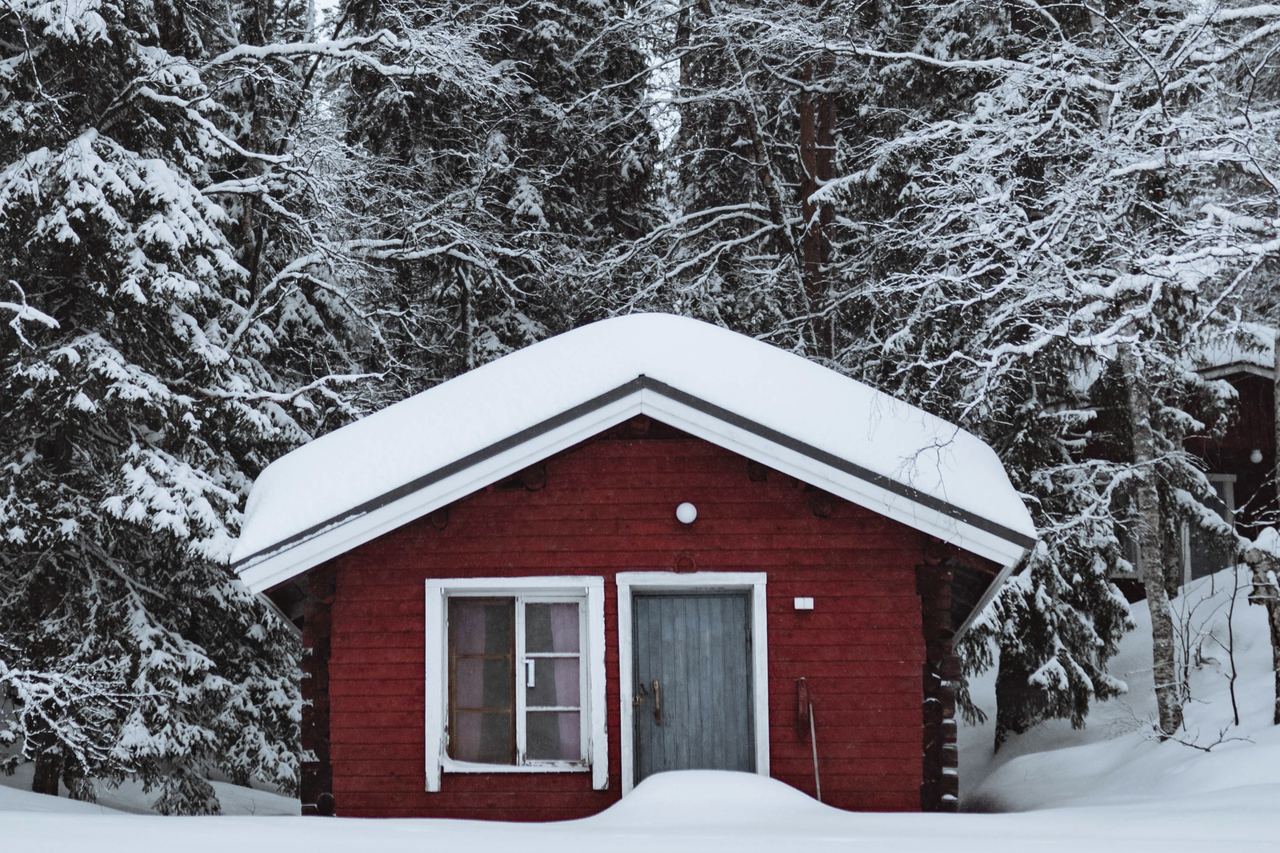
Aurora Camps
11 evenings that buy the waiting rather than the sky, from a campfire at 89 EUR to a glass igloo at 365
Almost nobody warns first-time visitors what an aurora night is actually made of. It is waiting. Three hours of standing about in the cold, checking the northern horizon every few minutes, with maybe twenty minutes of something happening in the middle if the evening goes well. The hunting tours solve that by driving; this category solves it by making the waiting worth doing on its own terms.
The trade is straightforward and every operator here is quietly making it on your behalf. A camp is fixed. If the cloud parks over that lake at seven and stays until midnight, no amount of good guiding changes the outcome, and there is no plan B two hundred kilometres west. What you get instead is a fire, food, somewhere warm to retreat to, and an evening that was pleasant regardless.
For a single-night visitor with one shot at this, that is the wrong trade. For anyone staying three or four nights in Lapland, it is arguably the best evening on the whole menu: book a chase for the night with the best forecast and a camp for the others, and you have stopped gambling the entire trip on one sky.
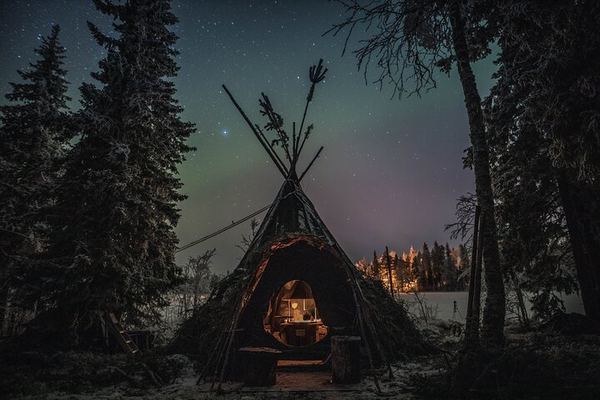
Arctic Lake Aurora Hunt from Rovaniemi with a Lappish Tipi
A quiet evening out on the Arctic lake, away from the city lights, with a Lappish tipi to warm up in between checks on the sky. Small and unhurried.
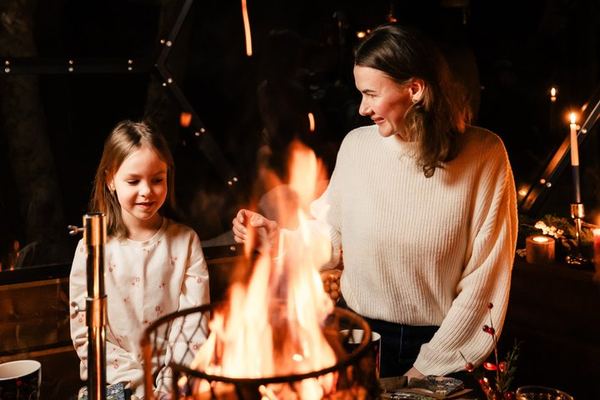
Aurora Gastronomy: Gourmet Glass Igloo Dinner and Snowmobile Safari
Regional cooking over an open fire, served in a private glass igloo on a frozen lake, then a snowmobile safari through the forest. Stars either way.
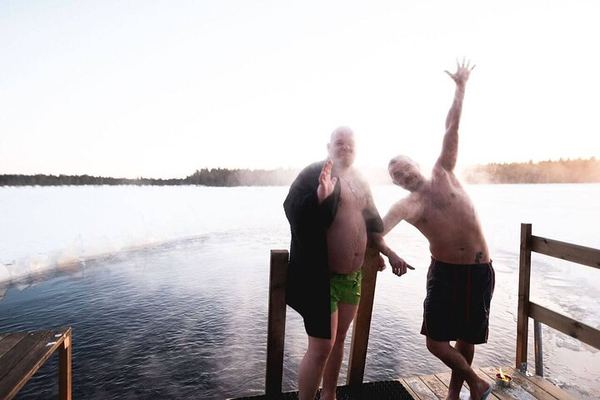
Lapland Night: Finnish Sauna, Ice Swimming, Dinner and Northern Lights
Ten minutes in the heat, then straight into ice water or snow, then blazed salmon cooked by an open fire in a wooden cottage. The aurora hunt runs alongside.
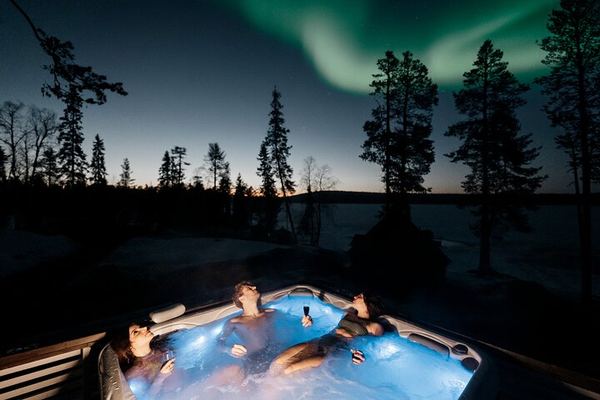
Private Arctic Forest Sauna and Jacuzzi with Northern Lights and BBQ
A Finnish night in the proper order: heat first, cold second, sky third. A wooden sauna in the forest, then an icy lake or the snow, if your nerve allows.
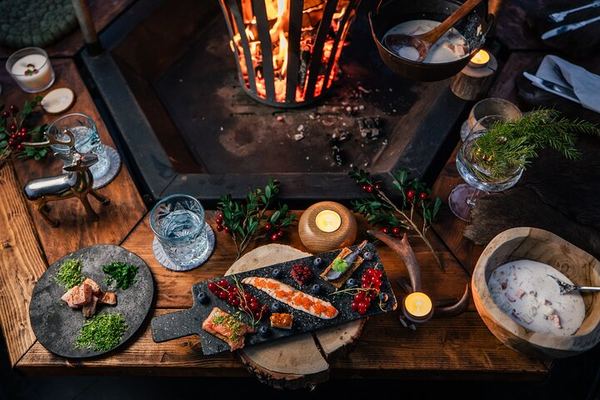
Private Glass Igloo Dinner and Aurora Safari by Snowmobile or ATV
Three Lapland courses cooked over fire inside a lakeside dome, then thermal gear and a safari by snowmobile or ATV, with guides steering to the best spots.
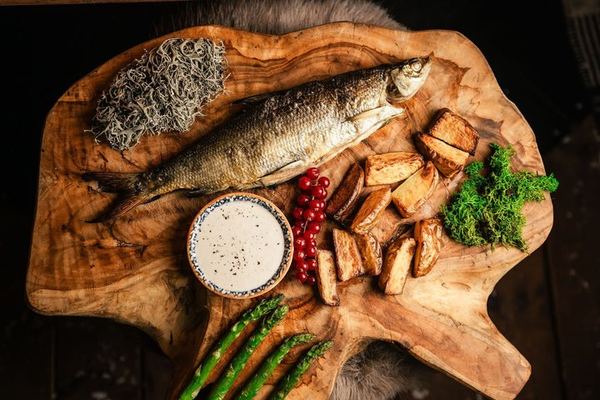
Private Glass Igloo Dinner and Snowmobile Safari under the Aurora, Rovaniemi
A luxury car out to one table in one glass igloo with nobody else around, a snowmobile across the frozen lake, and glass walls that keep the sky in view.
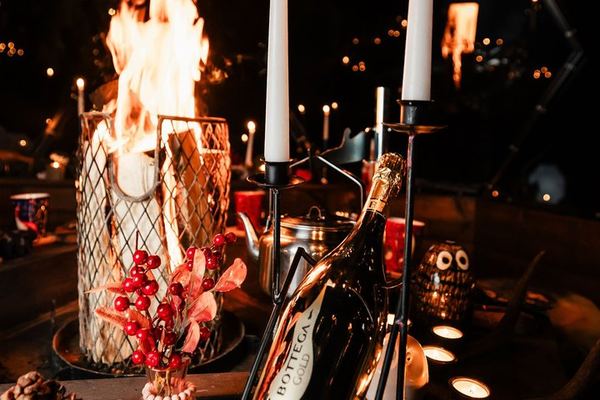
Private Glass Igloo Dinner with Choice of Menu and Snowmobile Aurora Safari
Reindeer, Arctic char or vegetarian, chosen when you book rather than on the night, eaten under a transparent roof. Then a snowmobile into the dark forest.
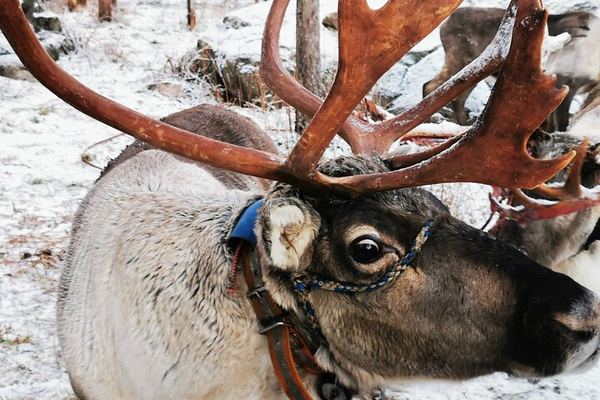
Rovaniemi Day and Night: Husky Ride, Reindeer Sleigh and Aurora BBQ
A morning with the huskies and the reindeer, the afternoon free, then out to the aurora spots for a Lappish barbecue in a kota with a fire in the middle.
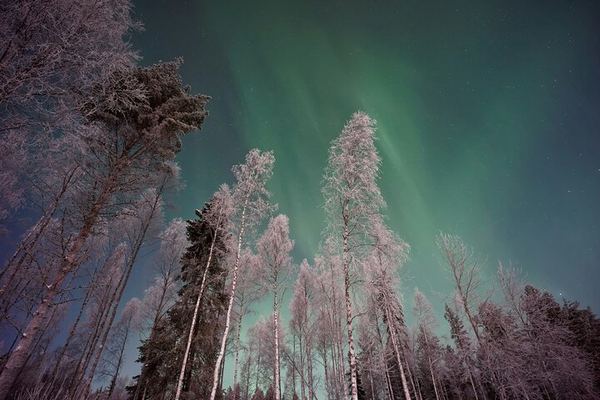
Rovaniemi Northern Lights Camp at Olkkajärvi Lake with Campfire Snacks
A family operator at a lakeside camp, with sausages and Karelian pies by the fire. If nothing appears, the night moves to Norvajärvi for a second attempt.
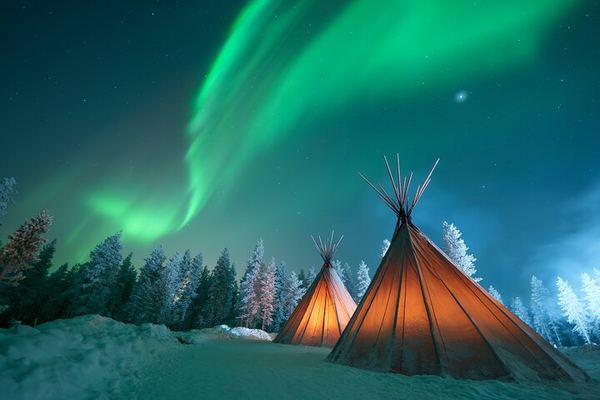
Rovaniemi Northern Lights Hunt with Campfire, Lappish BBQ and Transfer
A transfer out of Rovaniemi to untouched country, and a Lappish barbecue over the campfire while the sky is watched. Departure time varies with the night.
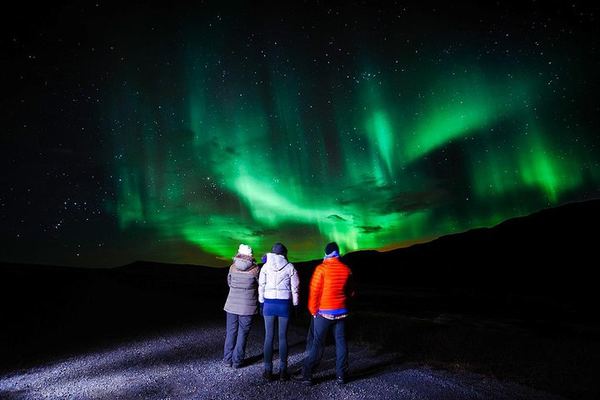
Rovaniemi Northern Lights Hunt with Campfire, Snacks and Lappish Folk Tales
Two and a half hours on a lake shore, mostly inside a traditional tent with the fire going. A warm outfit is provided when it drops below minus fifteen.
Ratings collected by Viator and Tripadvisor
Four kinds of evening, and they are not variations
The eleven split cleanly into four groups, and the price gap between the cheapest and the dearest is four-fold. That gap buys comfort and privacy. It does not buy a better sky, and nobody here claims it does.
| Format | How many | Price band | Where you wait | Best for |
|---|---|---|---|---|
| Campfire and kota | 4 | 89–130 EUR | A conical tent with an open fire in the middle, on a lake shore | The cheapest way to spend three hours outdoors and still enjoy them |
| Sauna and ice plunge | 2 | 165–189 EUR | A wooden sauna in the forest, with a hole in the lake next to it | Anyone who would rather be warm than mobile |
| Glass igloo dinner | 4 | 335–365 EUR | A private heated dome with a transparent roof, one table inside | A private evening where the aurora is the second reason you booked |
| Day and night combination | 1 | 219 EUR | Huskies and reindeer by day, a barbecue under the sky by night | Filling the daylight as well, in one booking |
One detail worth knowing about the igloos, because it is the sort of thing that only becomes obvious at the time. A lit glass dome is a poor place to look at a faint aurora. Your pupils adapt to the interior light in a couple of minutes, the glass throws your own reflection back at you, and condensation and frost build on the outside of the roof over the course of an evening. Good operators kill the lights the moment something appears and take you outside for the strong stuff. It is a fair question to ask when you book, and the answer tells you a lot.
Why they are all on a lake
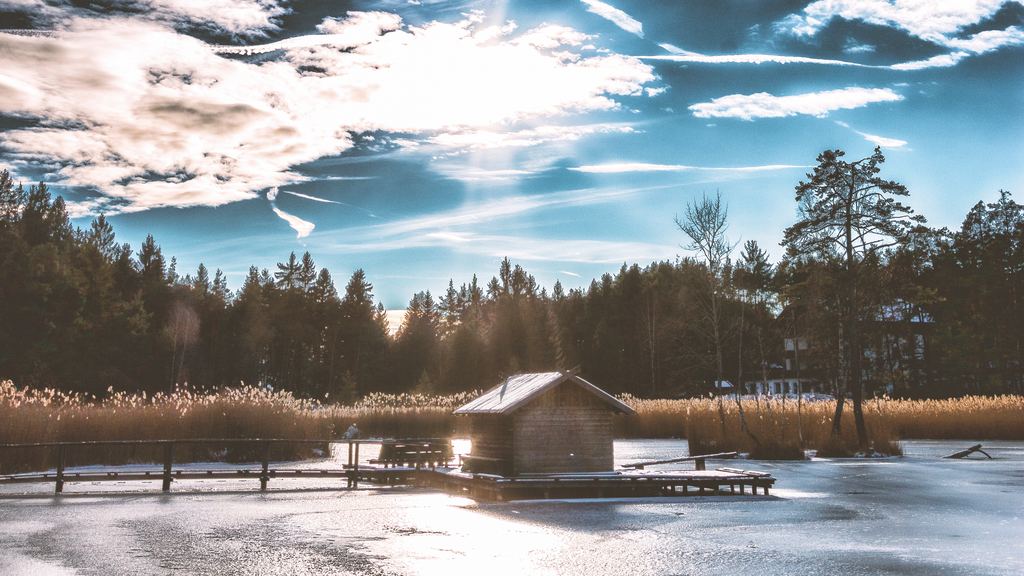
Nine of the eleven name a lake, and it reads like scenery until you have stood in a forest clearing. The aurora usually begins as a low arc across the northern horizon, and in Lapland the trees are 20 metres tall and everywhere. A clearing in a forest gives you a circle of sky directly overhead, which is exactly the part where nothing is happening for the first hour. A frozen lake gives you the horizon itself, all the way down.
That also explains the two camps that specify a north-facing shore or a hill. Direction is not decoration here. If you are ever choosing between two listings and one names its viewing spot while the other says wilderness, take the one that names it.
The sauna, since two of these are built on it
Finland has something like 3.3 million saunas for 5.6 million people, and in December 2020 UNESCO added Finnish sauna culture to its list of intangible cultural heritage. Neither number is a tourism statistic; the sauna is domestic infrastructure here, the way a bathroom is elsewhere.
What matters for an aurora night is physiological rather than cultural. Coming out of 80-degree heat, your skin is warm and your circulation is running, and you will stand outside comfortably for a good while longer than you would starting cold. The Finnish order is heat, then cold water or snow, then back to the heat, repeated as often as you like; the plunge is optional and nobody will push you. The one genuine warning is alcohol, which is a bad idea in a hot room and a worse one before an ice hole, and the operators here say so.
What you will be eating
Considerably better than the phrase campfire snack suggests. The standard kota spread is Lappish sausage grilled over the fire, karjalanpiirakka, the Karelian rice pies that come with butter and egg on top, and glögi, which is mulled wine with almonds and raisins in the bottom of the cup and is served hot enough to hold with gloves on. The dinner evenings run to three courses cooked over an open fire, often including poronkäristy, sautéed reindeer with mashed potato and lingonberry, which is the everyday winter dish of the region rather than a tourist invention.
Two operators here cook the meal on site over the fire rather than reheating something from a kitchen in town, and they say so in the listing. On a menu at 335 EUR, that distinction is the one worth checking.
When to go, and why it matters more here
Every page on this site says the month matters. On this one it matters most, and the reason is structural: a camp cannot move. A road hunt out of Rovaniemi will drive 300 kilometres, into Sweden if necessary, to get out from under the cloud. A kota on a lake shore is a bet on one patch of sky for the whole evening.
So the share of nights on which the sky above Rovaniemi is simply usable is close to the whole story here, where for a chase it is only part of it.
| Month | Usable-sky nights | Darkness per night | Moon-free nights | Expected usable dark hours |
|---|---|---|---|---|
| March | 50.0% | 4.3 h | 61% | 2.15 |
| October | 33.2% | 6.1 h | 48% | 2.03 |
| February | 30.4% | 6.2 h | 57% | 1.88 |
| December | 22.3% | 8.0 h | 58% | 1.78 |
| January | 22.9% | 7.5 h | 58% | 1.72 |
| November | 20.0% | 7.6 h | 53% | 1.52 |
| September | 41.7% | 2.8 h | 37% | 1.17 |
A camp in March is an excellent purchase. Half the nights have a usable sky, there are four hours of darkness, 61% of the month is free of moonlight, and the prices have dropped because the Christmas traffic has gone. October is the second choice, with two more hours of dark and open water rather than ice.
A camp in November, December or January is a fire in a field four nights out of five, and those are the months these evenings are busiest. That is not an argument against the product, which is a lovely way to spend an evening whatever happens. It is an argument for knowing what you are buying: at 20 to 23% usable sky, the glass igloo at 365 EUR is a private dinner in a remarkable place, and the aurora is a bonus you should not count on. If the sky is the point and your dates are in midwinter, take a chase that can drive.
One limit, stated because it argues against this ranking: it measures how much dark clear sky a month contains, not the chance the aurora does something inside it. Geomagnetic storms are close to twice as frequent at the equinoxes, favouring September and March. Even doubling September leaves it behind October; March wins either way.
| 1 | 2 | 3 | 4 | 5 | 6 | 7 | 8 | 9 | 10 | 11 | 12 |
Before you book a camp evening
Which month should I choose?
March, then October. A camp cannot drive out from under cloud, so it needs a month when the sky is open often: March gives 50.0% of nights and four hours of darkness. November to January give 20 to 23%, and those are exactly the weeks these evenings are busiest.
Will I see less than on a hunting tour?
Over a single night in the low-sky months, yes, and by a lot: a van can drive to a hole in the cloud and a building cannot. In March the gap narrows sharply, because half the nights are usable where you are standing. Over three nights it narrows again, and you have had three pleasant evenings instead of three drives.
Is a glass igloo worth 365 EUR?
As a private dinner in a remarkable place, quite possibly. As a way of seeing the aurora, no: the 89 EUR campfire camp on the same lake shows you the same sky, and a dark shore beats a lit dome for actually seeing a faint display. Book the igloo for the evening, not for the odds.
Are these suitable for children?
The campfire camps are the best option in the whole Rovaniemi catalogue for young children: two and a half to three hours, a fire, food, somewhere warm, and no long drive at the end of the night.
What should I wear?
Most operators supply thermal overalls and boots once it drops below minus 15, and several supply them regardless; check the listing. Bring your own base layers, a hat and two pairs of gloves, thin ones you can use a camera in and thick ones over the top. Standing still is much colder than walking, and standing still is the activity.
Data verified on. Cloud: ERA5 via Open-Meteo, 11 seasons. Darkness and moon: ephemerides. Prices and formats read off the 11 evenings on 10 August 2026.